
 For centuries, medical professionals diagnosed women with a peculiar condition that allegedly caused everything from fainting spells to a general tendency to cause trouble. The cure for this wide-ranging ailment involved a treatment that modern readers might find surprising.
Doctors in the Victorian era routinely performed pelvic massages on their patients to induce a “hysterical paroxysm,” which is known today as an orgasm. This strange chapter in medical history eventually led to the invention of the electromechanical vibrator, a device originally designed not for recreation, but as a labor-saving tool for physicians suffering from hand cramps.
The Theory of the Wandering Womb
The concept of female hysteria dates back to ancient times. In 500 B.C., the Greek physician Hippocrates recorded his belief that a woman’s uterus was a distinct, living animal capable of wandering around the body. He theorized that when this “wandering womb” moved to an unexpected location, it caused severe physical and emotional distress. The very word “hysteria” comes from the Greek word for uterus, hystera.
Centuries later, the Roman physician Galen expanded on this theory. He proposed that the movement of the womb resulted from sexual deprivation. While married women could rely on their husbands for relief, Galen suggested that widows and unmarried women required medical intervention. He documented a specific technique for pelvic massage intended to produce fluid and release the patient from her symptoms.
Symptoms of a Catch-All Disease
By the 19th century, hysteria had become a pervasive diagnosis in the West. It functioned as a catch-all category forany condition that doctors could not easily explain. A woman might be diagnosed with hysteria if she suffered from anxiety, loss of appetite, fluid retention, or even erotic fantasies. In the Victorian era, the French physician Pierre Briquet estimated that a full quarter of all women suffered from “hysteroneurasthenic disorders.”
Because the symptoms were so vague, almost any behavior could trigger a diagnosis. If a woman was irritable or acted in a way that society deemed disruptive, medical professionals often labeled her hysterical. The diagnosis provided a convenient medical explanation for behavior that men found difficult to manage or understand.
The Fatigue of Manual Treatment
The standard treatment remained the pelvic massage, but this cure presented a significant logistical problem for doctors. Achieving a “hysterical paroxysm” through manual stimulation was a time-consuming process that often took up to an hour. In 1660, Dr. Nathaniel Highmore had already noted the difficulty of the task, but by the 1800s, the demand for treatment had surged.
Physicians found themselves spending hours every day manually stimulating patients. This repetitive motion caused severe hand fatigue and cramping. Doctors began to view the procedure as tedious manual labor rather than a delicate medical art. They desperately needed a more efficient way to administer the cure without exhausting their own hands.
The Arrival of the Electromechanical Cure
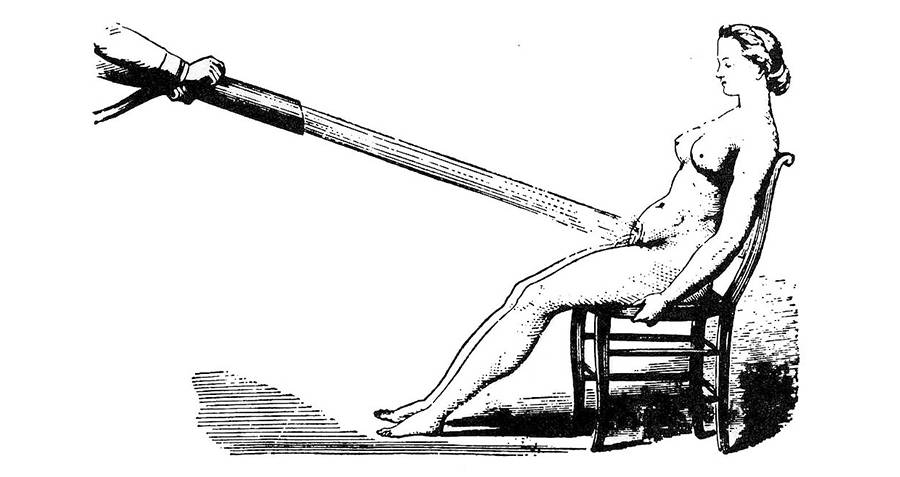
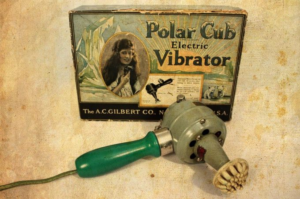
Medical innovators first attempted to automate the process with hydrotherapy devices that sprayed water jets, but these were cumbersome. In the 1880s, Joseph Mortimer Granville invented the first electromechanical vibrator. This device was a breakthrough for the medical community. It reduced the time required to induce a paroxysm from an hour to just five or ten minutes.
The vibrator quickly became a standard medical instrument. It was the fifth household appliance to be electrified, appearing even before the vacuum cleaner. Over time, the device transitioned from doctors’ offices to private homes. The medical community eventually abandoned the diagnosis of hysteria. The American Psychological Association removed the term from its diagnostic manual in 1952, closing the book on the wandering womb, but the technology created to treat it remains in use today.