
In February 2013, a couple known only as John and Mary took their dog for a routine walk on their rural property in Trinity County, California. This simple activity led to the discovery of the largest known buried treasure in the history of the United States.
Located less than 200 miles (322 kilometers) from the site of the historic 1849 Gold Rush, their finding stunned numismatists and historians alike. What appeared to be a decaying piece of trash turned out to be the first clue to a multi-million dollar fortune hidden just beneath the soil. The find instantly sparked global interest and became a modern historical phenomenon.
A Rusty Clue in the Dirt
The couple had hiked the same trail on their 200-acre (81-hectare) property for years without noticing anything unusual. On this specific day, however, a rust-covered metal can poked out of the ground near an old tree. John bent down to examine the object, but it was firmly stuck in the dirt.
He had to use a piece of wood to pry it loose from the earth. The can was surprisingly heavy, leading them to initially believe it contained lead paint. As they struggled to carry the weight back to their house, the lid cracked open to reveal the edge of a single gold coin. They immediately returned to the site with hand tools to investigate further.
Uncovering the Collection
Upon returning, they discovered a second can just 1 foot (30 centimeters) away from the first. Over the following days, they used a metal detector to locate more containers. Their excavation efforts eventually produced eight cans filled with 1,427 gold coins dating from 1847 to 1894.
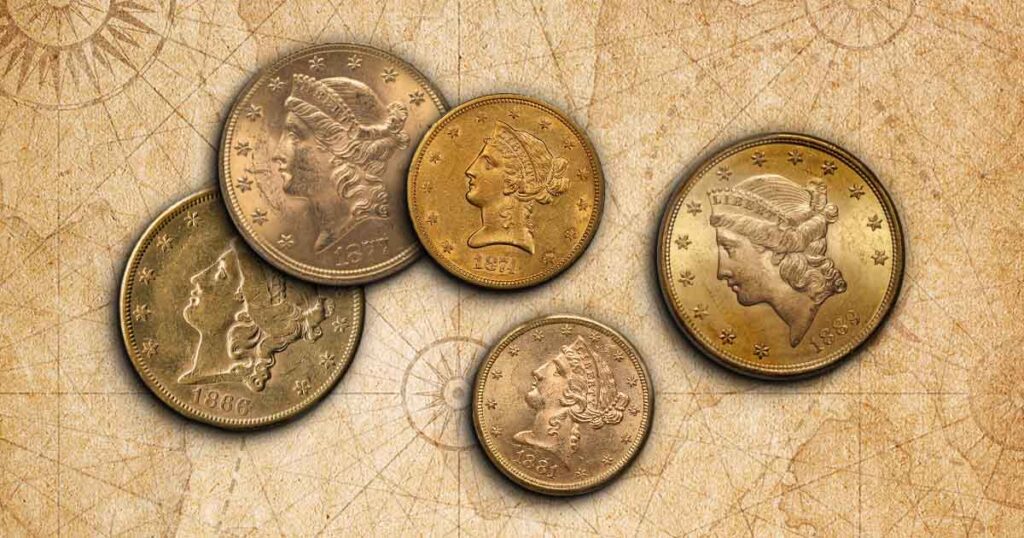
The hoard consisted primarily of $20 Double Eagles, along with several $10 and $5 coins. Although the face value of the currency totaled exactly $27,980, the rarity and preservation of the pieces commanded a much higher market price. Experts later assessed the total value of the hoard at approximately $10 million.
Mint Condition and Hidden Origins
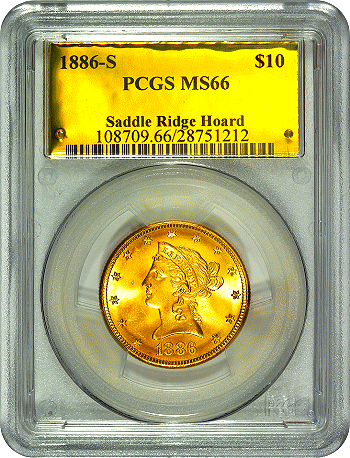
The Professional Coin Grading Service (PCGS) authenticated the discovery. They reported that many coins remained in uncirculated, mint condition. Some individual specimens were among the finest ever known, including an 1866-S No Motto Double Eagle valued at around $1 million.
Geographic markers near the site included a jagged rock the couple called “Saddle Ridge” and an empty can hanging from a tree that had grown around it. The center of the cache lay exactly ten steps from the rock toward the North Star. While some speculated the gold was linked to a 1901 theft by mint employee Walter Dimmick, the U.S. Mint stated they found no information linking the hoard to any government facility thefts.
Disposition of the Treasure
After the discovery, the couple hid the cans in an old ice chest and buried them under a woodpile for safekeeping. They eventually contacted Kagin’s, a numismatic firm, to represent them. To protect their privacy and prevent trespassers from swarming the land, John and Mary chose to remain anonymous.
Kagin’s arranged an exclusive sale of the coins through Amazon, which marked a major first for the retailer. The couple used the proceeds to pay off personal debts and donated a portion of the funds to local charities. The Saddle Ridge Hoard stands as a verified historical find, documented by physical evidence recovered directly from the California ground.