
In the early 6th century, the city of Luoyang was dominated by a structure that defied the architectural limits of the ancient world. Travelers approaching the Northern Wei capital reported seeing a glittering spire from thirty miles away, piercing the clouds.
This was the Yongning Pagoda, a wooden colossus built in 516 AD that stood taller than the Great Pyramid of Giza. For eighteen years, it reigned as the tallest building on Earth, a marvel of engineering that vanished as dramatically as it appeared.
An Imperial Obsession
The construction of the Yongning Pagoda began under the direct command of Empress Dowager Hu, a ruler known for her devout patronage of Buddhism and her immense political power. She designated the palace grounds for the temple, ordering the finest craftsmen in the empire to erect a nine-story wooden tower.
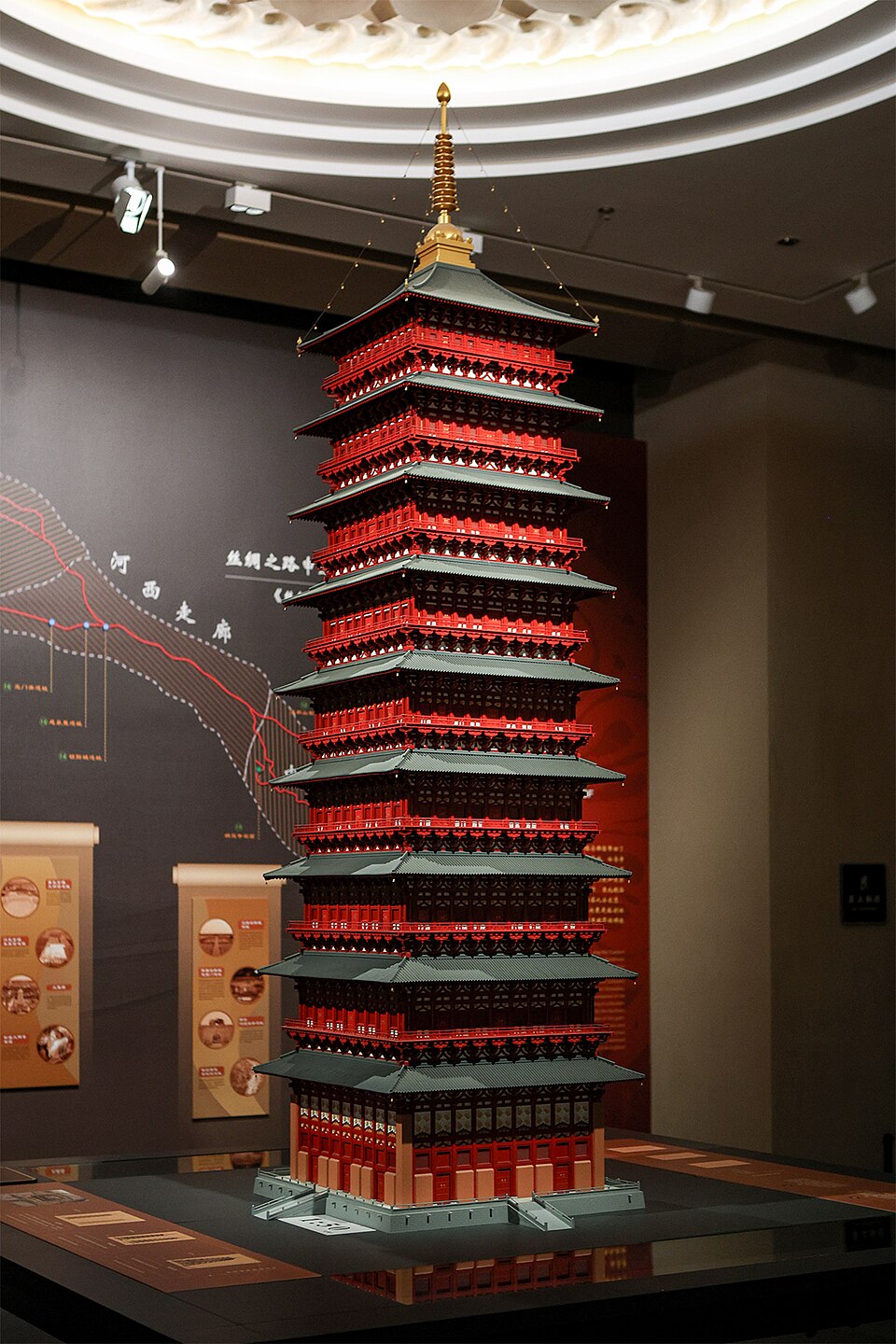
Historical records, specifically the Commentary on the Water Classic, suggest the tower reached a height of 400 to 500 feet, while other texts like the Record of Buddhist Monasteries in Luoyang claim an even greater height. Regardless of the exact measurement, the structure dwarfed every other building in China, requiring a massive foundation of rammed earth to support its crushing weight.
A Tower of Gold and Bells
The pagoda was not merely tall; it was designed to overwhelm the senses. The structural core consisted of a massive central pillar, surrounded by wooden beams painted in vermilion and intricate carvings. At the very peak sat a “treasure bottle” capable of holding twenty-five dan of grain, situated below a golden mast. From this mast, four heavy iron chains extended to the corners of the roof, each adorned with gold bells.
The architects suspended smaller bells from every corner of the nine stories. Texts from the era describe how, when the wind blew through Luoyang, the ringing of these thousands of bells could be heard throughout the capital, creating a constant, melodic hum that resonated through the city streets. The interior was equally lavish, featuring doors studded with gold and windows adorned with pearls.
The Inferno of 534 AD
The existence of this architectural giant ended in catastrophe. In the second month of 534 AD, a bolt of lightning struck the golden mast during a storm. The wooden structure, dried by years of exposure to the sun and wind, ignited instantly. The fire started at the peak and raced downward, consuming the timber frame.
Emperor Xiaowu sent princes and a thousand soldiers to the scene with water vessels, but the heat was so intense they could not approach the base. The tower burned for three months, and the smoke lingered for a year. Historical accounts state that three monks, overcome with despair at the sight of the destruction, threw themselves into the flames.
Unearthing the Clay Army
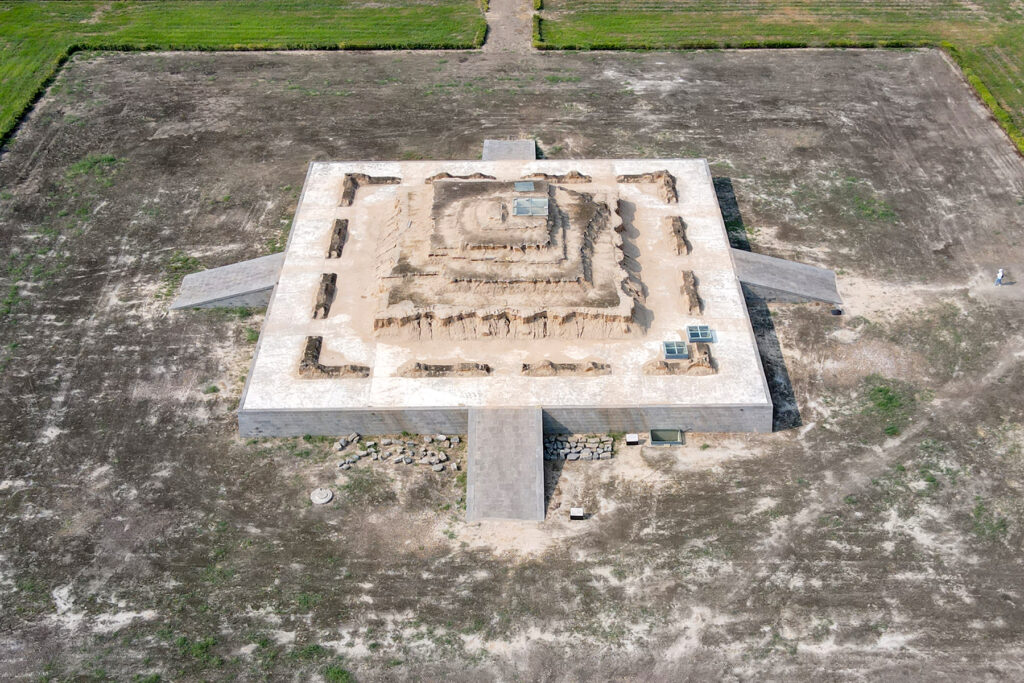
The ruins of Yongning lay buried beneath the soil for over a millennium until modern archaeologists located the site in 1979. The excavation revealed the massive rammed-earth base, confirming the colossal scale described in ancient texts. Among the charred debris and ash, researchers discovered fragments of over 1,500 painted clay sculptures that once decorated the pagoda’s interior.
These recovered figures, ranging from serene bodhisattvas to armored warriors, display a high degree of artistic sophistication. They remain the only physical evidence of the grand tower that once touched the sky, grounding the legendary descriptions in tangible reality.