
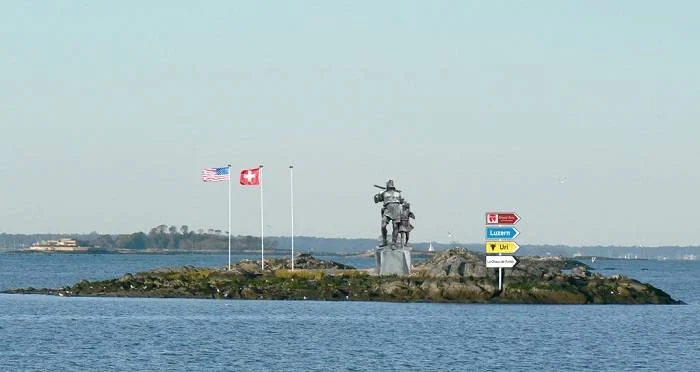
In the high-stakes world of New York City real estate, property is usually measured in square feet and vertical height. However, one specific holding defies the typical description of a Manhattan asset. Located in the Long Island Sound, roughly halfway between City Island and Hart Island, sits a jagged formation of bedrock known as Rat Island.
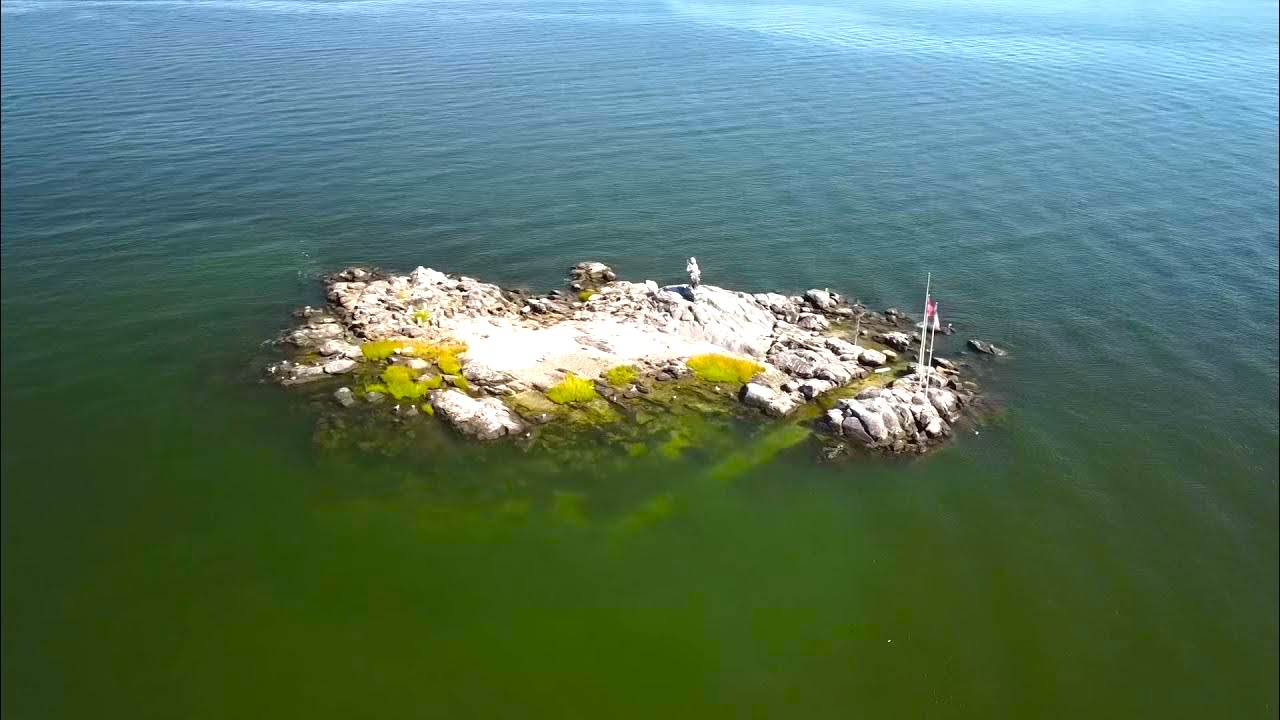
This 2.5-acre (1.0-hectare) lump of Manhattan schist holds the distinction of being New York City’s only legitimate private island. It lacks running water, electricity, or even a dock, and during particularly high tides, a significant portion of the land simply disappears beneath the Atlantic Ocean.
The Era of Quarantine and Escaping Convicts
The island’s history is as rough as its topography. In 1849, the City of New York purchased the land to address a public health crisis. Authorities established a “typhoid depot” on the rocks, using the isolation to quarantine victims of typhoid and yellow fever. For years, locals referred to the site as the “Pelham Pesthouse.” Roughly 40 patients were ferried to this desolate spot, housing them in temporary structures far removed from the general population.
The name “Rat Island” itself has two distinct historical explanations. One theory posits that the moniker comes from the “rats”—a slang term for escaping prisoners—who fled the penal colony on nearby Hart Island. These escapees would swim to the rock to catch their breath before attempting the longer, more dangerous swim to the mainland. A second, nautical theory suggests a corruption of the original name, “Rattle Island.” Sailors in the 19th century used wooden rattles to warn ships of the submerged rocks, and over time, “Rattle” was shortened in the local vernacular.
Artists, Hurricanes, and Scrapyards
During the early 20th century, the island briefly shifted from a place of disease to a site of leisure. A small group of writers and artists established a “mini-colony” on the rocks, building wooden bungalows to use as summer retreats. This bohemian existence ended abruptly in 1938 when a massive hurricane swept through the Long Island Sound. The storm destroyed every structure on the island, scrubbing the rock clean of human habitation.
Following the destruction, a marine contractor named Edmund “Red” Brennen acquired the deed. Rather than rebuilding homes, Brennen utilized the island’s isolation for industrial storage. For decades, the view from City Island did not include trees or houses, but rather the rusting silhouettes of crane buckets, lattice booms, and heavy salvage equipment. The ground became a hazardous mix of bird guano, crushed mussel shells, and industrial debris.
The Auction of a Private Kingdom
In 2011, the property entered the public spotlight again when it went up for auction. The sale took place on a street corner in City Island, drawing a crowd of curious onlookers and media crews. The high bidder was Alex Schibli, a retired Port Authority engineer and City Island resident. Schibli paid $160,000 for the island, with a final total of $176,000 after premiums.
Schibli, originally from Switzerland, did not purchase the island to build a fortress. He bought it simply because it was visible from his home and offered a place to kayak. In 2016, he added the island’s only permanent resident: a polyester statue of the Swiss freedom fighter William Tell. The statue stands anchored into the bedrock, holding a crossbow and facing the water. Today, at high tide, William Tell often appears to be walking on the surface of the sea, marking the location of New York’s strangest private property.