
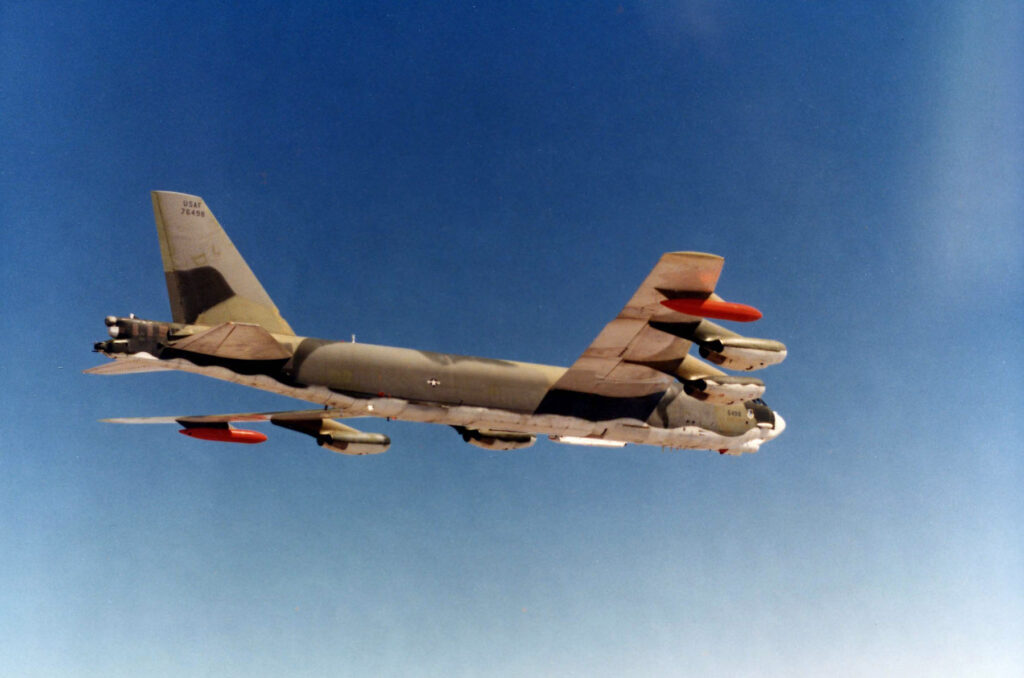
On January 21, 1968, the Cold War turned literally freezing. High above the Arctic Circle, a United States Air Force B-52 Stratofortress was on a secret mission. Its payload was terrifying: four B28FI hydrogen bombs, each more powerful than the weapon that destroyed Hiroshima.
The crew’s mission was to monitor Soviet missile radars, but a simple cabin fire turned their routine patrol into an international nightmare. As smoke filled the cockpit, the crew ejected into the pitch-black polar night, leaving the massive bomber to hurtle pilotless toward the frozen sea below.
The Fire and the Fall
The disaster began with a mundane mistake. A crew member had shoved foam cushions near a heating vent to block a draft. The foam ignited, filling the cabin with thick, choking smoke. The pilot, Captain John Haug, realized the fire was out of control and ordered an ejection.
Six of the seven crew members survived the bail-out into the -25°F (-31°C) air. The unmanned aircraft, however, continued its death spiral. It crashed onto the sea ice of North Star Bay, just miles from Thule Air Base in Greenland. The impact detonated the conventional explosives inside the nuclear weapons, shattering the radioactive cores and scattering plutonium across the frozen landscape.
Project Crested Ice
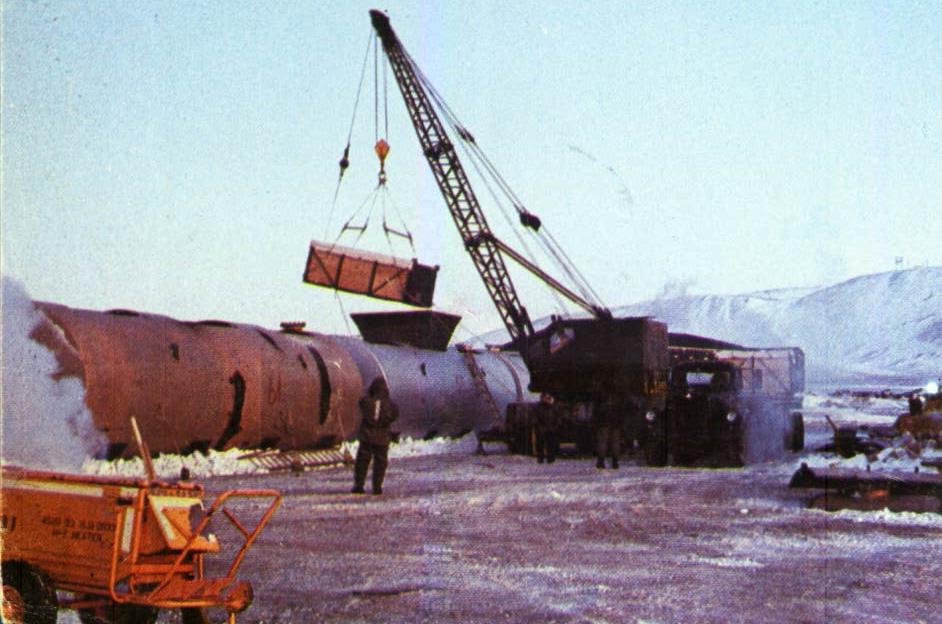
The crash triggered a “Broken Arrow”—the US military code for a nuclear accident. The immediate danger was not a nuclear explosion, but radioactive contamination. The cleanup operation, code-named Project Crested Ice, was grueling. In the perpetual darkness of the Arctic winter, American and Danish personnel worked in temperatures reaching -70°F (-57°C).
They scraped contaminated snow and ice into steel tanks, which were then shipped back to the United States. The work was so intense that the base camp established on the ice became known as “Camp Hunziker,” a grim city of igloos and temporary shelters built solely to scrub the stain of plutonium from the pristine white ice.
A Diplomatic Meltdown
The crash did more than just pollute the ice; it shattered a delicate political illusion. Greenland is a territory of Denmark, a country that had a strict policy prohibiting nuclear weapons on its soil. The presence of four hydrogen bombs revealed that the United States had been flying nuclear-armed missions over Danish territory for years.
The incident forced the Danish government into a corner, caught between its public anti-nuclear stance and its secret tolerance of American strategic interests. The revelation sparked protests in Denmark and strained relations between the two NATO allies.
The Mystery of the Fourth Bomb
Officially, the cleanup was a success. The Air Force announced that all four weapons had been destroyed and the debris recovered. However, documents declassified decades later told a different story. Investigators found components for three of the bombs, but the fourth weapon’s secondary stage—a cylinder containing uranium and lithium deuteride—was never definitively located.
Some reports suggest it melted through the ice and sank to the bottom of the bay. In 2008, a BBC investigation reignited interest in the “lost bomb,” though US officials maintained that the weapon had fragmented and was lost to the sea, leaving a lingering question beneath the Arctic waters.