
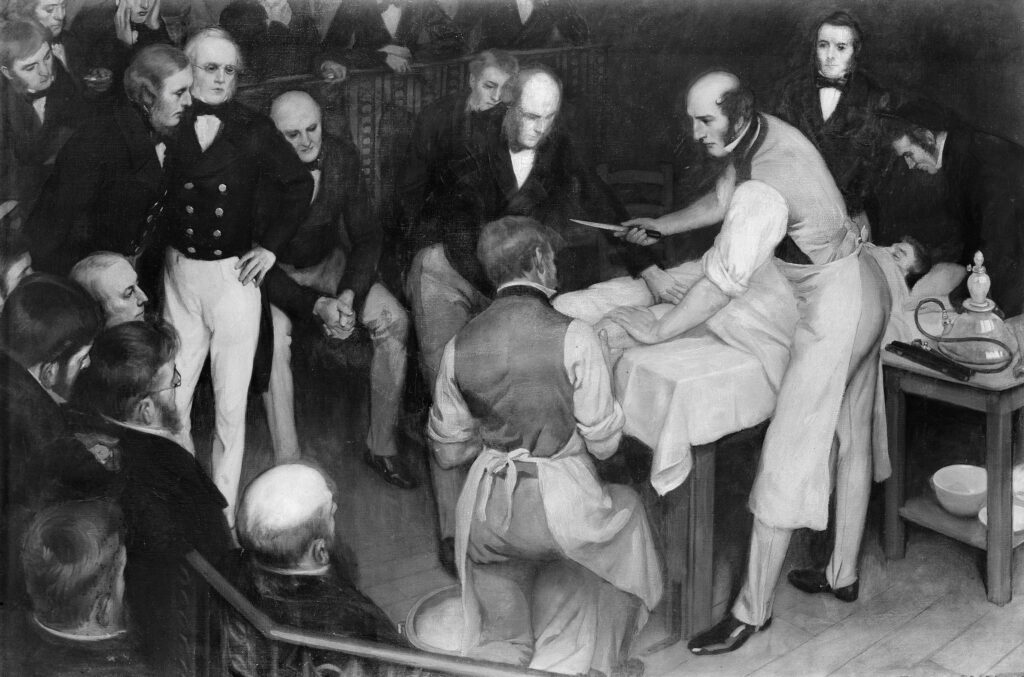
Patients in the early 19th century lay strapped to wooden tables, fully conscious, while students watched a surgeon pick up a saw. This was not a nightmare but a medical reality. Speed was the only mercy a doctor could offer; the faster the knife moved, the less likely the patient was to die from shock.
In this brutal era, one man stood above the rest as the undisputed king of speed: Robert Liston. Known as the “Fastest Knife in the West End,” Liston turned amputation into a high-speed performance, famously asking his students to “Time me, gentlemen” before removing a limb in mere seconds.
The 28-Second Amputation
Standing six feet two inches tall, Liston possessed the sheer physical strength required to restrain terrified patients and operate with lightning efficiency.
While most surgeons took several minutes to complete an amputation, Liston averaged just two and a half minutes. In his most legendary verifiable feat, he successfully amputated a leg in an astonishing 28 seconds. His hands moved so fast that observers often struggled to distinguish the flash of the knife from the sound of the bone saw.
Liston’s operating room was a place of frantic energy. He once removed a 45 lb (20 kg) scrotal tumor that the patient had to carry in a wheelbarrow, completing the massive excision in just four minutes.
His abrasive personality made him enemies among his colleagues, but his results were undeniable. In a time when hospital gangrene claimed one in four patients, Liston’s mortality rate was significantly lower, simply because his speed reduced the window for infection and trauma.
A Revolution in a Glass Jar
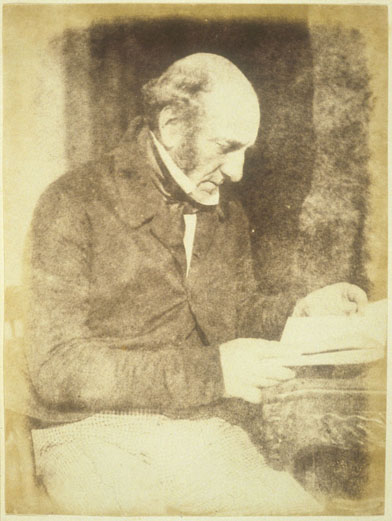
However, Liston’s greatest contribution to medicine was not his speed, but his willingness to make it obsolete. On December 21, 1846, a packed operating theater at University College Hospital in London gathered to witness a new experiment.
The patient was Frederick Churchill, a butler suffering from a diseased knee. The proposed solution was a “Yankee dodge” that had recently made headlines in America: a volatile liquid called ether.
Liston entered the theater and announced to the skeptical crowd, “We are going to try a Yankee dodge today, gentlemen, for making men insensible.” His colleague, William Squire, held a glass apparatus to Churchill’s face, forcing him to inhale the ether fumes. Within minutes, the patient fell into a deep, unnatural sleep.
The First Painless Operation
The room fell silent. For the first time, there was no screaming and no struggle. Liston seized the moment. He clamped the artery and made his incision. According to witnesses, the amputation was complete in just 25 seconds. When Churchill awoke moments later, he confusedly asked the room, “When are you going to begin?”
The students and spectators were stunned. The agonizing screams that had defined surgery for millennia were gone. Liston turned to the audience and delivered his verdict on the new anesthetic: “This Yankee dodge beats mesmerism hollow.” In less than a minute, Robert Liston had performed the first surgery under anesthesia in Europe, forever changing the course of medical history.