
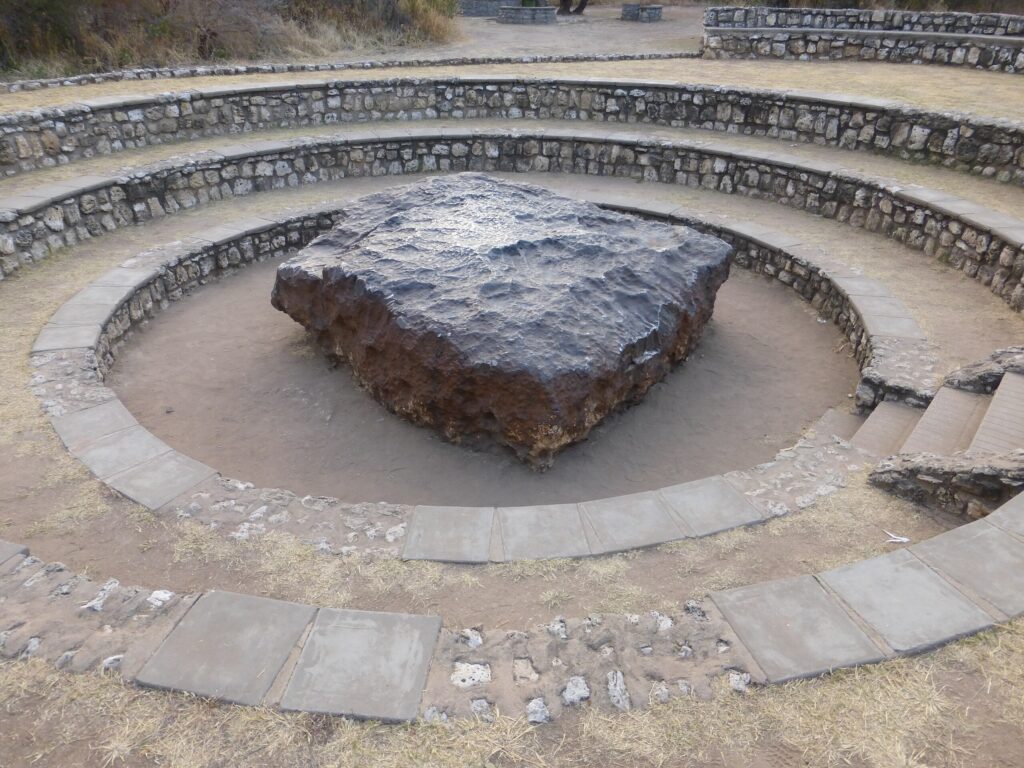
Hidden beneath the soil of the African plains for 80,000 years, a colossal iron traveler from the stars waited to be found. It didn’t crash with a catastrophic boom that wiped out cities or created a massive crater. Instead, it landed with a heavy thud, skipping across the atmosphere like a stone on a pond before coming to rest in what is now Namibia.
This 60-tonne behemoth, known as the Hoba meteorite, holds the title of the largest single piece of naturally occurring iron on the Earth’s surface. Its discovery in 1920 was not the result of a scientific expedition, but of a farmer’s plough hitting an obstacle that refused to budge.
The Metal Scratch Heard ‘Round the World
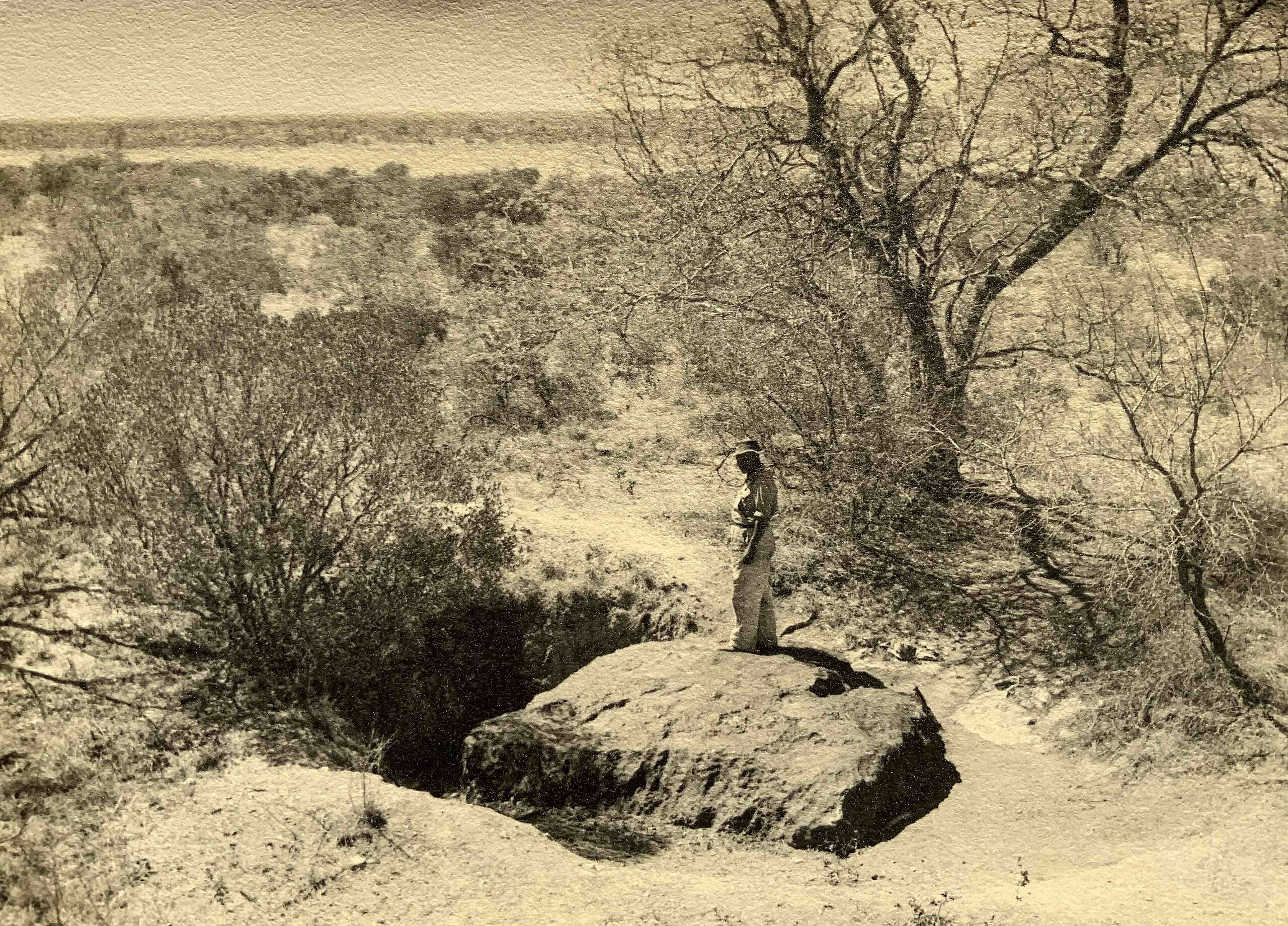
Jacobus Hermanus Brits was ploughing his field at Hoba West farm near Grootfontein when his work came to a screeching halt. A loud metallic scratching sound pierced the air as his ox-driven plough struck a black, rock-like mass buried in the limestone.
Brits excavated the soil around the object and described it in a report that is still preserved today. He had stumbled upon a rectangular block of metal measuring roughly 9 feet by 9 feet. The object was 84% iron and 16% nickel, a composition that classifies it as an ataxite iron meteorite.
A Gentle Landing Without a Crater
One of the most fascinating aspects of the Hoba meteorite is the absence of a crater. Typically, an object of this mass would strike the ground with such force that it would excavate a massive hole. Scientists infer that the meteorite entered the atmosphere at a shallow angle, which caused it to slow down significantly.
The friction of the air acted as a brake, reducing its speed to a terminal velocity of about 720 miles per hour (1,160 kilometers per hour) before impact. This deceleration allowed the meteorite to land relatively intact, preserving its flat, tabular shape without burying itself deep underground.
From Vandalism to National Monument
For decades after its discovery, the meteorite remained unprotected in the open field. Its fame attracted curious visitors, some of whom saw it as a source of free souvenirs. Vandals and souvenir hunters chipped away pieces of the iron giant, reducing its original estimated mass of 66 tonnes to its current weight of around 60 tonnes.
To stop this destruction, the government of South West Africa declared the meteorite a national monument in March 1955. However, its remote location made enforcement difficult for many years.
A Gift to the State
In 1987, the owner of the farm, Mrs. O. Scheel, donated the meteorite and the surrounding land to the state for educational purposes. This generous act allowed for the construction of a proper tourist center with a circular stone access and seating area.
Today, thousands of people visit the site annually to stand next to the massive iron block. The site is now secure, ensuring that this visitor from outer space remains safe from saws and hammers, resting exactly where it fell thousands of years ago.