
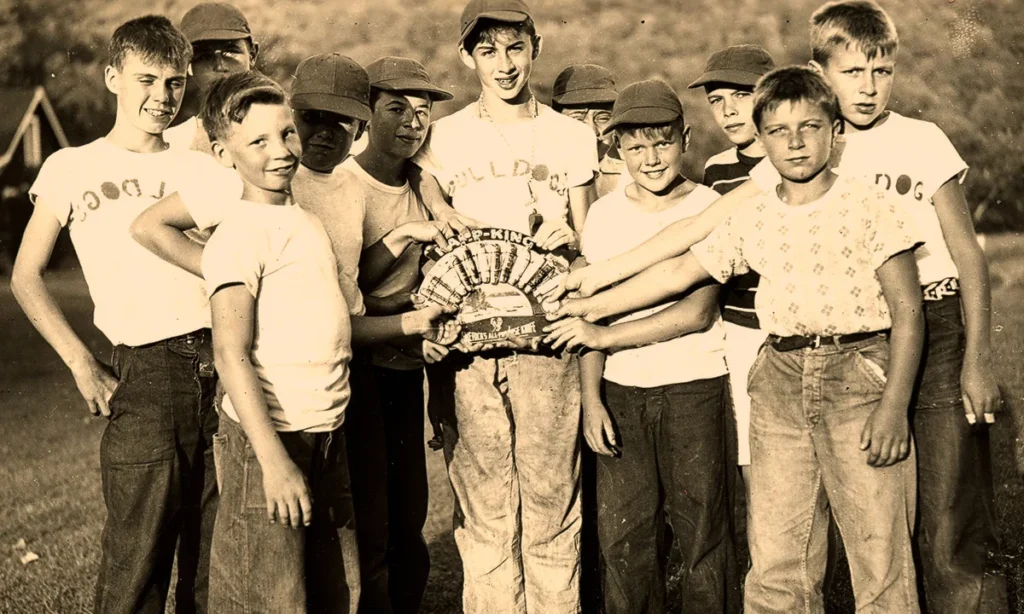
In the sweltering summer of 1954, twenty-two boys arrived at Robbers Cave State Park in Oklahoma for what they believed was a standard Boy Scouts camp. They were completely unaware that they were actually the subjects of a groundbreaking social psychology study orchestrated by Muzafer Sherif and his colleagues.
The researchers wanted to prove that competition for limited resources inevitably creates conflict, a concept known as Realistic Conflict Theory. This experiment would soon devolve into chaos, transforming well-adjusted middle-class children into warring factions in a matter of days.
The Eagles and The Rattlers
The participants were twelve-year-old boys from white, middle-class, Protestant backgrounds who did not know each other prior to the trip. The researchers split them into two distinct groups and kept them on separate sides of the 200-acre (81-hectare) park. For the first week, neither group knew the other existed.
During this first phase, the boys bonded with their respective teammates through hiking and swimming. They established their own internal cultures and hierarchies. One group named themselves “The Eagles” and the other “The Rattlers,” going so far as to stencil these names onto their shirts and flags to cement their identities.
From Sports to All-Out War
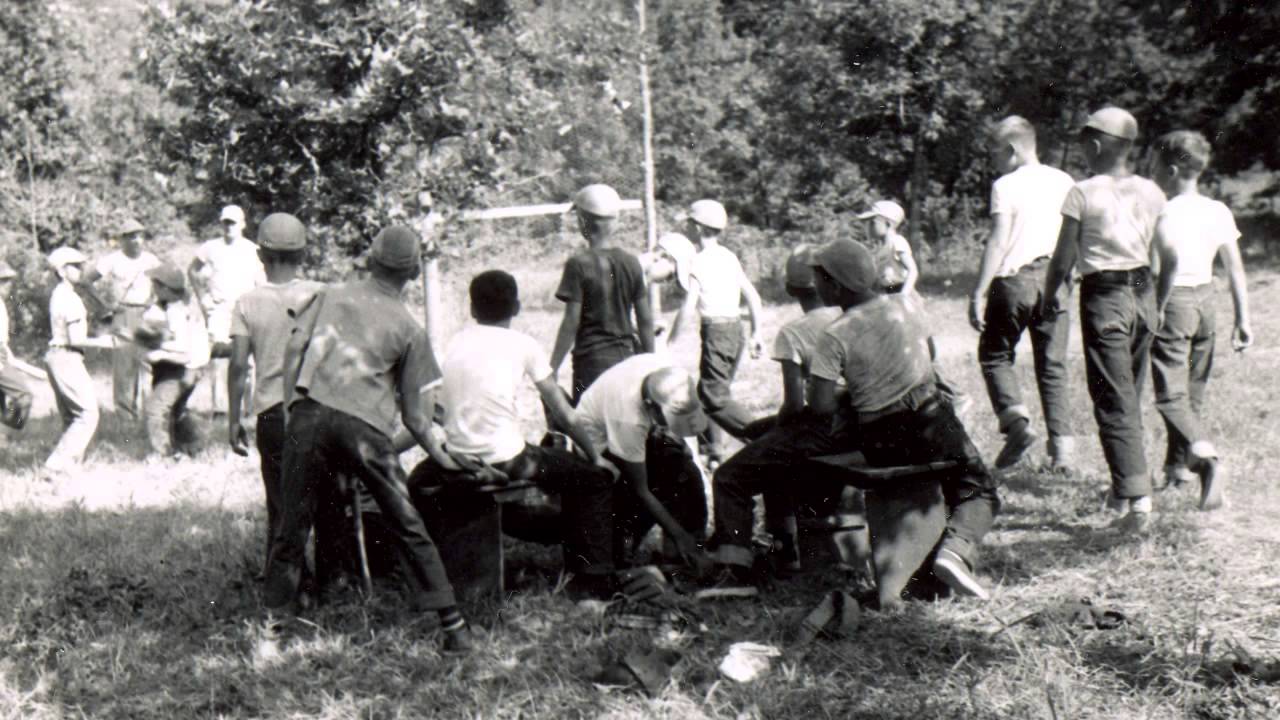
The second phase began when the researchers allowed the two groups to discover each other. Sherif immediately introduced a tournament of competitive games like baseball and tug-of-war. To raise the stakes, they offered a trophy and pocket knives to the winners, while the losers received nothing.
The friction was instant. The Rattlers staked a claim on the ball field and threatened anyone who touched their flag. Verbal taunts quickly escalated into physical action. After losing a challenge, the Eagles burned the Rattlers’ flag. In retaliation, the Rattlers raided the Eagles’ cabin, overturning beds and stealing private property. The hostility became so intense that the researchers had to physically separate the boys to prevent further violence.
The Power of Superordinate Goals
In the final phase, the researchers attempted to undo the hatred they had manufactured. Simply letting the boys hang out or watch movies together failed, as the groups just used these opportunities to trade insults and food scraps. Sherif realized that the only way to reduce conflict was to introduce “superordinate goals” which are objectives that require cooperation to succeed.
The researchers rigged the camp’s water supply to fail, blaming it on vandals. The boys from both sides were forced to inspect the water lines together. When they found a clogged faucet, they worked side-by-side for forty-five minutes to clear it. When the water finally flowed, the groups celebrated together. Later, when the camp could not pay for a movie rental, the boys pooled their money to cover the cost. These shared missions successfully bridged the divide, and by the end of camp, the former enemies were eating lunch at the same tables.