
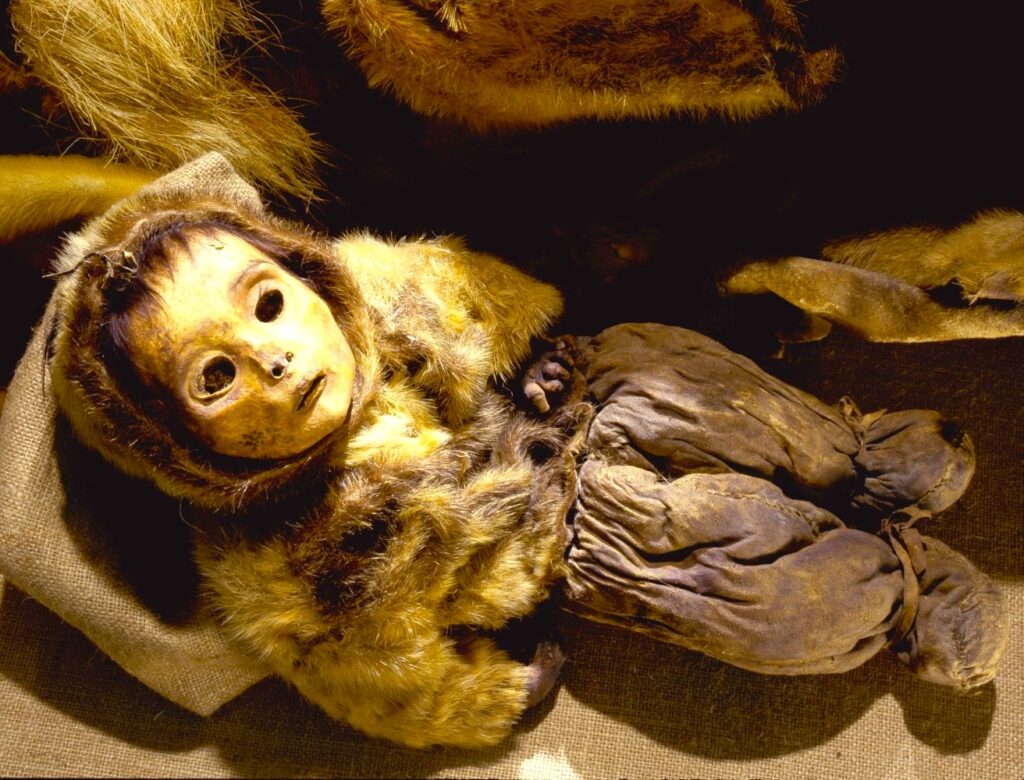
In 1972, two brothers hunting grouse in northwestern Greenland stumbled upon a rocky crevasse that held a find dating back to approximately 1475. Beneath a shallow stack of stones lay eight bodies, so perfectly intact that the hunters initially believed they had found people who had died recently.
These individuals belonged to the Thule culture, the ancestors of modern Inuit, and their bodies were not preserved by intentional embalming but by the natural forces of the Arctic environment. The frigid temperatures and dry winds effectively freeze-dried the remains, halting decomposition for five centuries and providing an exact look at life in the 15th century.
A Cold Grave in the Cliffs
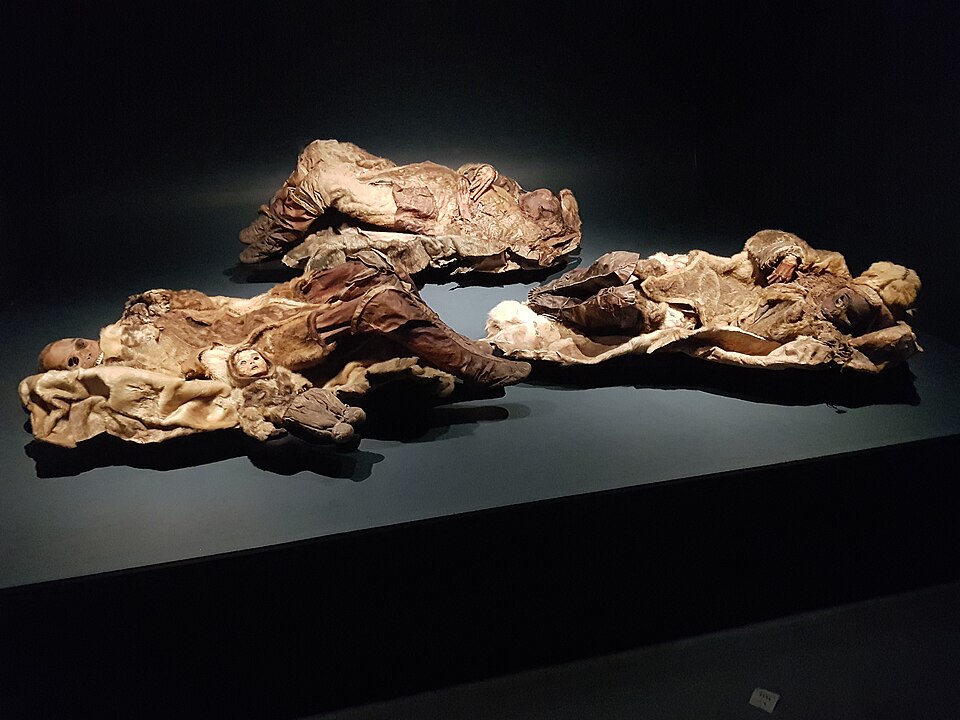
The discovery site at Qilakitsoq contained two separate graves. The bodies were stacked vertically, separated by layers of animal hides. In total, the group consisted of six women and two children. Analysis of their DNA revealed that three of the women were sisters, and they were buried alongside their children and other relatives.
Because the site was protected from rain and snow by an overhanging rock, and the air circulated freely through the stones, the bodies remained dry. This combination of factors preserved their skin, hair, eyebrows, and even their fingernails.
The Mystery of the Infant
Among the most notable of the remains is a six-month-old baby boy. Because of his small size, his body froze much faster than the adults, leaving him in a state of near-perfect preservation. Modern forensic examinations suggest a grim reality regarding his death.
While the adults showed signs of various ailments such as kidney stones and tumors, the infant appeared healthy. Thule custom often dictated that if a mother died, her nursing infant would be buried with her, either while still alive or through suffocation, to ensure they remained together.
Evidence of Daily Survival
The mummies provide specific data regarding the diet and health of the Thule people. Scans of their intestines revealed a diet consisting of 75% marine life, such as seals, and 25% terrestrial animals like reindeer. Scientists also found traces of moss and charcoal in their systems. Their lungs were heavily coated in soot, a result of living in small skin tents or sod houses heated by seal-oil lamps.
Furthermore, infrared photography uncovered intricate facial tattoos on the women. These marks, created by threading soot-covered sinew under the skin, consisted of dots and lines on the forehead and chin, indicating their specific family lineages.
Arctic Wardrobes and Craftsmanship
The group was buried in 78 layers of clothing made from the skins of seals and birds. These garments were expertly sewn to provide insulation against temperatures that drop below -30 degrees Celsius (-22 degrees Fahrenheit).
The outfits included double-layered parkas and waterproof boots. Today, four of these individuals are kept at the Greenland National Museum in Nuuk, where they remain in temperature-controlled environments.