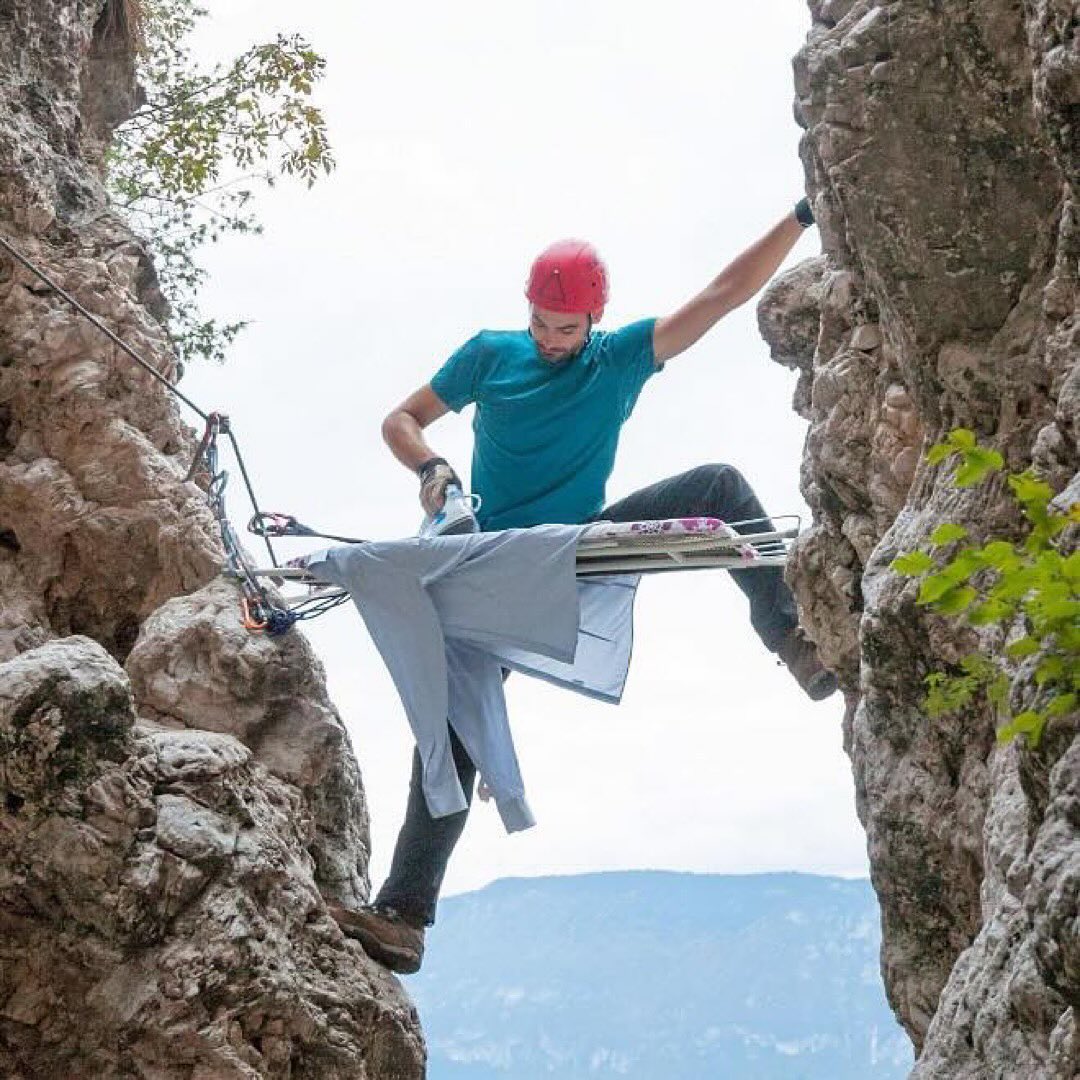
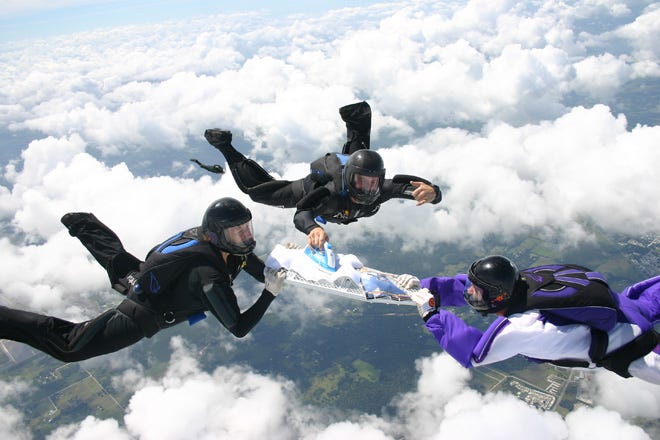
In 1997 a resident of Leicester named Phil Shaw returned home from a long day at a knitwear factory to a pile of wrinkled laundry. Preferring the outdoors to domestic chores, he decided to combine the two. He grabbed his ironing board, headed into his garden, and began pressing shirts in the fresh air.
When his neighbor asked what he was doing, Shaw replied, “Extreme ironing.” This simple moment of suburban multitasking sparked a global phenomenon that would eventually see competitors scaling the faces of mountains and diving into the depths of the ocean with cordless irons and foldable boards.
From a Leicester Garden to the Global Stage
What started as a joke quickly gained traction as Shaw, under the pseudonym “Steam,” began a mission to promote the activity as a legitimate sport. By 1999 he was embarking on a world tour to spread the word.
The premise was simple yet physically demanding: contestants had to carry a full-sized ironing board and a functional iron to a remote or hazardous location and press a garment of clothing. The results had to be documented with photographic evidence to prove the iron made contact with the fabric under extreme conditions.
The First World Championships
The sport reached its competitive peak in 2002 when the first Extreme Ironing World Championships were held in Valley, Germany. Teams from ten different countries, including Great Britain, Austria, Chile, and Croatia, arrived to compete for the top title.
The event featured five distinct categories: urban, water, forest, mountain, and freestyle. Judges did not just look at the difficulty of the location. They inspected the pressed garments to ensure they were actually crisp and free of wrinkles. A team from Great Britain took the gold, while an Austrian group secured the silver.
Breaking Records Underwater and On Ice
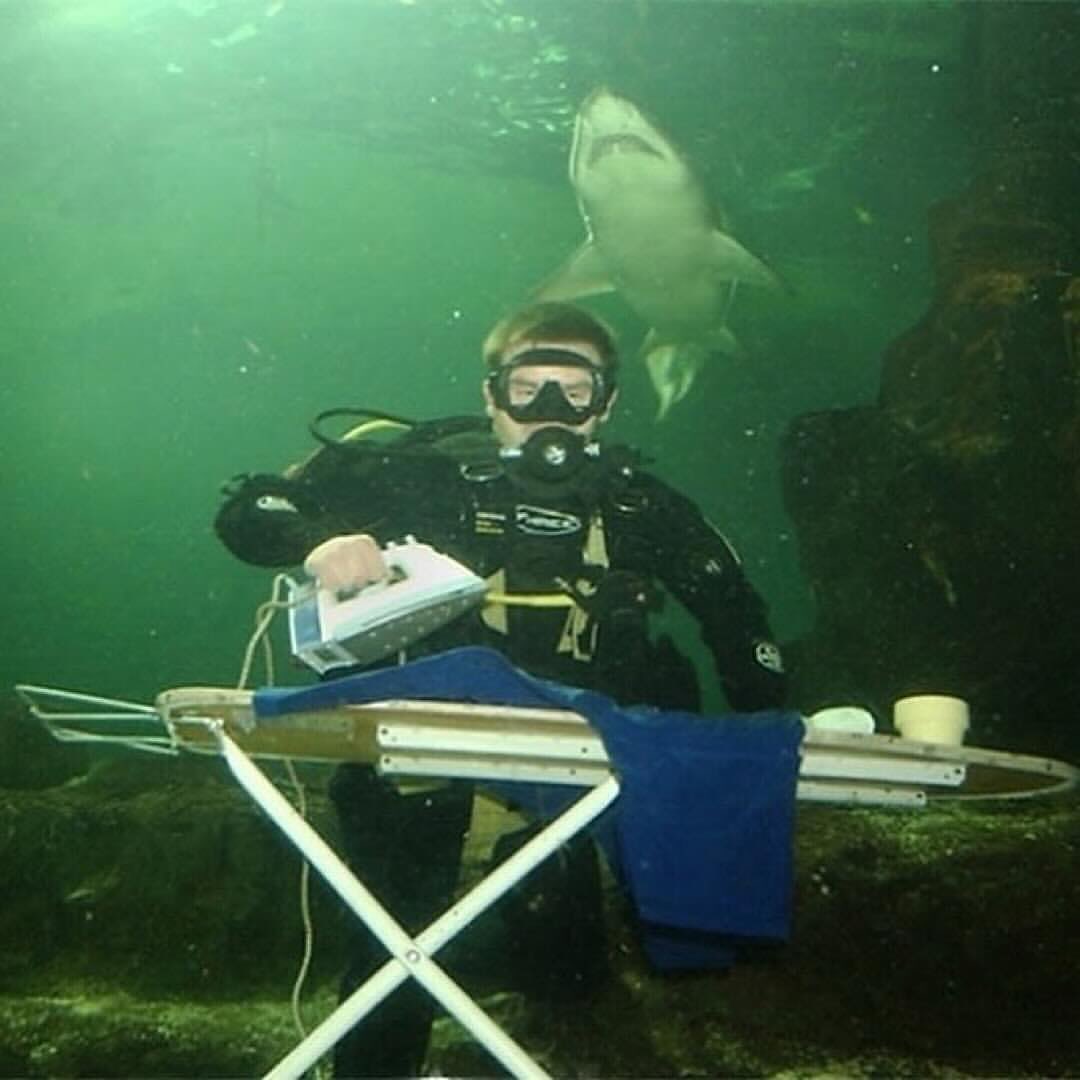
The community grew increasingly ambitious in the following years. In 2003 John Roberts and Ben Gibbons pressed a Union Jack flag at the Mount Everest base camp at an altitude of 5,400 meters (17,716 feet). Others took the heat underwater.
In 2011 a group of 173 divers in the Netherlands set a world record for the most people ironing simultaneously subsea. They spent ten minutes hovering over boards at the bottom of a swimming pool. National geographic features became the ultimate backdrop, with participants hanging from cliffs or standing in the middle of frozen motorways.
The Mechanics of Extreme Pressing
While the iron does not always need to be hot if there is no power source, the board must be official size. In freezing temperatures, such as those found on glaciers, the steam often freezes instantly.
In 2012 Phil Shaw officially retired from the sport after running the Hastings Half Marathon while ironing garments along the 21-kilometer (13.1-mile) route. He finished the race in two hours and four minutes.