
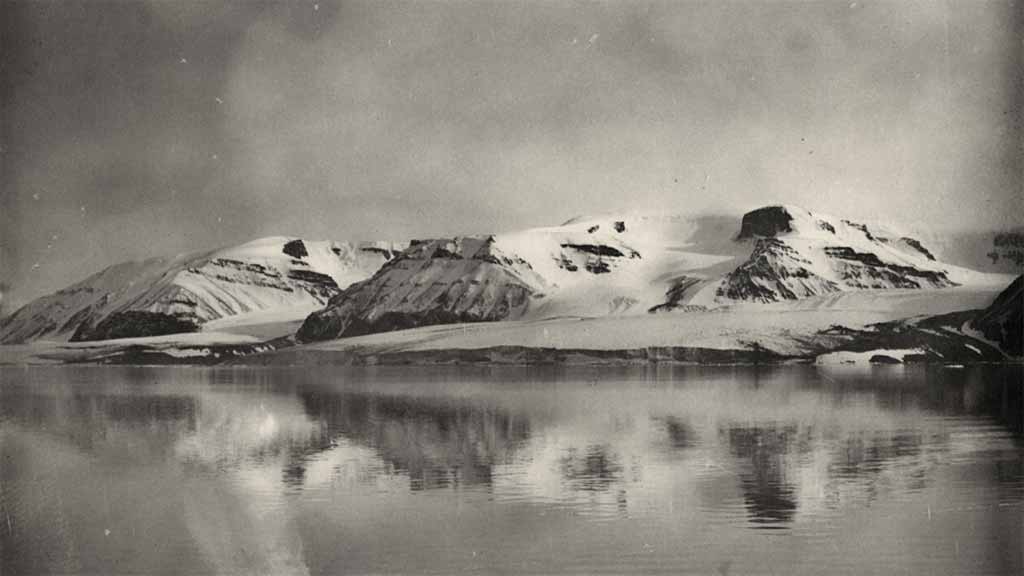
In the early 20th century, the map of the world still held blank spaces, but none was as tantalizing as the freezing Arctic Ocean. The Crocker Land Expedition of 1913 set out from New York to conquer a newly discovered landmass at the top of the globe.
This ambitious mission promised fame, scientific breakthroughs, and the charting of an unseen northern continent. The journey instead became an intense struggle for survival against the harshest elements on Earth, defined by a shocking deception and a tragic outcome. The explorers packed their sleds and ventured into the freezing unknown, only to find that the polar ice held secrets far more dangerous than expected.
The Allure of an Eighth Continent
In 1906, American explorer Robert E. Peary reported seeing a massive, snow-clad island glimmering in the distance from the northwestern shore of Ellesmere Island. Peary named this new territory Crocker Land and estimated it lay approximately 130 miles (209 kilometers) out in the Polar Sea.
The American Museum of Natural History, the American Geographical Society, and the University of Illinois funded a major expedition to map this territory. Led by MacMillan, the team prepared to brave temperatures plunging many degrees below zero to claim the prize.
Disaster Before the Ice
The expedition faced severe problems almost immediately after leaving the Brooklyn Navy Yard in July 1913. Their primary ship, the steamer Diana, struck rocks two weeks into the voyage because the captain was drunk.
The crew abandoned the damaged vessel and transferred their supplies to another ship, the Erik, which brought them to Etah, Greenland. The men constructed an eight-room base camp to serve as their headquarters. Attempts to establish radio communications failed completely.
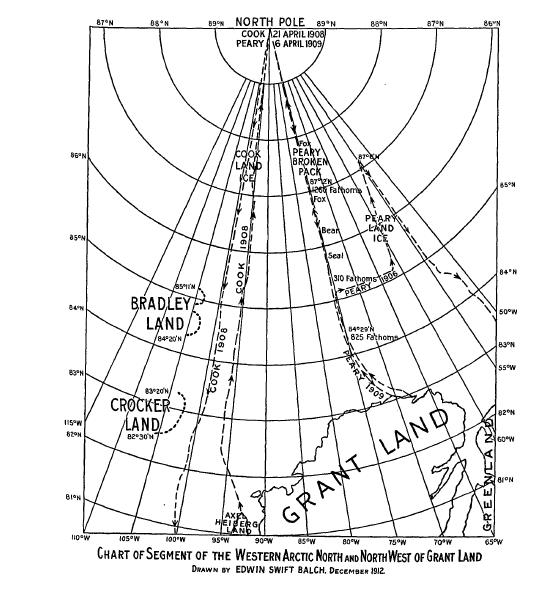
Chasing a Frozen Mirage
In March 1914, MacMillan, Fitzhugh Green, W. Elmer Ekblaw, and several Inuit guides began the 1,200-mile (1,931-kilometer) trek across the treacherous sea ice. Ekblaw suffered severe frostbite and had to be evacuated back to Etah. The remaining party pushed forward over open water patches and treacherous ice.
In April, after traveling roughly 125 miles (201 kilometers), the men saw a massive landmass on the horizon. Piugaattoq, an experienced Inuit hunter, informed the Americans that the land was merely “poo-jok,” a mist or mirage. MacMillan insisted on pushing forward for five more days before admitting Piugaattoq was correct. The continent was a Fata Morgana, a rare optical illusion. Crocker Land did not exist.
Four Years in the Harsh North
The revelation of the nonexistent island fractured the team. During a separate surveying trip, Fitzhugh Green shot and killed Piugaattoq under highly suspicious circumstances. The expedition was originally planned to last only two years, but multiple rescue ships became trapped in the thick ice.
The stranded team spent four grueling years in the Arctic. They survived by hunting and gathering vital scientific data about the region before a successful rescue finally brought them home in August 1917.