
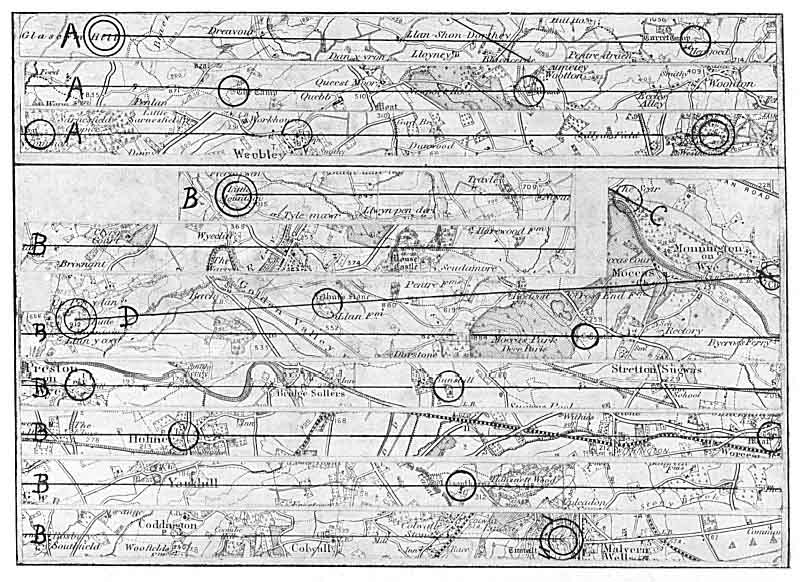
In 1921, an amateur archaeologist made a startling observation that birthed a century-long debate. He noticed that across Britain, perfectly straight lines connected natural and man-made monuments.
What began as a simple hypothesis about prehistoric navigation soon morphed into wild tales of alien communication, supernatural energy pockets, and mystical powers. Are these invisible grids an ancient secret left by early humans, or simply a mathematical illusion born out of sheer coincidence? Discover the strange evolution of ley lines and the skeptics who challenged them.
A Photographer’s Astounding Revelation
Alfred Watkins, born in Hereford, England, in 1855, was an affluent businessman and a respected landscape photographer. He possessed an intimate knowledge of his region and even invented the Watkins Bee Meter, a timing chain device for traveling photographers. On June 30, 1921, while standing on a hill in Blackwardine, Watkins experienced what he called a “rush of revelations”. Looking at a map, he observed that multiple ancient sites aligned perfectly.
He coined these alignments “ley lines”. In his book The Old Straight Track, Watkins argued that these routes were strictly practical, allowing prehistoric societies to travel rapidly for trade. However, British archaeologists dismissed the hypothesis, noting that walking perfectly straight over steep terrain was highly impractical.
The Shift to Supernatural Earth Energies
Watkins viewed his discoveries as purely scientific and never attributed mystical properties to the alignments. Decades later, his foundation took a drastic turn.
- In 1961, Tony Wedd suggested prehistoric humans used the lines to communicate with aliens, claiming the paths guided visiting UFOs.
- In 1969, John Michell wrote The View Over Atlantis, introducing the concept of “Earth energies”.
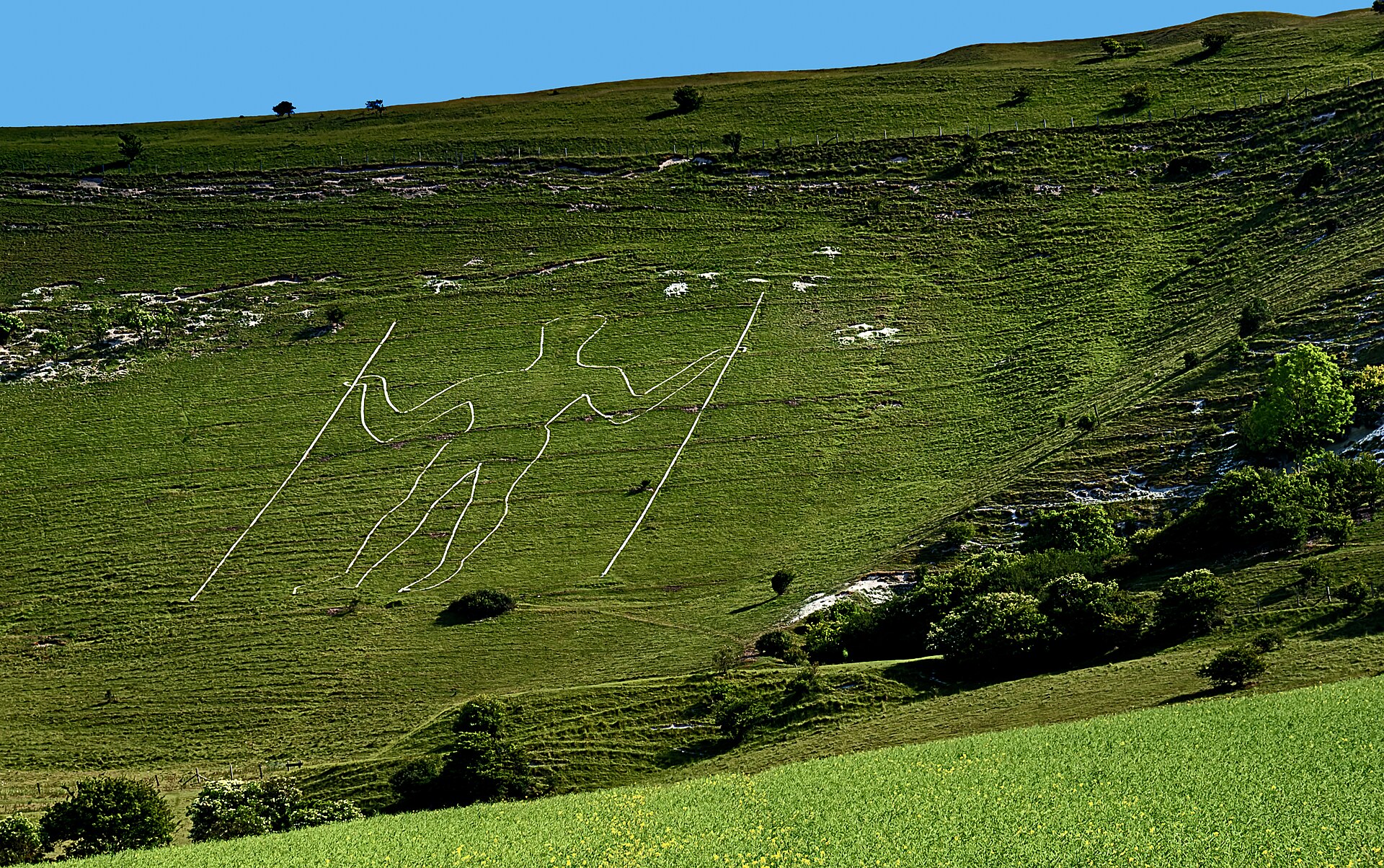
Ley lines transformed into invisible rivers crisscrossing the globe, carrying supernatural energy with concentrated pockets at their intersections. Throughout the 1960s and 1970s, the concept intertwined with counterculture movements and neo-paganism. Belief in these grids persists; in 2023, an artist named bone tan jones walked a purported ley line from London to Stonehenge, claiming a connection to the Earth’s moving energy.
Mathematical Coincidence and the Woolworths Experiment
Despite the mystical evolution, scientists approached the alignments with extreme skepticism. In the 1980s, scholars Tom Williamson and Liz Bellamy discovered a massive density of archaeological landmarks across England. Because of this sheer volume, anyone could draw a straight line in any direction and easily connect multiple historic locations.
Later, researcher Tom Brooks argued that ancient humans built 1,500 sites based on isosceles triangles, suggesting advanced geometry existed in Britain 5,000 years ago. To highlight how easily this data could be skewed, mathematician Matt Parker applied Brooks’ exact techniques to modern Woolworths stores.
Parker successfully mapped an exact equilateral triangle connecting three discount stores around Birmingham. His tongue-in-cheek experiment proved that by choosing a few specific locations and ignoring the vast majority, anyone could map alignments to support almost any argument.