
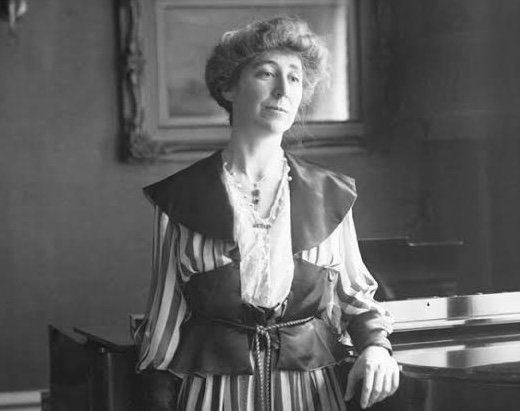
On December 8, 1941, one day after the attack on Pearl Harbor, an elected official in Washington, D.C., locked herself inside a Capitol cloakroom telephone booth to escape an angry mob of reporters and citizens.
Moments earlier, Jeannette Rankin had done what no other member of the United States Congress was willing to do by casting the sole vote against entering World War II. That controversial vote was only one chapter in the career of the first woman ever elected to federal office in America, who made history decades before women even had the nationwide right to vote.
How Jeannette Rankin Won the Right to Vote and a Seat in Congress
Born on a ranch near Missoula, Montana, on June 11, 1880, Rankin worked as a dressmaker, furniture designer, teacher, and social worker before joining the women’s suffrage movement. She organized campaigns in Washington, New York, and Montana. Her grassroots work helped convince Montana voters to grant women unrestricted voting rights in November 1914.
Two years later, in 1916, Rankin ran as a Republican for one of Montana’s at-large seats in the U.S. House of Representatives.
Campaigning at train stations, street corners, ranch potluck suppers, and one-room schoolhouses, she finished second in the general election. This victory made her the first woman in U.S. history elected to Congress, nearly four years before the ratification of the Nineteenth Amendment. Her swearing-in brought a standing ovation from House members, marriage proposals in the mail, and a $5,000 offer from a toothpaste company to photograph her teeth.
Saying No to World War I and Fighting for the 19th Amendment
Just days after Rankin took office in April 1917, President Woodrow Wilson asked Congress to declare war on Germany. At 3:00 a.m. on April 6, Rankin joined 49 male colleagues in voting against entering World War I, stating, “I wish to stand for my country, but I cannot vote for war.”
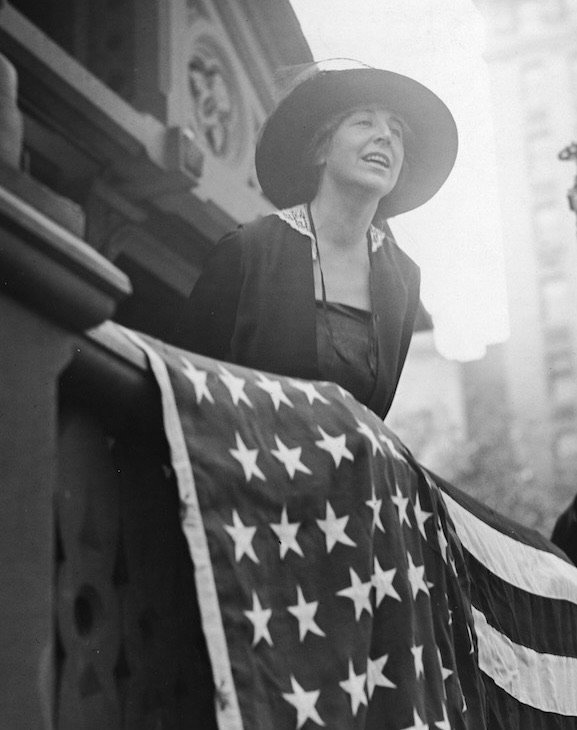
During her first term, Rankin also investigated working conditions at the Bureau of Engraving and Printing, resulting in an eight-hour workday limit for federal workers there. In January 1918, she opened the first House debate on a constitutional amendment granting universal suffrage to women. Although that initial resolution failed in the Senate before passing the following year, Rankin became the only woman in Congress to cast a vote for national women’s suffrage.
The Lone Vote Against World War II After Pearl Harbor
After losing a 1918 Senate bid, Rankin spent two decades lobbying for peace organizations, helping found the American Civil Liberties Union in 1920, and living on a Georgia farm without electricity or plumbing. In 1940, at age 60, she won back a House seat in Montana after speaking at 52 of her district’s 56 high schools.
When Japan attacked Pearl Harbor on December 7, 1941, opposition to the war vanished across Congress, except for Rankin. Amid hisses and boos from the gallery on December 8, she cast the sole vote against declaring war on Japan in a 388-to-1 decision. “As a woman I can’t go to war,” she stated, “and I refuse to send anyone else.” Capitol Police had to escort her from the cloakroom phone booth to her office, where she received a telegram from her brother, Wellington, reading, “Montana is 100 percent against you.”
Marching Against the Vietnam War at Age 87
Rankin did not seek reelection in 1942 and later traveled frequently to India to study Mahatma Gandhi’s teachings. In January 1968, at age 87, she returned to Washington to lead 5,000 women in the Jeannette Rankin Brigade, marching from Union Station to the Capitol steps to protest the Vietnam War. She died on May 18, 1973, in Carmel, California, at age 92, leaving her estate to assist unemployed older women workers.