
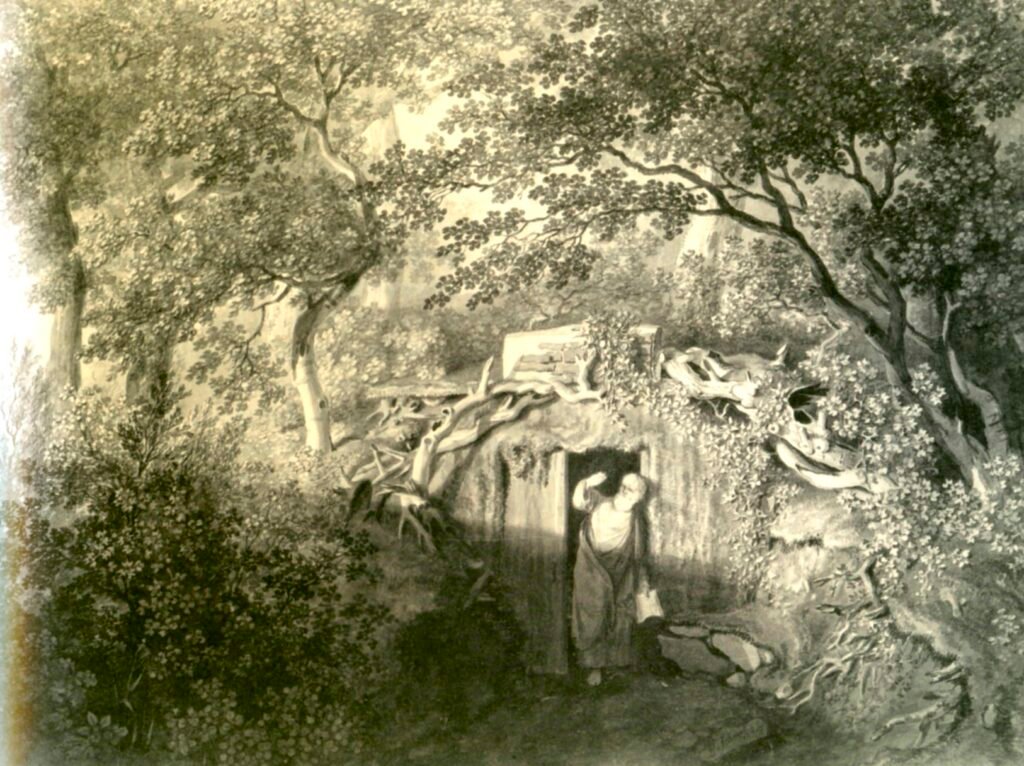
In eighteenth and nineteenth-century Europe, wealthy landowners transformed their expansive estates by hiring real-life humans to serve as ornamental garden hermits. Long before the invention of the ceramic lawn gnome, aristocratic elites sought to display both their immense material wealth and a fashionable appreciation for intellectual melancholy.
These human garden ornaments lived in purpose-built hermitages, grottoes, shacks, or follies on private properties, functioning as living fixtures designed to evoke contemplation and solitude.
Newspaper Want Ads and Extreme Rules
To secure a hermit for an estate, wealthy landowners frequently placed advertisements in local newspapers. These notices sought men willing to commit to long periods of total seclusion, typically for a seven-year contract. A famous advertisement placed by Charles Hamilton outlined strict and bizarre rules for his hermit-in-residence.
The hired individual was required to wear a camlet robe, consume only water and food provided from the main house, and never cut his hair, beard, or fingernails under any circumstances. Furthermore, the hermit was forbidden from straying beyond the boundaries of the estate or exchanging even a single word with the household servants.
Daily Life and Duties in the Hermitage
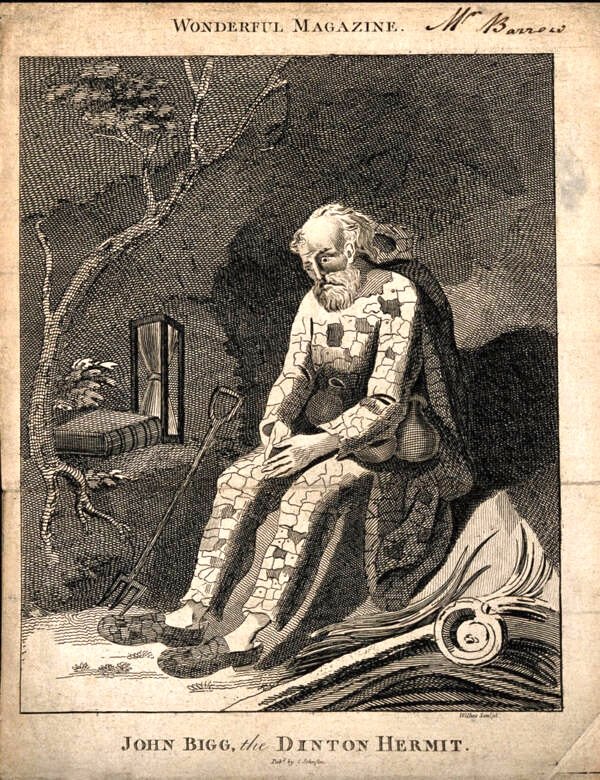
For those who agreed to the terms, life inside a small cave or hut was straightforward yet grueling. Property owners provided basic living items including a Bible, an hourglass as a timepiece, optical glasses, a mat for the feet, and a hassock for a pillow.
While some hermits were expected to remain entirely silent as a physical representation of mortality and solitude, others performed light agricultural duties, tended to estate guests, or helped serve drinks at garden parties. Property owners without a real hermit often built empty hermitages containing a chair, table, and classical text to suggest that a hermit had recently lived there or would soon arrive.
The Decline and Evolution of the Trend
The practice of maintaining a human garden hermit peaked among the British aristocracy during the eighteenth and early nineteenth centuries. Historical examples include the Lulworth Estate in Dorset and the landscaped grounds of Painshill, where Charles Hamilton’s first hired hermit lasted merely three weeks before being dismissed after authorities discovered him visiting a local pub.
By the 1830s, cultural and technological shifts away from excessive estate novelties caused the trend to fade away. Ultimately, the human garden hermit evolved into the familiar ceramic garden gnome seen on lawns today.