
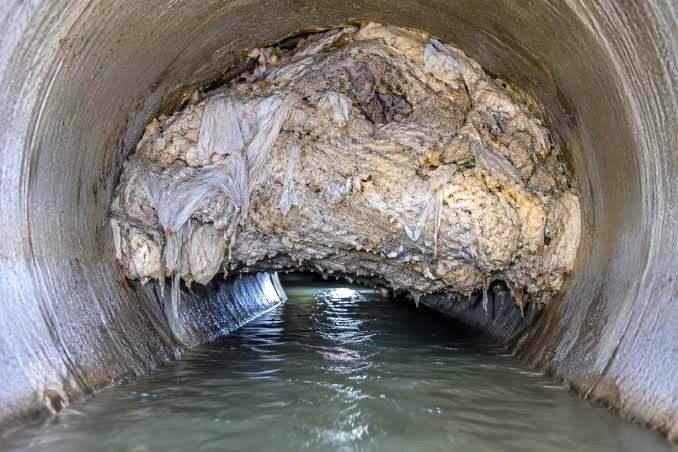
Deep beneath the streets of major cities, massive, rock-hard obstructions are choking sewer systems and causing millions of dollars in damage. These are known as “fatbergs.” One discovered in the London neighborhood of Whitechapel weighed 130 tonnes (128 long tons) and stretched for more than 250 meters (820 feet). The phenomenon requires a specific chemical reaction to form, and as the use of disposable wipes increases, these underground masses are becoming a worldwide infrastructure crisis.
The Chemical Recipe for a Fatberg
A fatberg is not simply cooking oil that has cooled and congealed in a pipe. It is the result of a chemical process called saponification. When fats, oils, and grease (FOG) enter the sewer system, they mix with water, calcium, and free fatty acids. This chemical reaction converts the liquid oil into a solid, soap-like substance that can become as hard as concrete.
The physical structure of the fatberg is reinforced by non-biodegradable solids that humans flush down toilets or wash down sinks. Wet wipes, specifically those marketed as “flushable,” are the primary structural binder. Other common materials found embedded within fatbergs include cotton buds, sanitary napkins, condoms, hypodermic needles, and food waste processed through garbage disposal units.
How Rough Pipes Trap Debris
Fatbergs typically begin forming in areas where the fluid flow within the sewer pipe becomes turbulent. In a perfectly smooth pipe, water flows freely. However, when the fluid hits an obstruction, it creates a swirl that catches and holds debris.
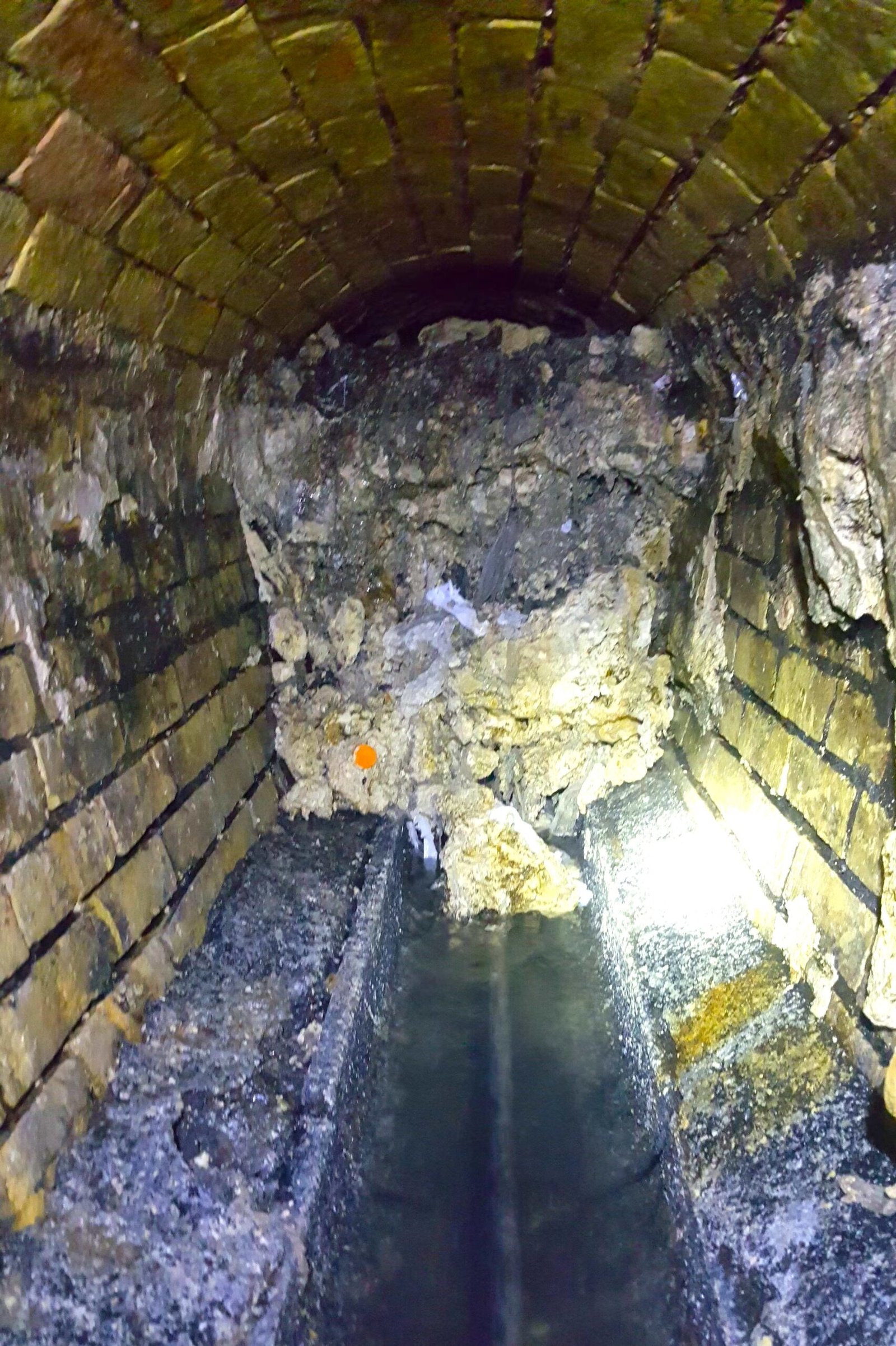
These snags occur at damaged brickwork, tree root intrusions, or areas where surplus cement drips into the pipe. The problem is particularly severe in older infrastructure, such as the Victorian-era sewer systems found beneath Great Britain. Once the initial debris is trapped at these rough points, the saponification process binds more passing fats and solids, causing the mass to grow until it completely blocks the pipe. In the United States, grease combined with disposable wipes causes almost half of all sewer blockages.
Overflows, Biodiesel, and Perfume
When a fatberg completely blocks a sewer line, it causes sanitary sewer overflows, forcing untreated human waste directly into the environment. Removing them requires specialized heavy equipment and intense manual labor.
Once extracted, however, the waste can be repurposed. The massive Whitechapel fatberg was partially processed and converted into biodiesel fuel. In the UK, researchers have also treated sterilized fatberg material with specialized bacteria to produce a chemical compound with a pine-like scent, which has been utilized as an ingredient in perfumes.
Public Campaigns and Labeling Standards
To mitigate the formation of fatbergs, municipalities are focusing on stopping the ingredients from entering the system. Many U.S. cities now mandate that restaurants and food processing facilities install grease interceptors.
Environmental organizations, including the Marine Conservation Society, have pressured the UK’s Advertising Standards Authority to ban the word “flushable” on wet wipe packaging. In 2022, Australia and New Zealand established a strict product labeling standard to define precisely what materials can legally be flushed.