
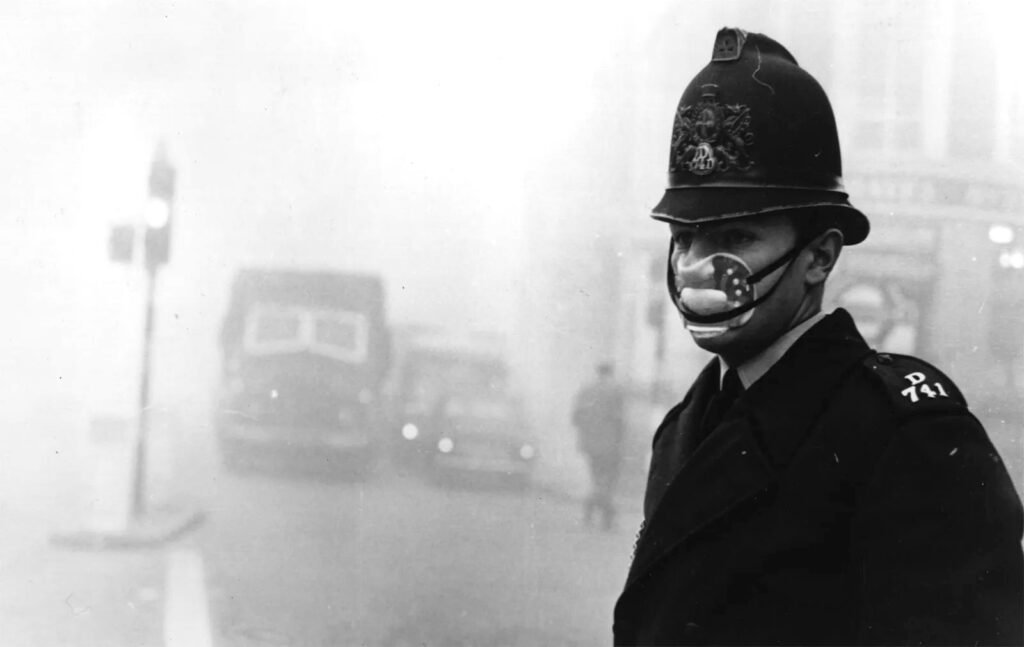
On December 5, 1952, a cold front settled over England, prompting residents to shovel extra coal into their stoves. What seemed like a routine winter chill quickly engineered one of the deadliest environmental disasters in human history. Within hours, a yellowish-black cloud swallowed the capital, blinding drivers and seeping under doors.
Over the next five days, the Great Smog of London would choke the streets, paralyze public transport, and ultimately kill an estimated 12,000 people. It took scientists nearly 65 years to completely unravel the exact chemical reaction that turned the city’s air into a toxic, acidic trap.
The Anticyclone That Trapped London
The crisis began with a freak combination of weather patterns. A high-pressure anticyclone stalled directly over the Thames Valley, creating a severe temperature inversion. A layer of warm air formed a lid over the freezing, windless streets below. At the same time, post-war economic conditions meant residents were burning “nutty slack,” a cheap, low-grade coal packed with sulphur.
Chimneys pumped thousands of tons of smoke, sulphur dioxide, and nitrogen dioxide into the stagnant air. With zero wind to disperse the fumes, the pollution had nowhere to go but down.
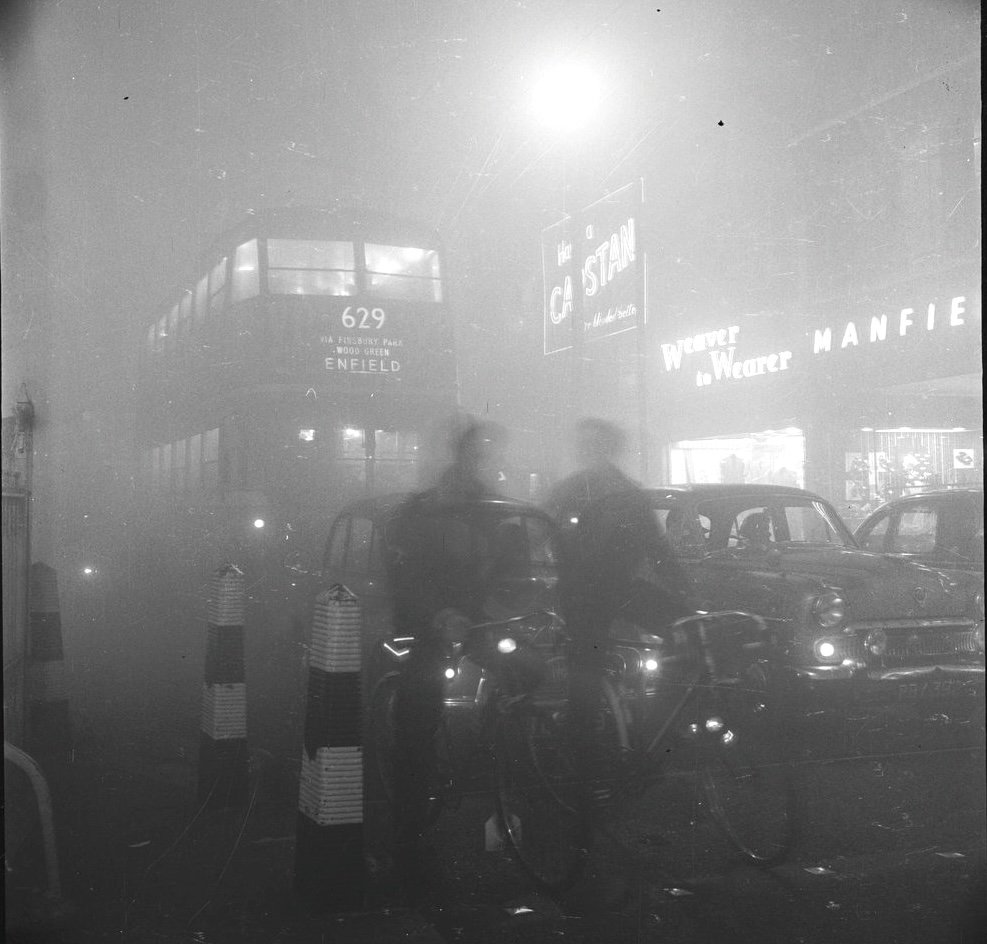
A Toxic Yellow Cloud Blinds the Streets
By the weekend, the air turned a sickly greenish-yellow. Visibility dropped to mere inches. The smog grew so dense it forced the city to a complete standstill. Drivers abandoned their cars in the middle of the road. Pedestrians shuffling along the pavements had to drag their feet against the curbs just to navigate.
The foul-smelling fog even penetrated indoor spaces, forcing cinemas and theaters to cancel screenings because audiences could not see the screens. Smog masks sold out at local chemists, but they offered little protection against the microscopic pollutants.
The Devastating 1952 Death Toll
While London was famous for its fog, this specific cloud was actively lethal. The water droplets in the thick air mixed with the trapped sulphur dioxide and nitrogen dioxide, converting into concentrated sulphuric acid. Residents were literally breathing in acid.
Hospitals flooded with patients suffering from severe respiratory tract infections, hypoxia, and acute bronchitis. Initial government reports logged 4,000 fatalities, but modern medical researchers later reviewed the mortality charts. The final data revealed that the five-day disaster caused between 10,000 and 12,000 deaths.
Cracking the Chemical Code Decades Later
The catastrophe forced the UK government to pass the Clean Air Act of 1956, financially incentivizing citizens to switch to gas or coke heating.
However, the exact chemical mechanism of the disaster eluded experts until 2016. An international team of scientists finally proved that nitrogen dioxide, another byproduct of coal burning, facilitated the rapid conversion of sulphur dioxide into fatal sulphuric acid particles upon hitting the natural fog.