
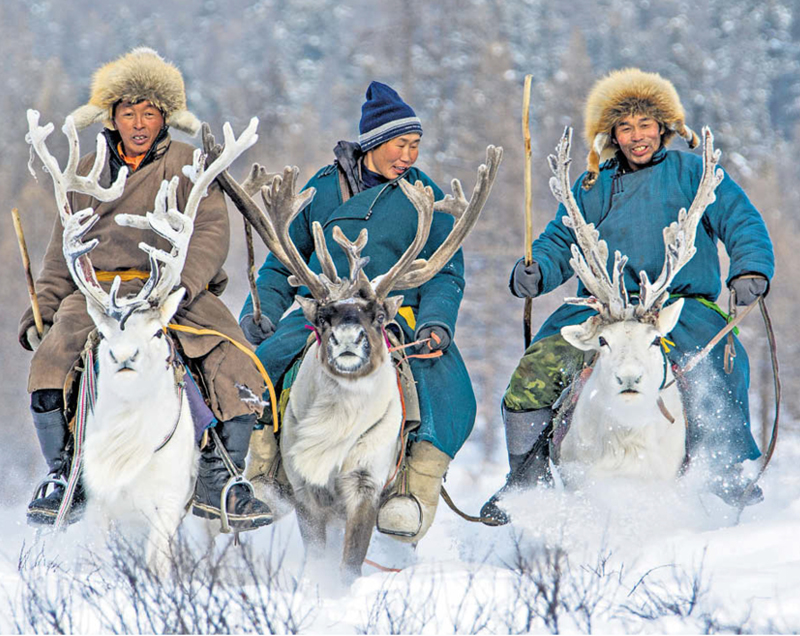
Deep within the freezing, mountainous taiga of northern Mongolia, a tiny group of semi-nomadic herders survives by riding and living entirely alongside domesticated reindeer. Numbering just roughly two hundred individuals, the Dukha people, also known as the Tsaatan, exist in one of the most remote regions on Earth.
They move their camps every few weeks through the dense forests of Khövsgöl Province, completely dependent on their reindeer herds for daily transportation, milk production, and sheer survival in the wild.
Daily Taiga Life and Reindeer Transportation
The Dukha community is fundamentally structured around the care of their animals. Unlike other global herders who strictly use sledges, the Dukha use their reindeer as pack animals and for direct horseback-style riding. They begin training the young reindeer when the animals reach two years of age. Children often ride without saddles, while adult men ride the fully grown castrated males.
A single male reindeer can carry loads of up to 40 kilograms (88 pounds) through the rugged taiga, making the frequent migrations between seasonal grazing grounds possible. The herders rely heavily on reindeer milk, transforming it into cheese and yogurt, which form the absolute staples of their daily diet.
Shamanism and the Sacred Forest Animals
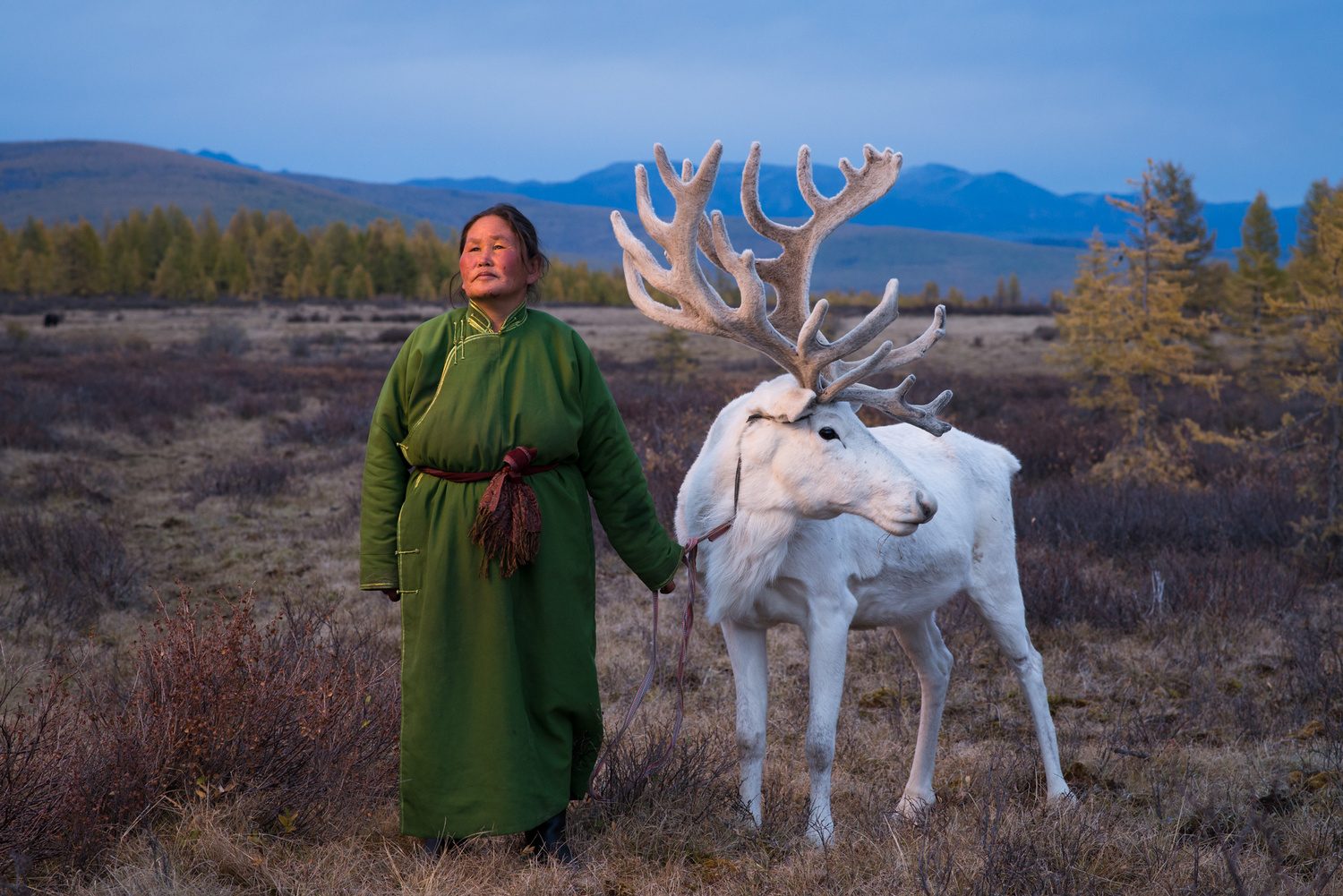
The Dukha practice Shamanism, Tengrism, and animism, holding the strict belief that all aspects of nature are powerful forces. Because they view the reindeer as completely sacred creatures, they rarely slaughter them for meat. Instead, the community supplements their food supply by hunting wild forest animals such as elk, moose, sable, bear, and wild boar.
When they do need physical materials, they utilize the reindeer without killing them. They carefully saw off the antlers each summer to carve tools and trade for traditional medicine, explicitly leaving pregnant females alone because their antlers help regulate their body temperatures.
Birch Bark Tents and the Cold Climate
Instead of the traditional felt yurts common across most of Mongolia, the Dukha build distinctive conical shelters known as ortz. These tall tents look physically identical to Native American tepees. A single medium-sized ortz requires the harvested bark from up to twenty-five birch trees.
The families set up these tents in small residential groups called olal-lal. They stay close together to share the daily tasks of milking, herding, and actively protecting the animals from local wolf packs during the long, harsh winter months.
Historical Border Closures and Collectivization
Originally originating from the Tuva Republic region, the Dukha freely crossed the borders until 1944 when Tuva was annexed by the Soviet Union and the border was completely sealed. The Dukha living in Mongolia then faced the state-run collectivization of their herds under the socialist government. In 1956, they were officially granted Mongolian citizenship and resettled at Tsagaan Nuur Lake.
Following the economic shifts of the 1990s, many returned to the taiga and their semi-nomadic herding practices, later facing modern difficulties like a 1990 brucellosis outbreak that drastically reduced the local animal populations.