
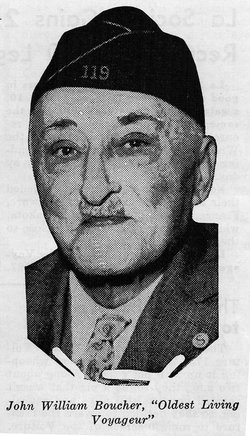
In early 1917, a grey-haired man stood naked before a Canadian army doctor in a recruitment office. When asked his age, the man threw back his shoulders and declared he was 48. The doctor, looking at the wrinkled skin and weathered hands of the applicant, smiled knowingly.
“And then some, like myself,” the medical officer replied. Despite the obvious falsehood, the doctor signed the papers. John William Boucher, actually 72 years old, had just successfully enlisted to fight in World War I. This specific moment marked the beginning of an extraordinary journey for the oldest enlisted soldier to serve on the Western Front.
A Veteran Returns to the Fray
John William Boucher was no stranger to conflict. Born in December 1844 in Ontario, Canada, he had already fought in a major war half a century earlier. As a teenager, he slipped across the border to join the Union Army during the American Civil War, serving in the 24th Michigan Infantry. After that war ended in 1865, he returned to a quiet civilian life in Canada.
When Germany marched on Belgium in 1914, Boucher felt a renewed call to service. However, his age was a significant barrier. Army regulations strictly capped enlistment at 45. For years, recruiters rejected him instantly. It was only when the 257th Canadian Railway Battalion raised its age limit to 48 that Boucher saw his chance to lie his way back into uniform.
Building Rails Under Fire
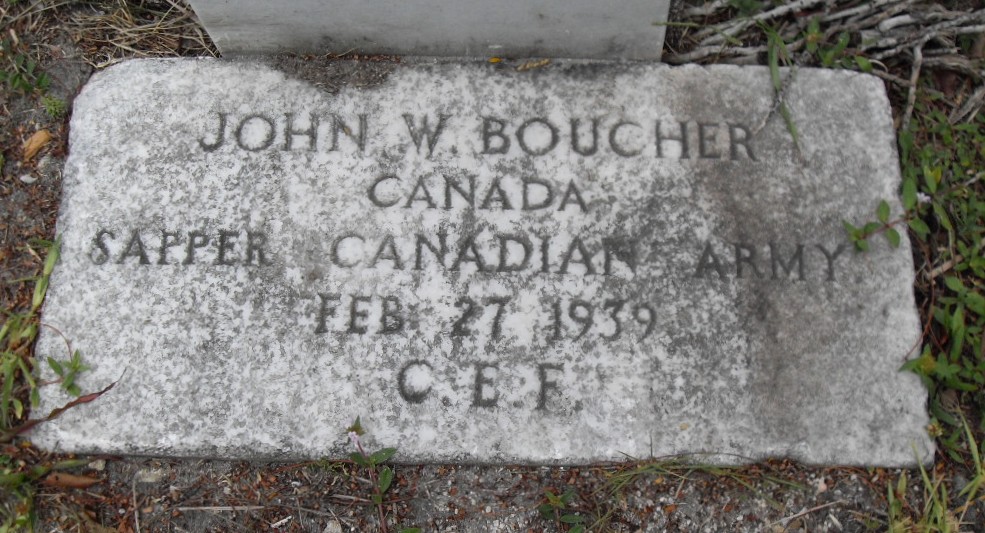
Boucher deployed to western France as a “sapper,” a private-grade military engineer. His unit’s task was grueling and dangerous. They built narrow-gauge railways to transport ammunition and supplies to the trenches. At an age when most men retired, Boucher marched through knee-deep mud and laid heavy steel rails. He worked alongside mules and younger men, refusing any special treatment.
The work placed him directly in the line of fire. German biplanes frequently targeted these supply lines. During one air raid, Boucher sprinted for cover behind an old iron boiler, only to trip and bury his face in the dirt as bombs tore up the fields around him. He later noted that it was astonishing they accomplished anything, as enemy shells often destroyed the tracks as fast as his team laid them.
The King and the Sapper
After eight months of hard labor, the physical toll became impossible to ignore. Rheumatism began to cripple his joints. A Red Cross corporal finally confronted him, demanding his true age rather than his “army age.” Boucher admitted he would soon turn 73. His time at the front was over.
Before returning to Canada, Boucher received a rare honor. He was summoned to Buckingham Palace to meet King George V. The King grasped the sapper’s hand and told him it did his eyes good to see a man of his age in khaki. Boucher returned to North America as a celebrity, touring the United States to raise funds and morale. He eventually passed away in 1939 at the age of 94, just months before the world erupted into war once again.