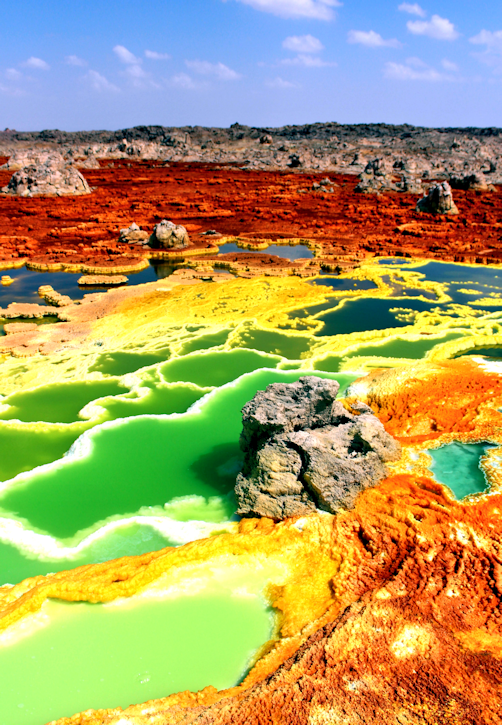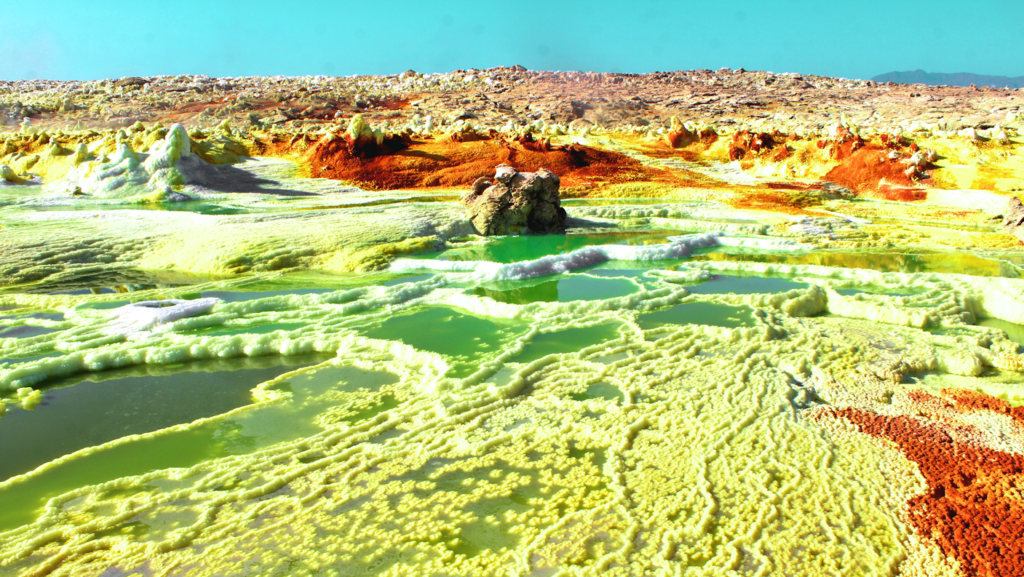
In the remote reaches of the Afar Region in Ethiopia, the ground bleeds neon green, vibrant yellow, and rust red. This is the Dallol hydrothermal system, a geological anomaly that appears more extraterrestrial than terrestrial.
Situated in the Danakil Depression, it holds the distinction of being the lowest land volcano on Earth, resting 130 meters (430 feet) below sea level. The landscape presents a violent and colorful clash of salt, acid, and subterranean heat, creating one of the most hostile environments on the planet.
A Volcanic Explosion in the Salt Flats
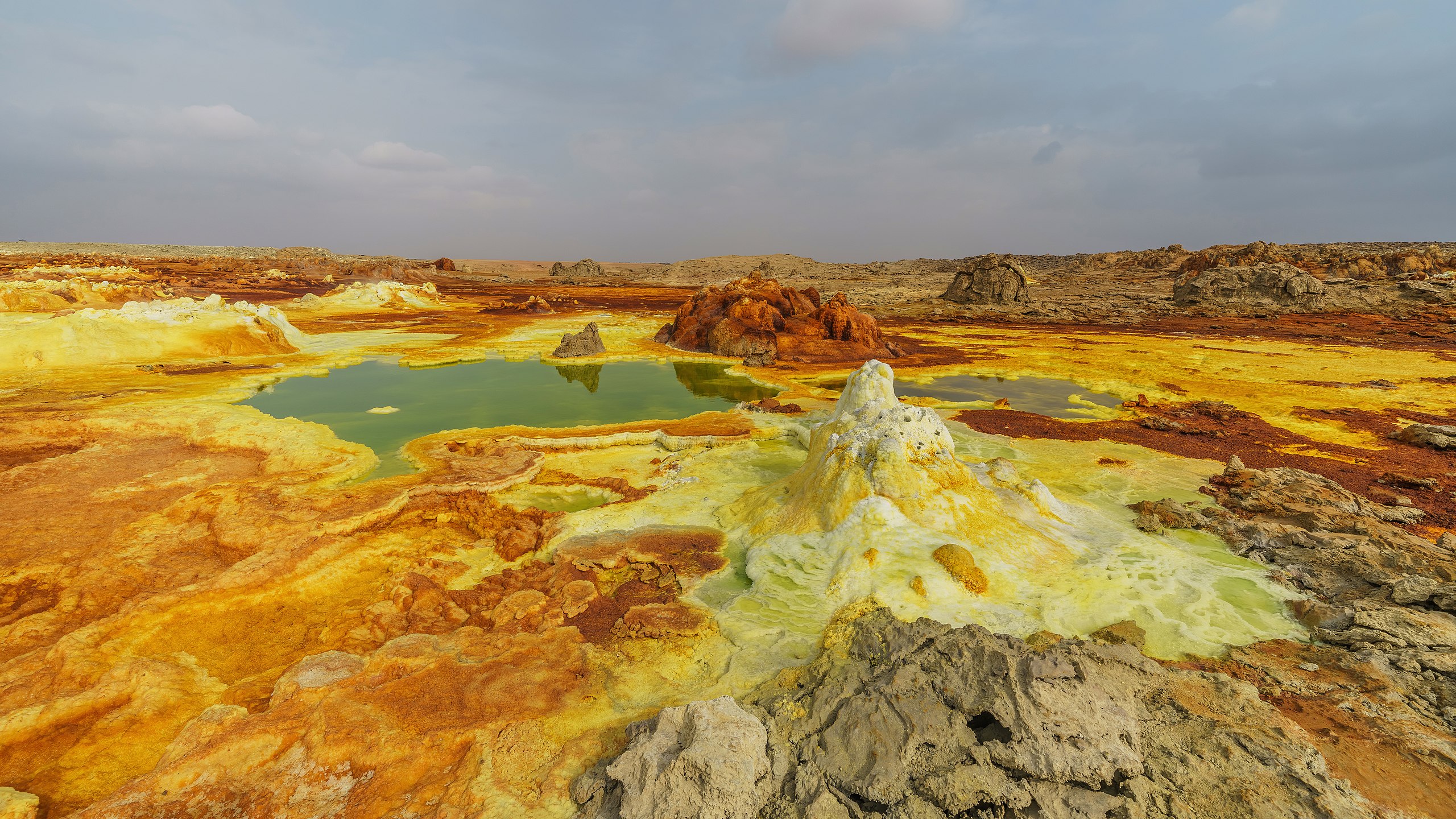
The current formation emerged relatively recently. In 1926, a massive phreatic eruption burst through the salt plains, creating the cinder cone structure visible today. This event was not an isolated incident but part of ongoing geological activity where basaltic magma interacts with vast Miocene salt deposits.
These salt layers formed millions of years ago when the Red Sea flooded the depression and subsequently evaporated. Deep underground, magma heats the groundwater, which rises and dissolves the salt. This process creates a supersaturated brine that erupts onto the surface, rapidly crystallizing to form sharp pillars and terraced basins.
The Chemistry of Neon Colors
The visual impact of Dallol comes from a complex chemical stew. The blinding whites, deep ochres, and toxic greens result from the oxidation of inorganic iron and the presence of sulfur. The pools found here are not just hot; they are chemically aggressive.
The water is hypersaline and extremely acidic, often registering a pH of less than 0.5. Geysers discharge this boiling brine, which solidifies almost instantly upon contact with the scorching air. The formations are ephemeral. White salt pillars oxidize over time, turning the bright, fresh structures into rusty brown towers as they age and weather.
Life at the Limits of Existence
Scientists flock to this site to understand the absolute limits of biological survival. The environment combines hyper-salinity, extreme acidity, and high temperatures. In 2016, researchers identified DNA sequences suggesting the presence of polyextremophiles—microbes capable of surviving multiple lethal conditions simultaneously.
However, subsequent studies in 2019 suggested that the most active, central pools contain chaotropic magnesium salts. These salts break down hydrogen bonds and destroy cellular structures, potentially rendering the center of the site completely sterile. It remains one of the rare surface locations where liquid water exists without supporting life.
The Abandoned City of Salt
The region surrounding the volcano holds the record for the highest average annual temperature ever recorded for an inhabited location. Between 1960 and 1966, the nearby settlement recorded an average temperature of 34.4°C (93.9°F), with daily highs frequently exceeding 46°C (115°F).
A ghost town, also named Dallol, stands near the hydrothermal fields. Built from blocks of salt, this settlement served as a base for potash mining operations in the early 20th century. The British dismantled the rail link after World War II, and the site was eventually abandoned. Today, the ruins remain preserved by the dry heat, while caravans of camels still traverse the depression to transport salt blocks cut by local Afar miners.