
Millions of people travel to a specific ruined castle in Ireland just to bend backwards over a sheer drop and kiss a cold block of limestone. This bizarre physical ritual has been happening for hundreds of years, drawing world leaders and famous authors to the rural countryside.
Built high into the battlements of a medieval fortress, this particular rock is said to grant whoever presses their lips against it the power of ultimate persuasion. The true origins of the rock, how it got its famous name during a royal dispute, and the extreme lengths people go to touch it reveal a fascinating historical timeline.
A Fortress Built on Local Limestone
Blarney Castle sits 5 miles (8.0 kilometers) northwest of Cork in Ireland. In 1446, Cormac Laidir MacCarthy constructed the current stone keep. During the building process, he placed a specific block of rock high up in the castle’s battlements, roughly 90 feet (27.4 meters) above the ground. For centuries, wild myths claimed the rock came from Stonehenge, Scotland, or the Middle East. It sat undisturbed in the high tower while political turmoil brewed below.
The Queen and the Earl’s Frustration
The word associated with the rock originated in the late sixteenth century during a land dispute. Queen Elizabeth I ordered the Earl of Leicester to seize the castle from Cormac Teige MacCarthy. MacCarthy repeatedly delayed the surrender by sending long, flattering letters full of complex excuses. The Queen threw one of his letters away in anger, claiming it was all just “blarney” and that he never meant what he said. The word officially entered the English language from that specific exchange, defining talk that aims to charm or flatter.
The Gravity-Defying Kissing Ritual
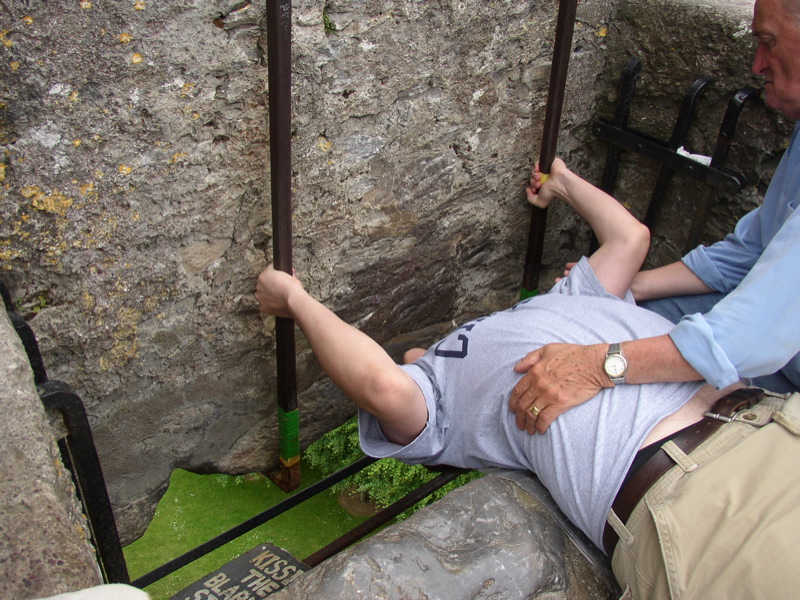
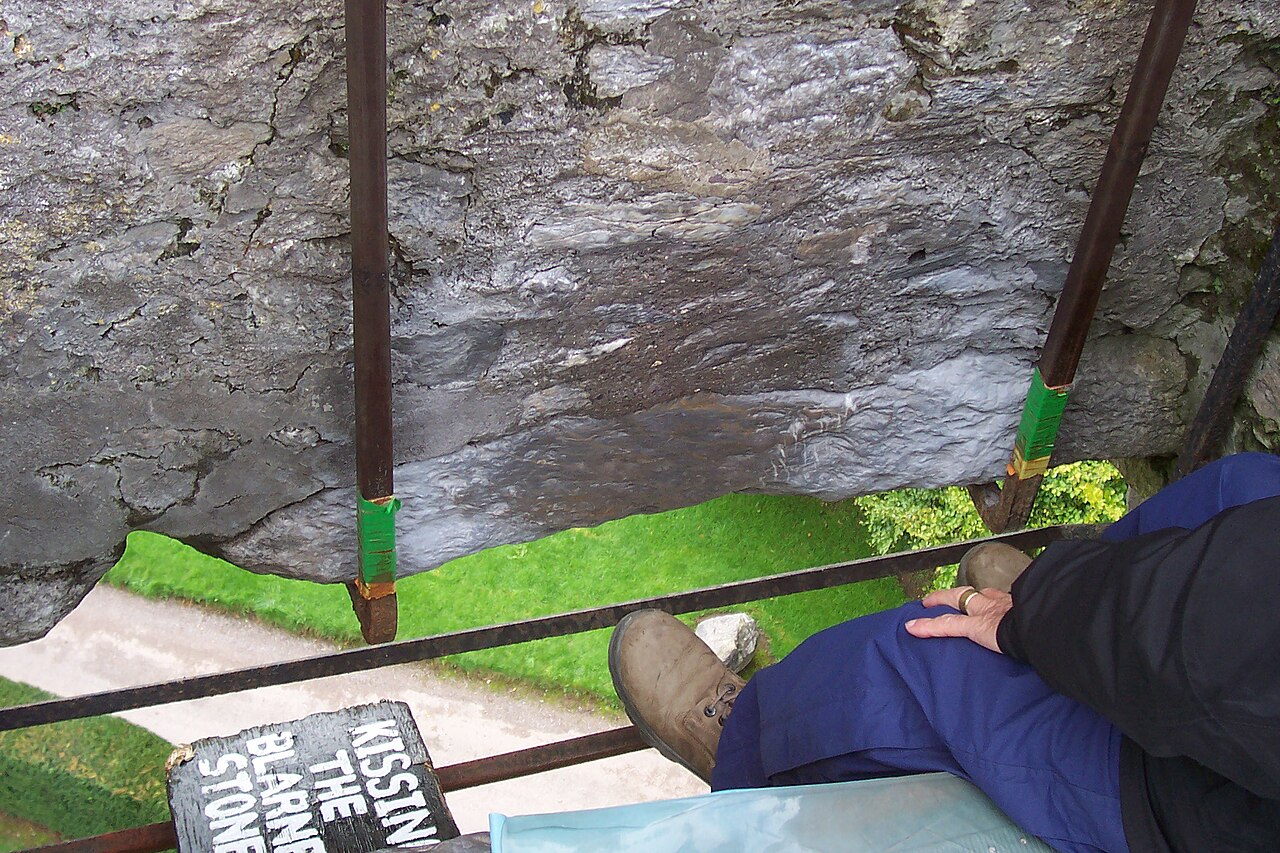
To gain this promised power of persuasive speech, visitors must kiss the exact stone MacCarthy installed. The physical act requires significant effort. A person must lie flat on their back and bend their head downward and backward over the edge of the parapet walk. Today, wrought-iron guide rails and a staff member assist people to keep them safe. In the past, individuals had to be held tightly by their ankles and dangled headfirst over the sheer drop.
Modern Science Examines the Rock
In 2014, researchers from the University of Glasgow took a microscopic section of the rock to analyze its composition. The geologists discovered it is made of fossiliferous Carboniferous limestone. This scientific analysis proved the rock is roughly 330 million years old and entirely local to the south of Ireland. The findings ruled out the myths about it traveling from distant countries. The rock remains in its original position today.