
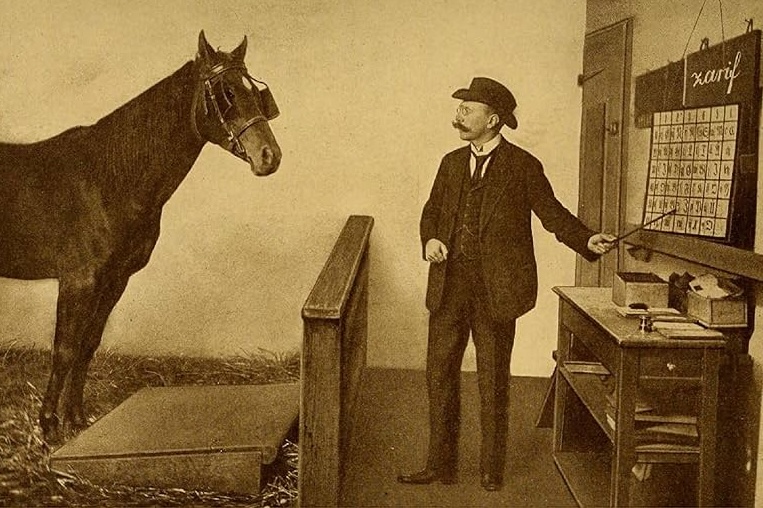
In the early twentieth century, an Arabian stallion named Muhamed captivated the scientific world with an extraordinary reputed skill set. This particular animal, living in Elberfeld, Germany, roughly 280 miles (450 kilometers) from Berlin, was not just known for his physical prowess.
Muhamed was reportedly able to read, spell, and mentally extract the cube roots of complex numbers. The narrative of this unique horse, raised by Karl Krall, presents one of the most intriguing chapters in the history of animal psychology. The events surrounding his abilities, the rigorous testing he endured, and his unexpected behaviors create a fascinating historical account that engages scholars.
A Mind in Elberfeld
Karl Krall acquired and raised several supposedly gifted horses, including Clever Hans, Zarif, Amasis, and a blind stallion named Berto. Among this group, Muhamed stood out for his purported capacity to perform highly complicated arithmetic calculations.
While the other horses demonstrated basic math and reading skills, Muhamed took these apparent abilities to a completely different level. Krall himself professed disbelief that the horse was a genius, arguing instead that human savants could also perform mathematical functions rapidly in their heads.
The Hoof Tapping Method
When psychologists and scientists tested Muhamed, they would write a number on a blackboard and ask the horse to extract the cube root. Muhamed communicated his answers using a specific hoof-tapping system. His left hoof represented the tens, while his right hoof represented the ones.
To give the answer sixty-five, he would tap six times with his left hoof and five times with his right hoof. This exact tapping method was also used to demonstrate his spelling abilities. According to historical reports, the horse did not correctly handle German orthography, yet he still managed to produce recognizable words.
Under the Scientific Microscope
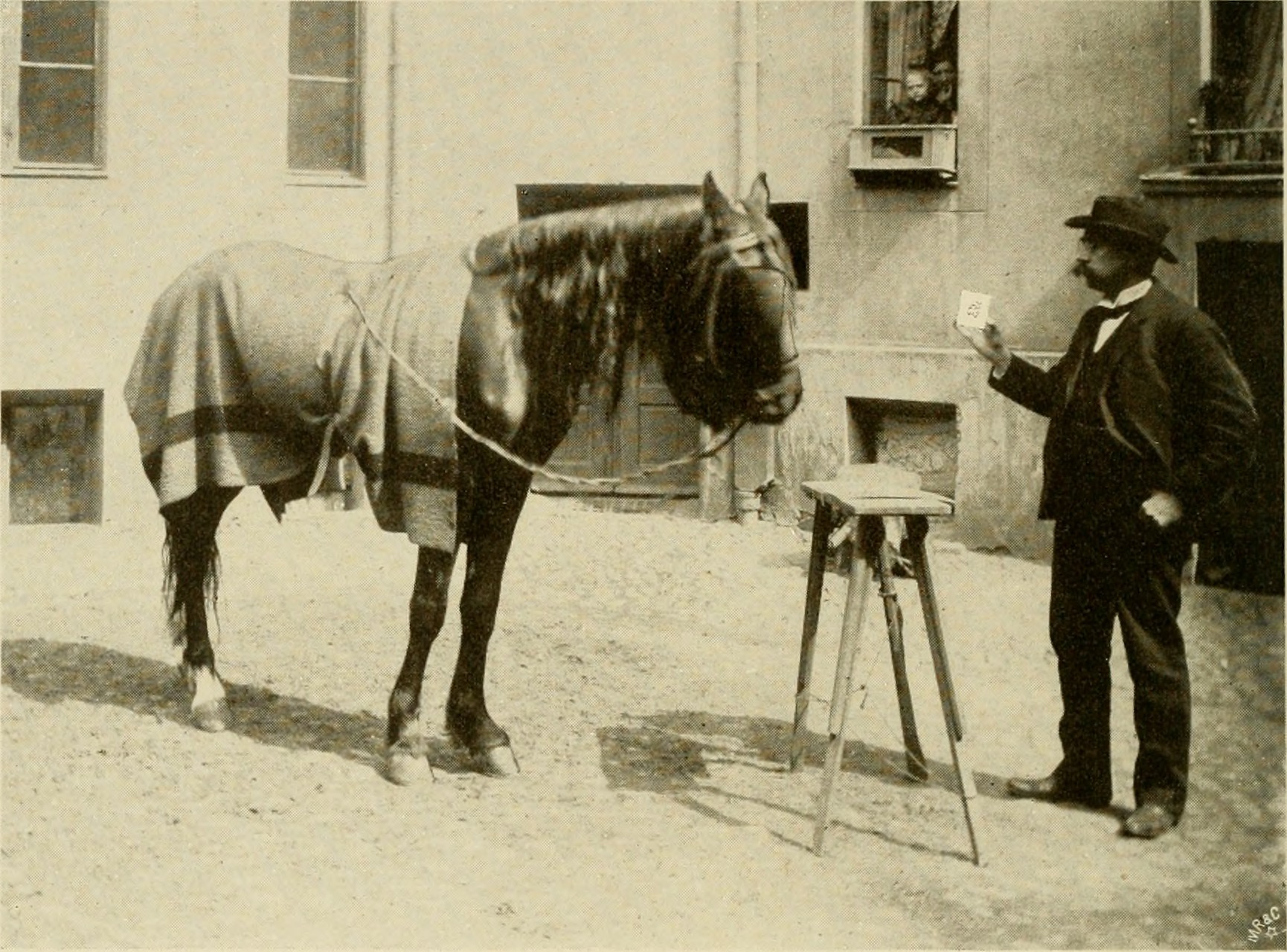
The astonishing claims prompted researchers to investigate whether Krall was secretly signaling the answers. Scientists attempted various tests to rule out human interference. They tried to blindfold the horses by tying sacks over their heads. They also observed the animals in their stables through peepholes.
Scholars like psychologist Edward Claparède and Belgian writer Maurice Maeterlinck tested the horses and came away impressed. Conversely, psychologist Edmund Sanford remained skeptical. Sanford praised Krall’s good faith but compared the results to those obtained by trainers and magicians through deceptive means.
A Communicative Stallion
According to Krall, Muhamed eventually began to communicate spontaneously. Krall reported that the intelligent stallion would sometimes tattle on the other horses for being lazy. In other instances, Muhamed supposedly used his tapping to report grooms who were secretly beating the animals.
The ongoing education of Muhamed and his stablemates continued until the outbreak of the First World War. In the year 1915, the life of the calculating Arabian horse came to a close when Muhamed died.