
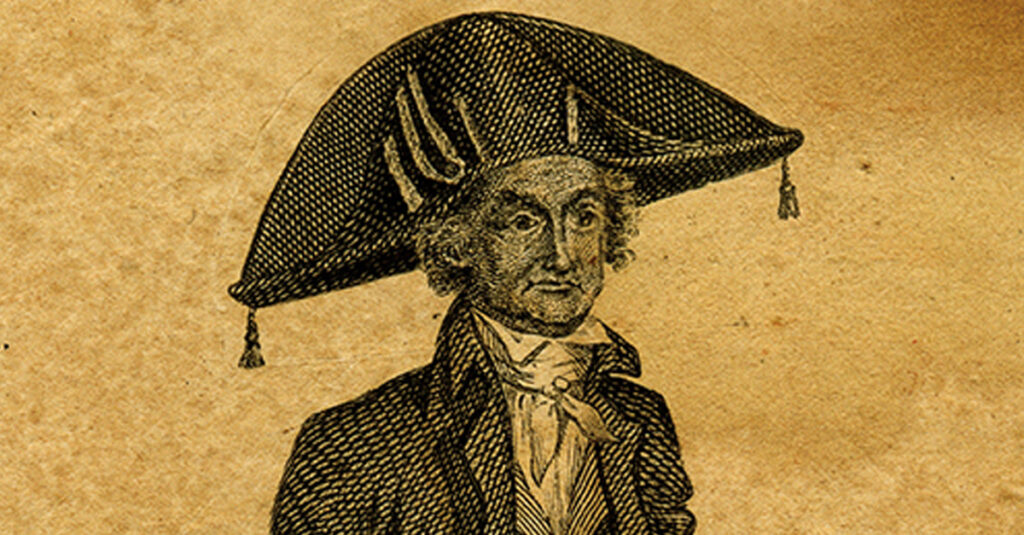
Timothy Dexter was an 18th-century leatherworker who defied all conventional financial logic to become one of the wealthiest men in Massachusetts. Born into poverty in 1747, he possessed no formal education beyond the age of eight, yet his seemingly disastrous business ventures consistently resulted in massive profits.
From shipping winter items to tropical islands to printing a book devoid of punctuation, his actions baffled his contemporaries. The true events of his life document a series of highly unconventional investments that invariably succeeded against all odds.
Turning Devalued Currency and Bad Advice into Gold
Dexter acquired his initial wealth during the American Revolution. He spent his life savings purchasing devalued Continental dollars. Once the United States Constitution was ratified, a provision allowed citizens to trade these notes for treasury bonds, making Dexter instantly rich.
Seeking to ruin him, envious rivals began feeding him terrible business advice. One competitor convinced him to ship 42,000 heavy brass bed warmers to the tropical West Indies. Upon arrival, the items were marketed as molasses ladles and sold at a premium, netting Dexter a massive profit.
Coal to Newcastle and Cats to the Caribbean
Competitors continued trying to bankrupt him. They advised Dexter to send a shipment of coal to Newcastle, which was Britain’s premier coal-mining hub. By sheer coincidence, his cargo arrived during a massive miners’ strike, and the desperately needed coal sold for double its value.
When competitors tricked him into shipping winter gloves to the South Pacific, Portuguese sailors heading to colder climates bought the entire inventory. Later, Dexter gathered stray cats and shipped them to the Caribbean. Plantation owners eagerly purchased the felines to clear their warehouses of mice.
A Mansion Trimmed with Wooden Statues
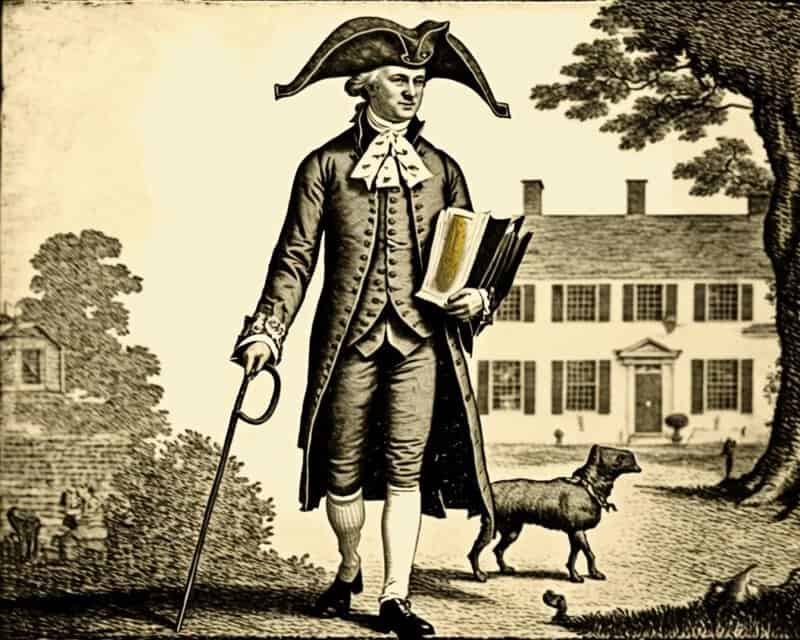
Flush with cash, Dexter purchased a massive chateau in Newburyport, located roughly 35 miles (56.3 kilometers) north of Boston. To decorate his yard, he commissioned 40 enormous wooden statues of famous Americans, including George Washington, Thomas Jefferson, and himself.
Each statue cost him $2,000. He also appointed a local 20-year-old fishmonger as his personal poet laureate, crowning the young man with a wreath made of parsley.
A Punctuation-Free Bestseller and a Fake Funeral
Dexter authored a memoir titled A Pickle for the Knowing Ones. The entire book contained no punctuation marks and featured entirely phonetic spelling. When readers complained, Dexter printed a second edition with an addendum containing 13 lines of solely punctuation marks, telling readers they could insert them wherever they wanted.
Later in life, Dexter faked his own death and hosted a mock funeral to see how many people would attend. He hid and watched the proceedings, subsequently revealing himself to the shocked attendees. Dexter died in 1806.