
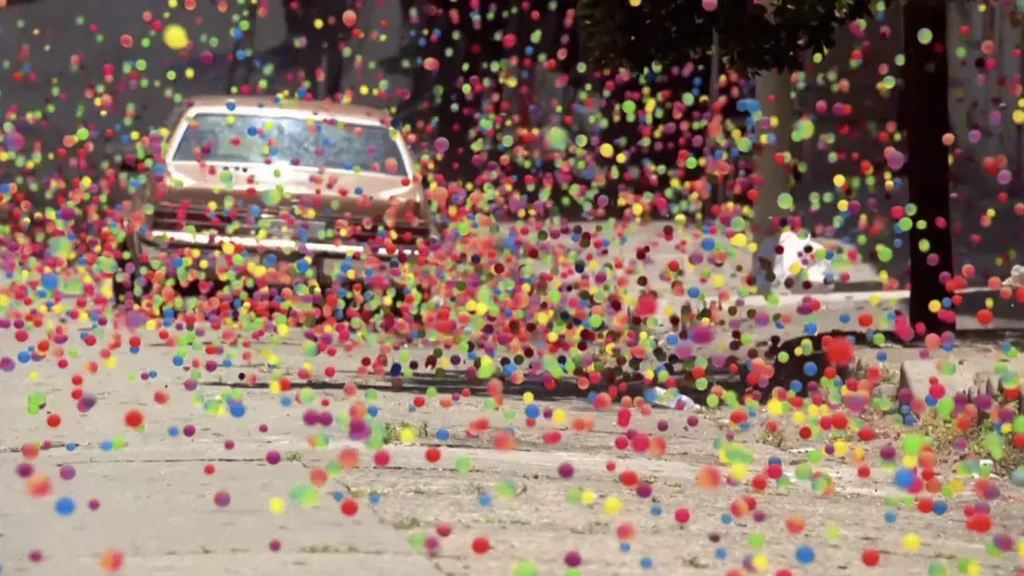
In July 2005, a torrential flood of 250,000 colorful bouncy balls launched down the steep slopes of San Francisco. Fired from custom air cannons, the spheres reached speeds of up to 136 miles per hour, ricocheting off houses, shredding foliage, and denting vehicles.
This physical event was completely real, executed entirely without computer-generated imagery. Danish director Nicolai Fuglsig orchestrated this massive logistical operation to film a television advertisement for Sony Bravia. The project required buying out regional toy supplies, designing proprietary mortar systems, and securing unprecedented city permits to execute an incredibly complex practical effects shoot.
Sourcing Every Bouncy Ball West of the Mississippi
To achieve the required volume, the production team purchased every single bouncy ball available in vending machines west of the Mississippi River. The chosen projectile was the Superball, originally made from the synthetic polymer Zectron.
These specific items possess a 0.92 coefficient of restitution, allowing them to retain 92 percent of their drop height upon bouncing. Transporting the quarter-million balls to the California set required multiple semi-trucks. Once on site, production assistants had to manually sort the spheres by color to prepare for specific camera sequence requirements.
Engineering High-Speed Air Cannons
Rolling the spheres would not generate enough momentum on the angled streets. Special effects specialist Barry Conner designed a proprietary mortar system to launch them into the air. The crew bolted six truck-mounted air cannons into the asphalt at the intersection of Filbert and Hyde streets.
Early tests pulverized the balls, forcing the engineering team to invent a foam buffer and rope system to protect the rubber from the extreme air pressure. When fired, the cannons propelled the cargo at 150 to 200 feet per second.
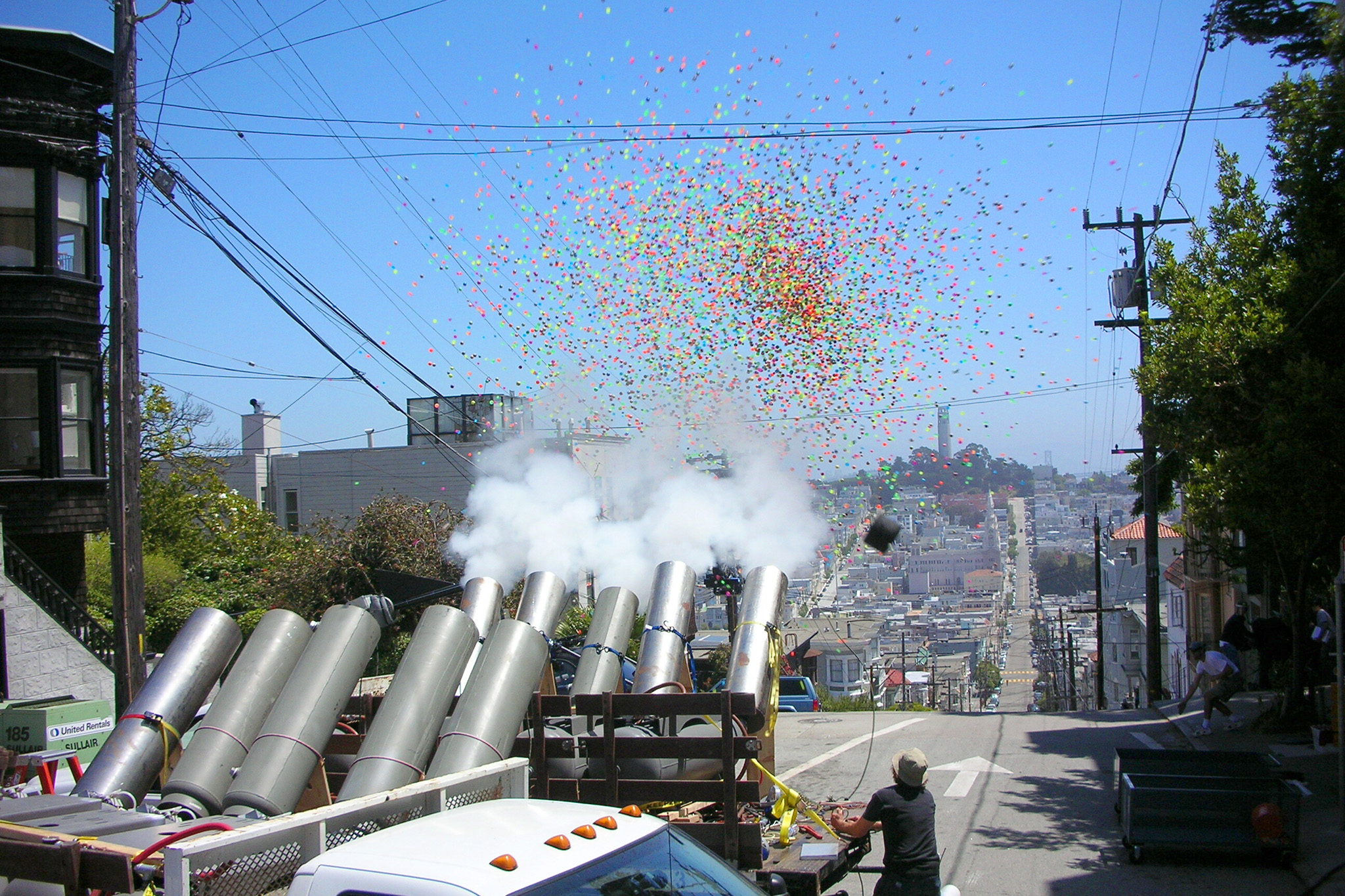
Filming Practical Effects Without CGI
Production designer Bret Lama built custom set pieces along the impact zone, including a rigged drainpipe containing a real frog. Six cameras, shielded by heavy plywood casings, captured the event. The crew utilized older Photo-Sonics cameras to record the high-speed motion, requiring special weather insurance because minor lighting changes from clouds could ruin the exposure.
During the shoot, camera operators and crew members wore Kevlar armor, thick helmets, and riot shields to protect themselves from unpredictable ricochets.
The Unavoidable Property Damage
The extreme velocity of the projectiles caused significant destruction to the neighborhood. The impacts dented 24 production vehicles, chipped wooden siding off six houses, and destroyed multiple car windows. The production company retained an on-site glass repair crew and ultimately paid 74,000 dollars to fix broken windows.
After city officials banned the air cannons due to the sheer chaos, the crew completed the final shoots by hoisting shipping containers 65 feet into the air with forklifts and dropping the remaining cargo onto elevated plywood ramps.