
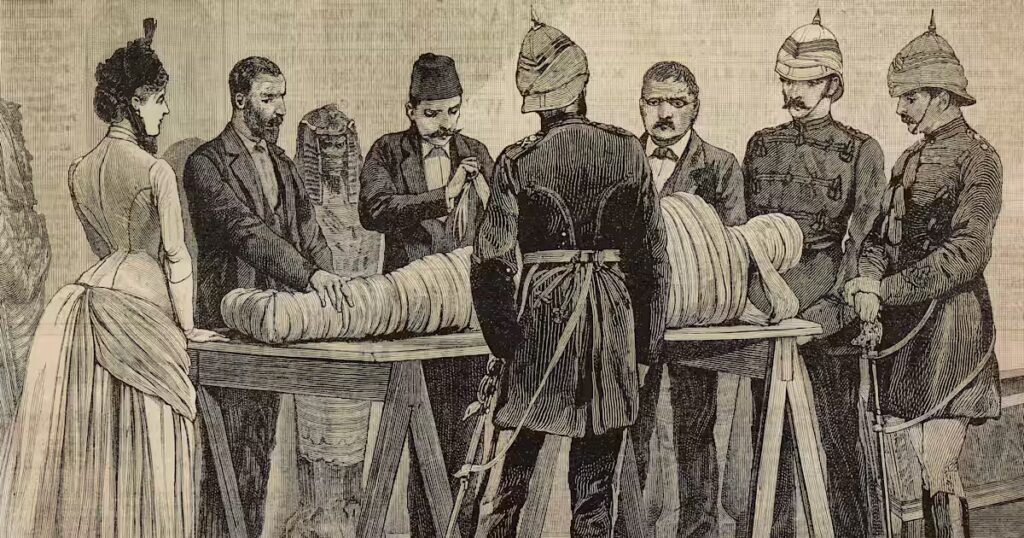
Imagine receiving a formal invitation from a respected surgeon, not for a dinner party or a musical performance, but to watch a millennia-old corpse be stripped of its bandages. In the early 19th century, this practice became a highly sought-after entertainment trend across Great Britain.
Known as Victorian mummy unwrapping parties, these gatherings captivated the social elite, blending early archaeology with theatricality. From private parlors to massive public lecture halls, the craze dominated society, driven primarily by a London doctor who turned anatomical examinations into sold-out performances.
Egyptomania Sweeps 19th-Century London
Europe’s fascination with ancient Egypt skyrocketed following Napoleon Bonaparte’s military campaigns in the late 1790s. When French scholars published extensive texts detailing Egyptian antiquities, an intense cultural obsession known as Egyptomania gripped Britain.
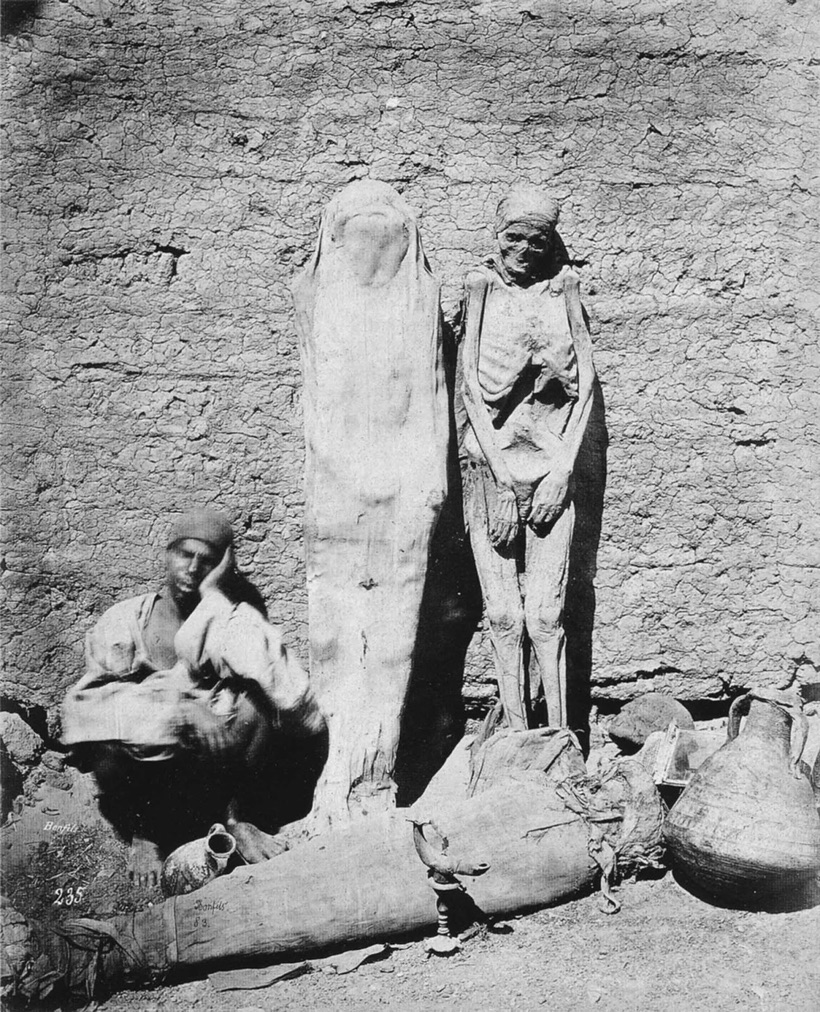
Wealthy tourists traveled to the region, purchasing authentic Egyptian mummies as exotic souvenirs. These ancient bodies were shipped back to England and often displayed in the drawing-rooms of aristocrats. Eventually, curious owners decided to look beneath the linen wrappings, giving rise to social gatherings centered entirely around dissecting the dead.
Thomas Pettigrew Takes the Stage
While private citizens hosted small gatherings, surgeon and antiquarian Thomas Joseph Pettigrew transformed the practice into a massive public spectacle. Pettigrew, an anatomy professor at Charing Cross Hospital who had vaccinated a young Queen Victoria, utilized his medical background to add scientific authority to the events.
In March 1833, he held a highly publicized mummy unrolling before a crowd of aristocrats, physicians, and the Mayor of London. By January 1834, his event at the Royal College of Surgeons was completely sold out, earning him the nickname Mummy Pettigrew.
The Spectacle of the Unrolling
Pettigrew’s performances followed a highly structured format designed to build anticipation. The mummy was placed on a central table surrounded by authentic artifacts and hieroglyphs. Pettigrew would deliver a lecture on ancient burial practices before using scalpels and levers to pry apart layers of hardened bandages. As he worked, he passed linen strips and hidden amulets into the audience.
The results were highly unpredictable. One mummy’s head was completely filled with sand, while another body, sold as an ancient princess, was revealed to be a man. Because mummies coated in asphaltum sometimes crumbled to dust immediately upon opening, Pettigrew kept a successfully unwrapped corpse hidden backstage as a backup.
The Decline of the Unwrapping Fad
The enthusiasm for Victorian mummy unwrapping parties gradually disappeared as the 19th century progressed. The scientific community increasingly favored the strict preservation of historical antiquities rather than their physical destruction. Furthermore, historians note that the public simply grew bored.
Pettigrew’s methodical process was essentially the same every time, and the initial shock value eventually wore off. By the time he passed away in 1865, the era of unrolling ancient corpses for public entertainment had largely concluded, replaced by modern archaeological preservation techniques.