
Most car enthusiasts and engineers assume that “horsepower” is a precise scientific constant. It seems logical that one unit of horsepower would equal the exact output of one horse. However, history and biology reveal a very different reality. The term that defines modern engine performance was actually born from a clever 18th-century marketing strategy rather than a strict biological limit. In fact, a single horse can exert nearly 15 times the power that its namesake unit suggests.
James Watt’s Clever Marketing Trick
The story begins with the Scottish engineer James Watt, who is famous for his improvements to the steam engine. Watt needed a way to convince skeptics to switch from animal labor to his new machines. His engines were far more efficient than previous models and required less fuel, but customers struggled to visualize their potential.
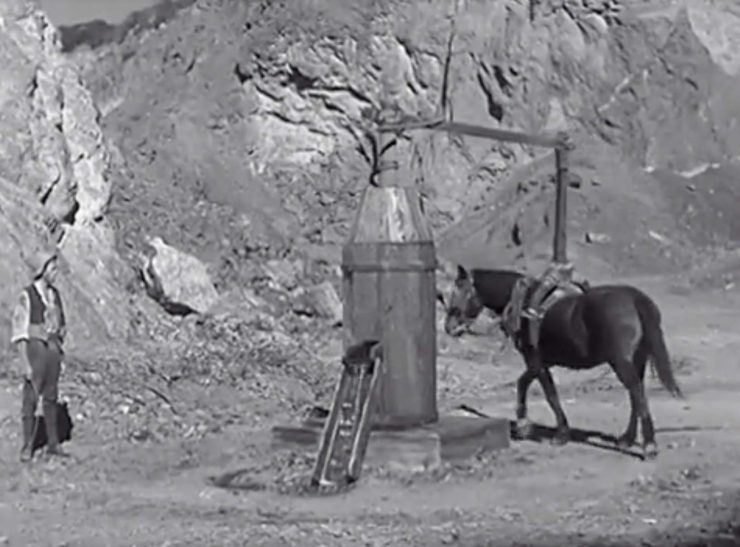
To solve this, Watt created a unit of measurement that farmers and mill owners could instantly understand. He observed horses turning a mill wheel and used those observations to calculate a standard unit of power. This allowed him to claim his engine could do the work of a specific number of horses, making the investment clear to potential buyers.
The Math Behind the Machine
Watt based his calculations on specific data points he gathered from his observations. He noted that a horse could turn a mill wheel with a 24-foot (7.3-meter) diameter approximately 2.5 times per minute. Watt defined power as the work done per unit of time. He calculated the force the animal applied multiplied by the distance it traveled. To create a round number for his customers, he standardized one horsepower as 33,000 foot-pounds of work per minute.
In modern scientific terms, this unit converts to approximately 746 Watts. A similar standard used by some manufacturers, known as metric horsepower, is defined slightly differently. It represents the power needed to raise a 75-kilogram mass against gravity over a distance of one meter in one second, which equals about 735 Watts.
The True Power of a Horse
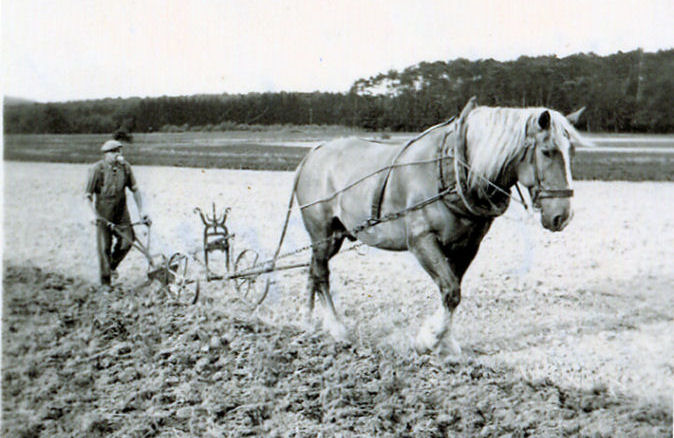
While Watt’s figure of 746 Watts accurately reflects the sustained work a horse can do over a full day, it drastically underestimates the animal’s peak performance. In 1993, biologists R. D. Stevenson and R. J. Wassersug published a letter in the journal Nature that challenged the traditional limit. They analyzed the maximum sustainable mechanical power of muscle, which ranges between 100 and 200 Watts per kilogram.
Based on these biological limits, they calculated that a horse could theoretically produce up to 24 horsepower. Real-world data backs this up. Records from the 1925 Iowa State Fair show that over short bursts, a draft horse can exert up to 14.9 horsepower. Watt’s unit measures a marathon pace, while the animal itself is capable of a much more powerful sprint.