
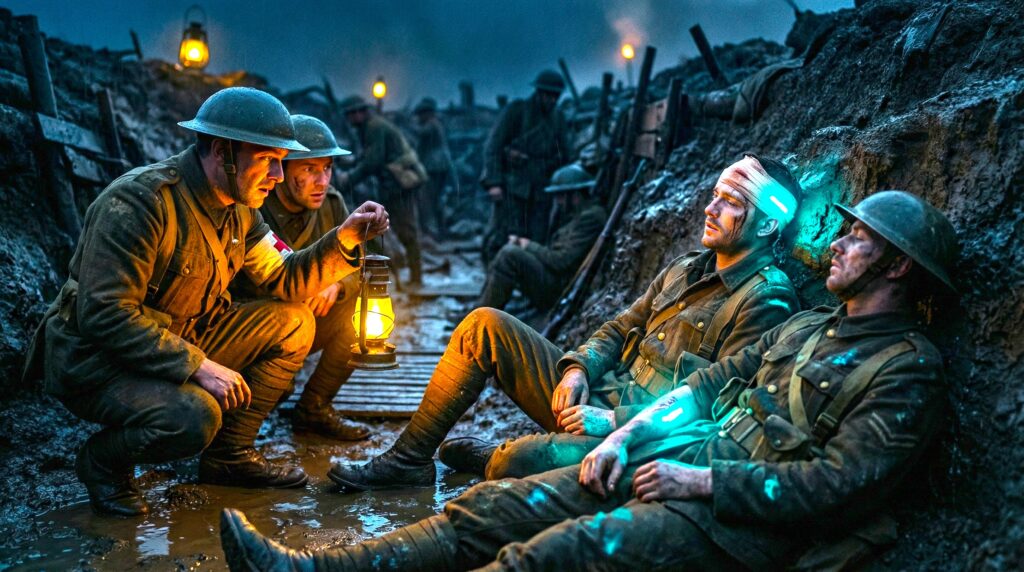
In April 1862, a brutal clash during the American Civil War left thousands of wounded soldiers stranded in freezing mud. As night fell over the battlefield, an inexplicable phenomenon occurred. The open injuries of several men began to emit a faint, blue-green light in the dark.
This strange luminescence completely baffled the medics, but the afflicted troops healed faster and survived at much higher rates than the others. For over a century, the exact cause of this luminous medical anomaly remained unsolved.
The Bloodshed in the Tennessee Mud
The Battle of Shiloh took place in southwestern Tennessee and resulted in more than 23,000 casualties over two days. The fighting was so intense that medical personnel were completely overwhelmed. Many injured soldiers had to wait in the pouring rain and cold mud for up to 48 hours before receiving any medical attention. Hypothermia quickly set in as the men lay helpless in the freezing dirt.
The Arrival of the Angel’s Glow
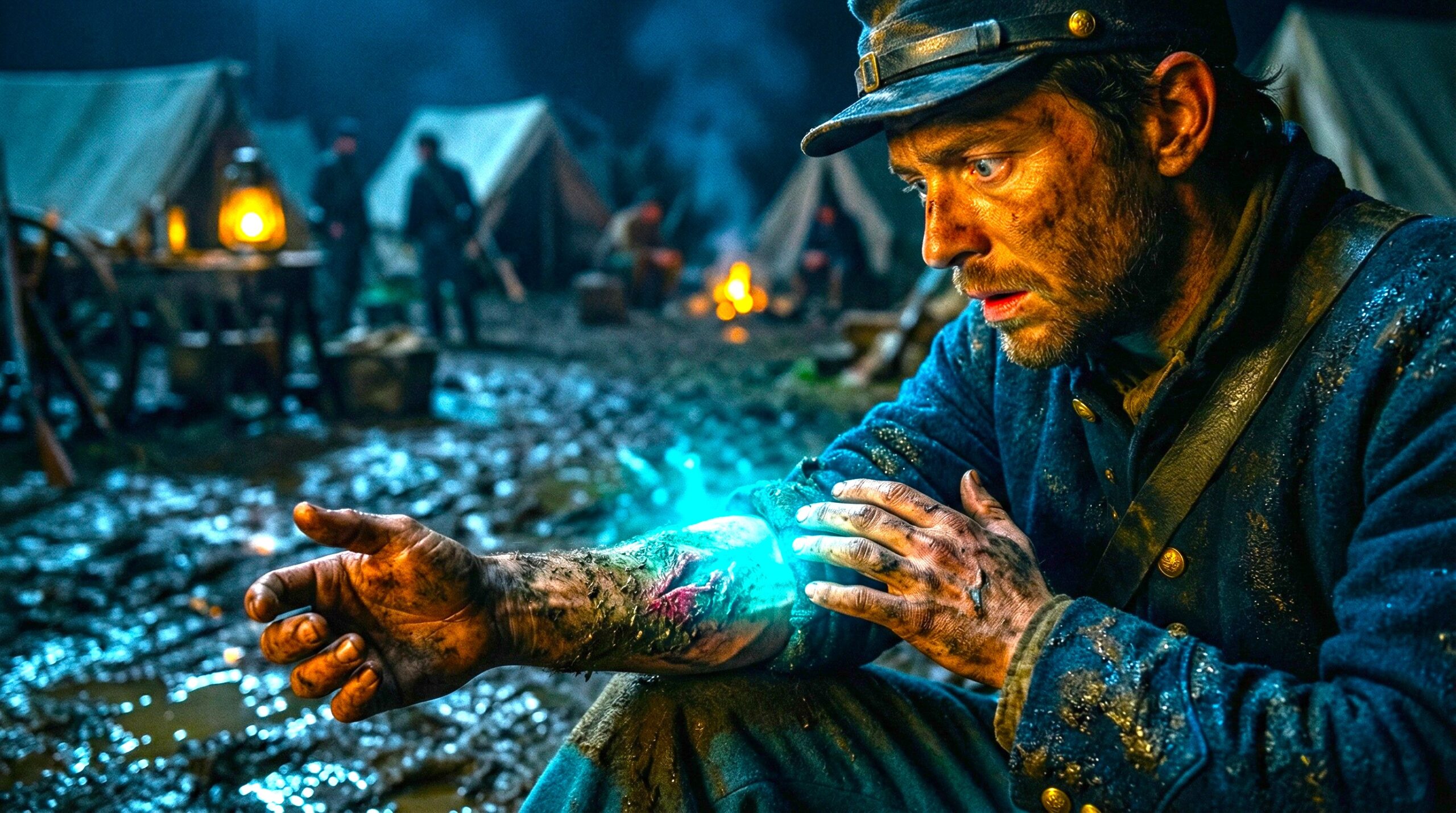
When the sun went down, medics noticed that some of the soldiers’ wounds literally glowed in the pitch black. The glowing men experienced a surprisingly high survival rate. Their injuries avoided the severe, deadly infections that typically killed wounded troops during this historical era. Because the light appeared to protect the dying men from infection, the troops named the bizarre occurrence the Angel’s Glow.
A Century-Old Medical Mystery
The true scientific cause of the luminescence stayed unknown until the year 2001. Two high school students, Bill Martin and Jon Curtis, decided to investigate the historical event for a science fair project. Martin’s mother worked as a microbiologist studying bioluminescent soil bacteria, giving the teenagers a unique starting point for their research. They focused their attention on a specific bacterium called Photorhabdus luminescens.
The Microscopic Soil Bacteria
The students discovered that Photorhabdus luminescens lives inside microscopic worms called nematodes, which hunt insect larvae in the dirt. When the nematodes find a host, they regurgitate the bacteria. The bacteria then release chemicals to kill the host, emit a soft glow, and produce powerful antibiotics to destroy other competing bacteria. Normally, these glowing bacteria cannot survive at standard human body temperatures.
However, because the soldiers at Shiloh lay in the cold mud for days, their core body temperatures dropped drastically. This severe hypothermia created the perfect cool environment for the bacteria to thrive inside the soldiers’ wounds. As the bacteria multiplied and glowed, their natural antibiotics killed off deadly pathogens like staph and strep, effectively cleaning the wounds and saving the men.