
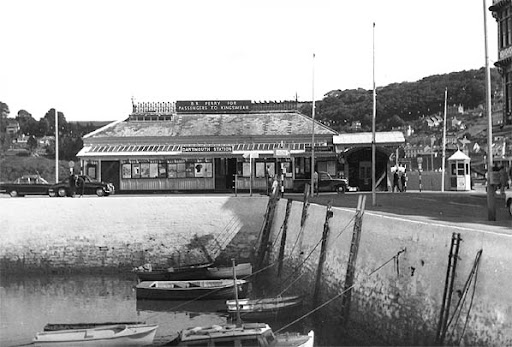
In the town of Dartmouth, Devon, stands a Victorian building that has held the official status of a railway station for over 160 years. It features a station master, a booking office, and traditional waiting rooms, yet no locomotive has ever arrived at its doors.
The station lacks tracks, platforms, and engines, as it was built on a quayside where no rail line exists. Despite this physical absence of rail infrastructure, passengers have bought thousands of integrated train tickets to this specific location, making it one of the most unusual transport hubs in British history.
The River Barrier and Engineering Deadlocks
The Dartmouth and Torbay Railway originally intended to bridge the River Dart to reach the town directly. However, engineering challenges and narrow terrain forced the company to terminate the physical tracks on the eastern bank at Kingswear.
Rather than abandoning the Dartmouth market, the railway company obtained a site on the Dartmouth quay and constructed a functional station building. This wooden structure opened on August 16, 1864, equipped with all the standard administrative facilities found at a conventional terminal.
A Commute by Water
To bridge the gap between the tracks and the town, the company established a dedicated ferry service. The Dartmouth station functioned as a maritime terminal where passengers validated through-tickets. A jetty extended 24 meters (78 feet) into the river to a floating pontoon, allowing travelers to transition from the ferry directly into the station environment.
Because the station was the primary link for officers and cadets traveling to the Royal Naval College, its station master was historically paid a higher salary than the counterpart at Kingswear, despite never overseeing a single train movement.
Administrative Status and Modern Changes
The office was officially classed as a railway station for ticketing purposes. This designation allowed the Great Western Railway and later British Rail to sell integrated fares that combined rail travel with the ferry crossing. In 1884, waterfront improvements led to the construction of a new embankment, but a gap remained for five years because the town and the railway company could not agree on funding.
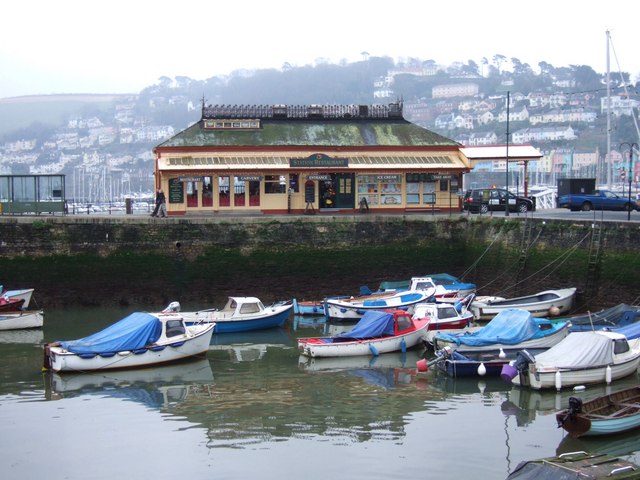
Eventually, a new station building was erected on oak piles partially overhanging the river. This structure remained a vital part of the regional network until the line from Paignton to Kingswear was withdrawn in 1972.
Transition to the Present Day
After the closure of the national rail service, the building was sold and converted into a restaurant. The railway line itself became a heritage attraction, now known as the Dartmouth Steam Railway. While the heritage operators still run a ferry to the pontoon, the original station building no longer serves passengers.
Kiosks located nearby continue the tradition of selling combined boat and rail tickets, and the area serves as a central hub for buses and taxis. The building stands as a physical record of an era when administrative definitions allowed a pier to function as a full railway terminal.