

In 2011, a new political entity emerged in Switzerland with a singular mission that resonated with frustrated office workers worldwide. The Anti-PowerPoint Party (APPP) was founded by Matthias Poehm to advocate for a decrease in the use of presentation software in professional and educational settings.
The group maintains that the widespread use of slides causes significant economic damage and decreases the quality of communication. By framing the issue as a national concern, the party successfully navigated the Swiss legal system to become an official political organization capable of participating in federal elections.
Calculating the Economic Cost of Bullet Points
The core of the APPP’s platform is based on the calculation of lost time and productivity. The party claims that the use of presentation software costs the Swiss economy approximately 2.1 billion Swiss francs annually. On a broader scale, they estimate the loss across the entire European continent to be roughly 110 billion euros.
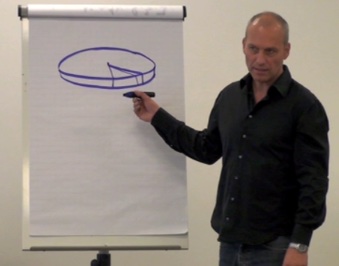
These figures are derived from the total number of employees attending presentations and the percentage of those individuals who report finding the slides unhelpful or demotivating. The party argues that most presentations would be more effective if speakers used flipcharts or whiteboards instead.
Pursuing a National Referendum
The ultimate goal of the APPP is not just to spread awareness but to trigger a nationwide referendum to ban or restrict the use of PowerPoint during presentations. Under the Swiss system of direct democracy, any group that gathers 100,000 valid signatures can force a public vote on a specific issue.
While the party admits it may not reach this threshold immediately, it uses the signature-gathering process as a marketing tool to elevate the discussion to a federal level. They position themselves as the only party dedicated to the “95 percent” of the population who find slides tiresome.
The Competition with Traditional Media
Despite its humorous name, the organization operates with the formal structure of a traditional political party. It maintains a membership base that pays annual fees to support the cause. During the 2011 Swiss federal elections, the APPP stood candidates for the National Council, receiving several hundred votes in various cantons.
The party platform emphasizes that a return to physical tools, like drawings on a board, fosters a better connection between the speaker and the audience. They argue that software often serves as a crutch for poorly prepared speakers.
International Attention and Growth
The movement quickly expanded its reach beyond the Swiss borders, attracting members from Germany, Austria, and other parts of the world. By registering as a party rather than a simple interest group, the APPP gained access to mainstream media coverage that would otherwise be unavailable.
Matthias Poehm, the founder, has authored books on the subject and continues to lead the organization in its efforts to change corporate culture. The party remains active, continuing to recruit members who believe that the digital era of presentations has hindered human interaction and economic efficiency.