
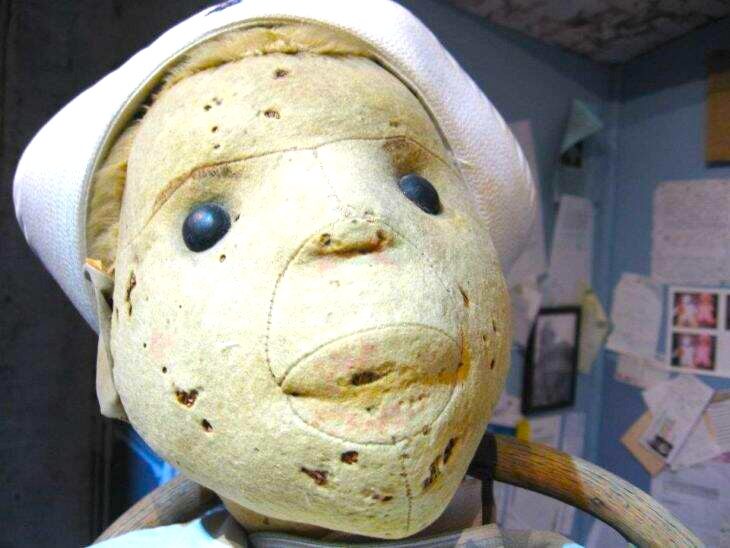
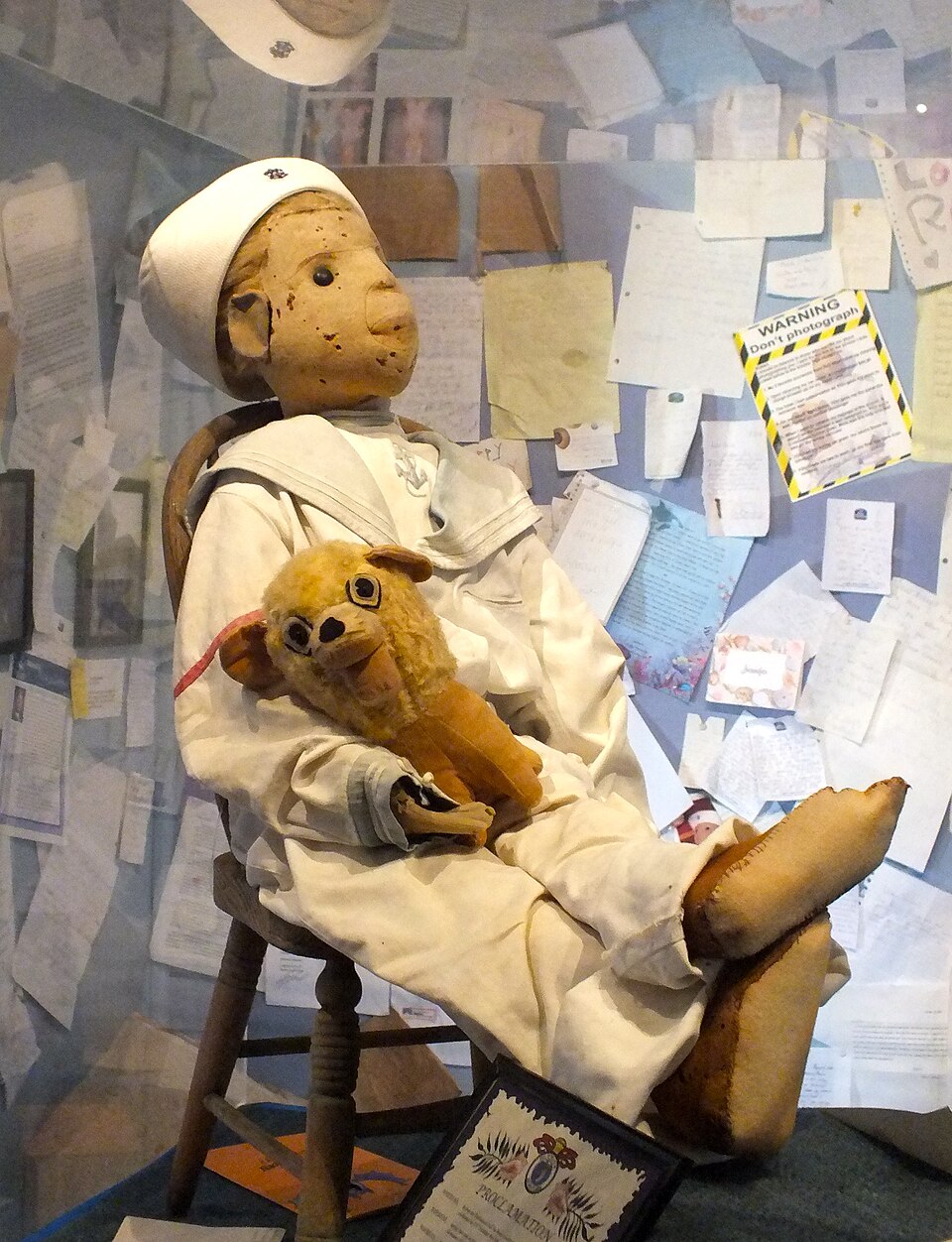
In a climate-controlled glass case at the Fort East Martello Museum in Key West, Florida, sits a handmade figure that demands a level of respect rarely accorded to inanimate objects. He stands forty inches tall, wears a faded sailor suit, and clutches a small stuffed lion.
This is Robert the Doll. Visitors who flock to see him do not just observe; they ask permission before taking photographs. Those who mock him, or who snap a picture without asking, often send frantic letters days later detailing car crashes, job losses, and broken bones, begging the doll for forgiveness. This is the verifiable history behind the most haunted object in Florida.
A Childhood Companion and Two Voices
The narrative began in 1904 when a young boy named Robert Eugene Otto, known to his family as “Gene,” received a straw-filled doll. The toy, likely manufactured by the German Steiff company, was stuffed with wood wool, known as excelsior, and dressed in one of Gene’s own childhood outfits. Gene became inseparable from the figure, giving the doll his own first name while he went by his middle name.
Inside the Otto family home, servants and relatives reported hearing Gene having conversations in two distinct voices: his own childish soprano and a lower, guttural response that did not sound like a human child. Whenever mischief occurred—such as overturned furniture or mutilated toys—the boy provided a consistent defense that he maintained into adulthood: “Robert did it.”
The Artist House and the Turret Room
Gene eventually studied art in Chicago and New York but returned to the family estate in Key West with his wife, Anne. Despite his adult status, Gene retrieved Robert from storage and designed a dedicated room for the doll in the house’s turret, furnishing it with child-sized chairs.
Residents of Key West and local schoolchildren reported seeing the doll move between windows when the family was away. A plumber working alone in the house claimed he heard giggling and turned to find the doll had changed position on its own. Anne Otto openly expressed her disdain for her husband’s attachment to the toy, yet Robert remained a central presence in the house until Gene died in 1974.
Electronic Failures and Written Apologies
Myrtle Reuter purchased the Otto home after Gene’s death and lived with the doll for twenty years. She signed a notarized affidavit claiming that Robert moved around the house independently and once locked her in a room. In 1994, she donated him to the Fort East Martello Museum, where the phenomenon of the “curse” gained documentation.
Museum staff began receiving letters from former visitors shortly after Robert went on display. Today, the walls surrounding his enclosure are papered with these written apologies. The correspondence comes from individuals who attribute verifiable misfortunes—divorces, flight cancellations, and physical accidents—to their disrespect of the doll.
Cameras and electronic devices frequently malfunction directly in front of his case, only to work perfectly once the visitor steps away. The museum continues to catalog these letters, preserving the physical evidence of Robert’s strange impact on the public.