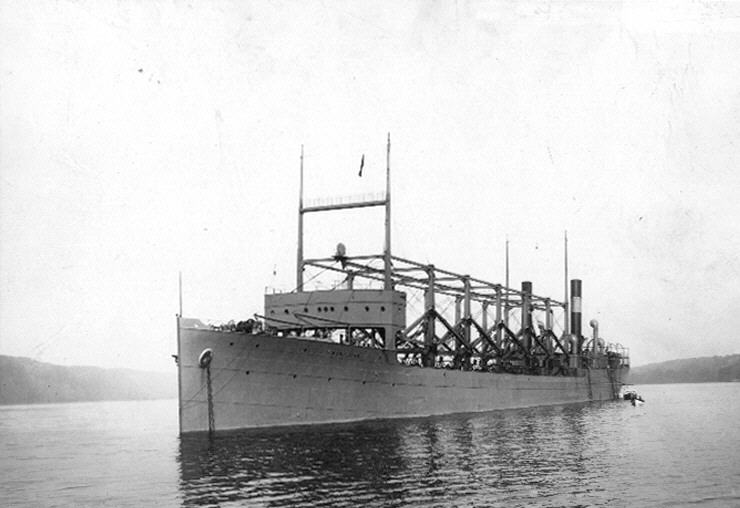
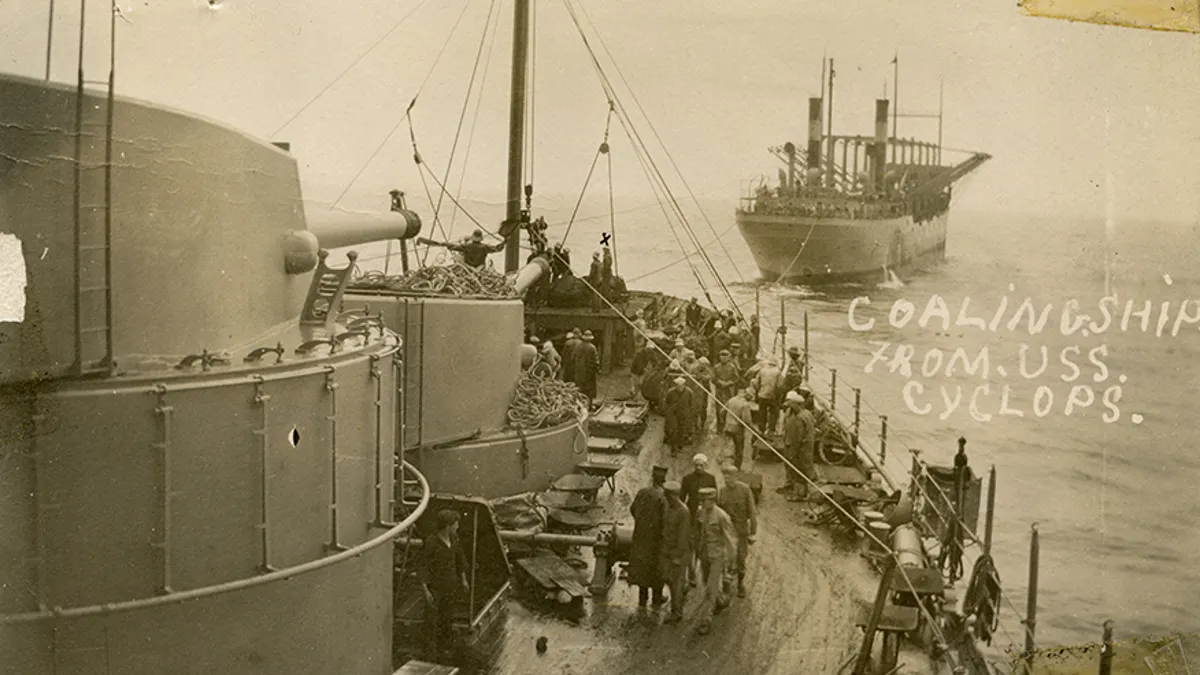
On March 4, 1918, a massive steel leviathan departed Barbados and sliced through the Atlantic waves toward Baltimore. The USS Cyclops was a titan of the seas, a 542-foot (165-meter) collier carrying vital wartime supplies and 306 souls.
Yet this floating fortress did not battle an enemy fleet or succumb to a visible disaster. Instead, it simply ceased to exist. There was no distress call, no wreckage, and no debris ever found. To this day, the event remains the single largest non-combat loss of life in U.S. Navy history. It is a chilling puzzle that has baffled investigators for over a century.
The Burden of Cargo and Command
The Cyclops was laden with 10,800 long tons (10,973 metric tons) of manganese ore. This was a dense material crucial for munitions manufacturing during World War I. This heavy load strained the vessel and pushed the water level well above the Plimsoll line. The cargo itself posed a hidden danger because manganese ore could shift into a slurry when wet. This could potentially cause the ship to list dangerously.
Commanding this perilous voyage was Lieutenant Commander George W. Worley. He was a man as volatile as the ocean itself. Born Johan Frederick Wichmann in Germany, Worley was known for his eccentric behavior. He often patrolled the deck in long underwear and a derby hat. His crew reportedly feared him. Rumors of pro-German sympathies swirled around him and added a layer of human intrigue to the mechanical risks.
Into the Void
Before vanishing, the ship made an unscheduled stop in Barbados to resupply. U.S. Consul Charles Ludlow Livingston noted the captain’s reticence and the ship’s poor condition. This included a cracked cylinder in the starboard engine. Livingston even sent a telegram to Washington that hinted at a fate worse than sinking due to the crew’s dislike of the master.
Despite these warning signs, the Cyclops steamed out of the harbor on March 4. She was expected to arrive in Baltimore by March 13, but the horizon remained empty. No radio signals pierced the static. The U.S. Navy launched a massive search and scoured the seas for any sign of the vessel. The ocean offered nothing in return. On June 1, 1918, the ship was officially declared lost with all hands.
The Unsolved Puzzle
Decades of speculation have produced numerous theories regarding the ship’s fate. Initial fears pointed to German U-boats, but postwar records confirmed no enemy attacks occurred in that sector. Modern analysis suggests a structural catastrophe is more likely. Two of the Cyclops’ sister ships, the Proteus and Nereus, also vanished while carrying heavy ore.
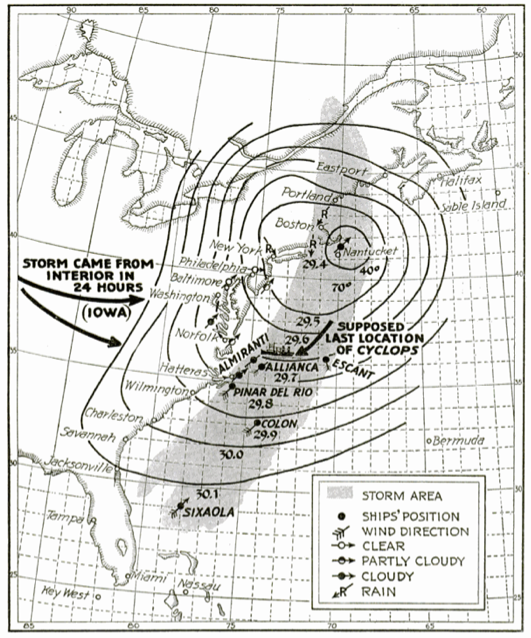
This hints at a fatal design flaw in the class. It is possible the corrosive cargo eroded the I-beams and caused the ship to snap in violent seas. Others point to a sudden storm that swept the Virginia Capes on March 10. Regardless of the cause, the ocean swallowed the Cyclops whole. It left only silence as its enduring record.