
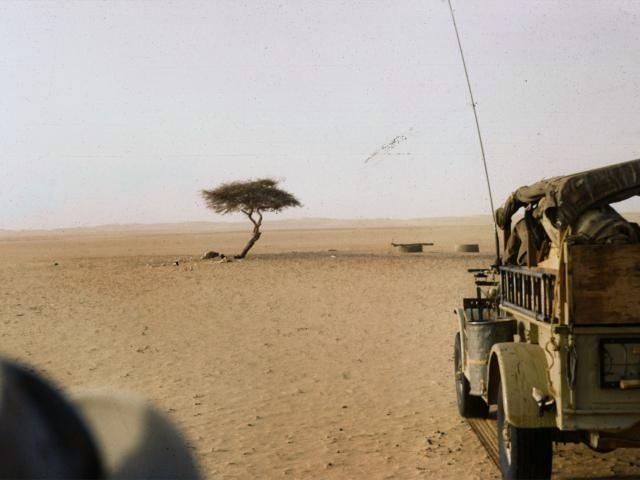
A single living organism stood completely alone in an endless ocean of sand, the only one of its kind for hundreds of miles. This isolated acacia was so distinct that cartographers included it on a 1:4,000,000 scale map of the Sahara Desert.
It survived for three centuries in one of the harshest environments on the planet, guiding travelers across the barren dunes. It withstood severe droughts and extreme temperatures, only to meet a sudden, unnatural end at the hands of a motorist. The true history of the Tree of Ténéré reveals a fascinating intersection of nature, human navigation, and modern machinery.
The Solitary Acacia of Niger
The Tree of Ténéré was a solitary acacia located in the Ténéré region of the Sahara Desert in northeast Niger. It was recognized as the most isolated tree on Earth. Long ago, the Sahara was a less parched environment, and this acacia was the final surviving member of a group of trees that once grew along the region’s ancient caravan routes.
For decades, it stood completely alone. Nomads leading salt caravans across the desert viewed the plant as a strict taboo. They never cut its branches to make fires for brewing tea, and they prevented their camels from eating its leaves and thorns.
Deep Roots in a Barren Landscape
The biological mechanics of the tree were uncovered during the winter of 1938 to 1939. During that time, a well was dug near the site. Excavators discovered that the tree possessed an extensive root system reaching down to the local water table.
These roots extended 33 to 36 meters (108 to 118 feet) below the desert surface. This massive subterranean network allowed the 300-year-old acacia to pull moisture from deep underground, keeping its leaves green and producing yellow flowers despite the intensely arid climate above.
The First Encounter with a Motor Vehicle
French ethnologist Henri Lhote documented his visits to the tree. During his initial trip in 1934, he noted its green leaves and distinct double trunk.
When he returned 25 years later on November 26, 1959, he found the tree severely damaged. A truck traveling to Bilma had collided with it, despite the vast, open space surrounding the site. The collision tore away one of the main trunks, leaving only a single slashed stump.
The Final 1973 Crash
The tree survived the 1959 incident but could not survive a second collision. In 1973, a Libyan truck driver, who was reportedly drunk, crashed his vehicle directly into the solitary acacia and knocked it down entirely.
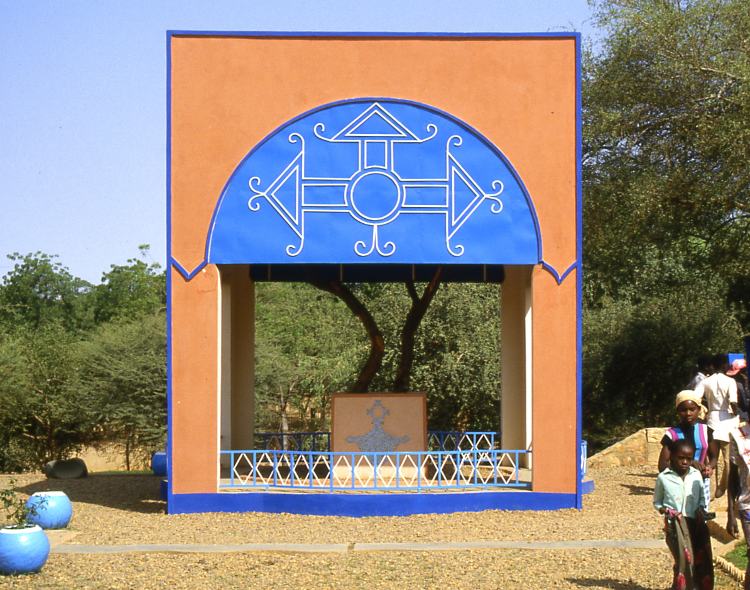
The dead remains were transported on November 8, 1973, to the grounds of the Niger National Museum in Niamey, where they were placed in a dedicated pavilion. Today, a simple metal sculpture stands in the desert to mark the exact geographic location where the tree once grew.