
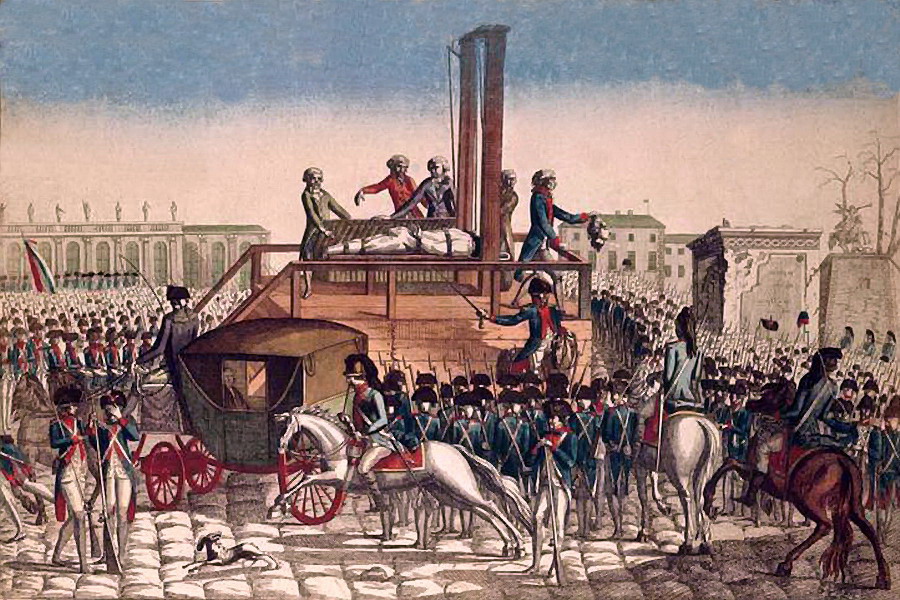
Charles-Henri Sanson held a unique and terrifying position in French history. He was the Royal Executioner of France during the reign of King Louis XVI, and yet, he became the very man who dropped the guillotine blade on the King’s neck.
Born into a dynasty of headsmen, Sanson served the French court for over forty years and executed nearly 3,000 people. His career bridged the gap between the medieval torture of the Old Regime and the mechanized slaughter of the French Revolution. He remains the only man to have executed a King, a Queen, and the revolutionaries who ordered their deaths.
A Family Business of Death
Born in Paris in 1739, Charles-Henri did not choose his profession. He inherited the title of Monsieur de Paris from his father. He began his work on the scaffold at just fifteen years old. His early career involved brutal methods mandated by the legal system of the time.
In 1757, he assisted his uncle in the execution of Robert-François Damiens, a man convicted of attempting to assassinate King Louis XV. The sentence required quartering by horses. The process was a disaster; the horses could not pull the limbs from the body, and the executioners had to sever the tendons with knives to finish the job. This gruesome spectacle reportedly left Sanson disgusted with the inefficiency and cruelty of traditional methods.
Engineering the Guillotine
As the French Revolution began, the new government sought a uniform and equal method of capital punishment for all classes. Dr. Joseph-Ignace Guillotin proposed a decapitation machine, but it was Sanson who ensured it worked. He wrote a detailed memorandum to the National Assembly arguing that swords became blunt and ropes broke, leading to unnecessary pain.
He insisted that a machine was necessary for consistent results. Sanson tested prototypes on bales of straw and live sheep before eventually using human cadavers. In April 1792, he performed the first public execution by guillotine on a highwayman named Nicolas Jacques Pelletier. The crowd complained the process was too fast, but the device functioned exactly as intended.
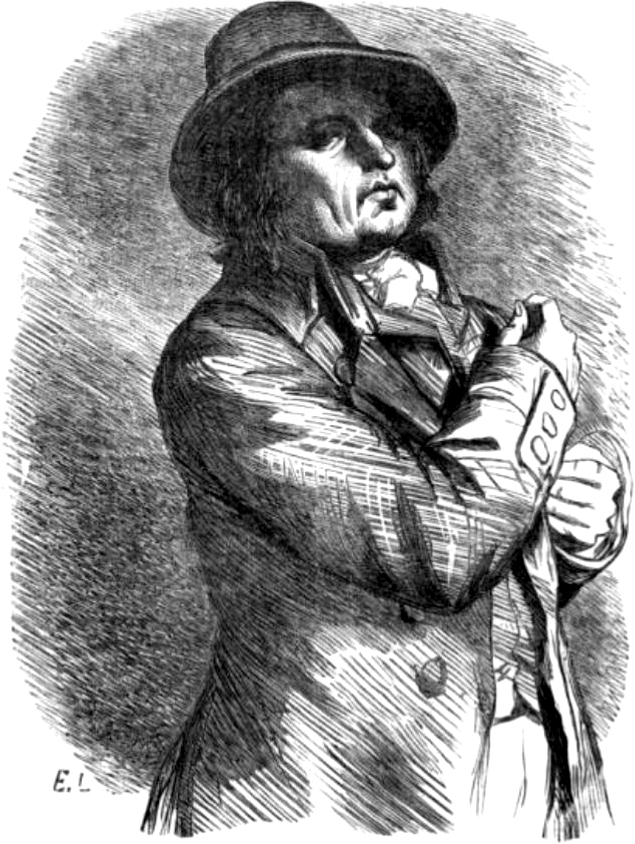
The King on the Scaffold
The defining moment of Sanson’s life occurred on January 21, 1793. The revolutionary government had sentenced King Louis XVI to death. Sanson, who had received his commission from the King himself, had to carry out the order. At the Place de la Révolution, the King attempted to speak to the crowd, but a drum roll ordered by the guards drowned out his voice.
Sanson and his assistants strapped the monarch to the plank. The blade fell, and Sanson’s assistant lifted the royal head to the silent crowd. Days later, Sanson wrote a letter to a newspaper correcting false reports, stating simply that the King had died with calmness and without a struggle.
The Architect of the Terror
The work did not end with the monarchy. The Reign of Terror forced Sanson to operate at a frantic pace. He executed waves of aristocrats, including Queen Marie Antoinette. As the political winds shifted, he eventually executed the revolutionary leaders themselves.
He beheaded Georges Danton and, finally, Maximilien Robespierre, the architect of the Terror. In a single day, he once executed 54 people. Exhausted by the volume of blood, he passed the title to his son in 1795 and died in 1806.