
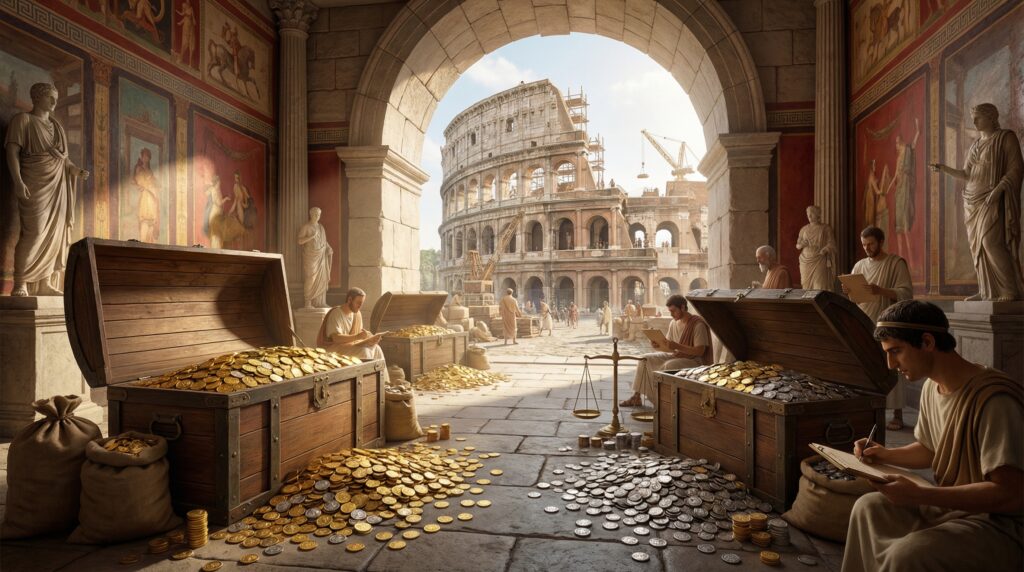
In 70 A.D., the Roman Empire faced a financial crisis that threatened to collapse the government. Following the chaotic Year of the Four Emperors, the imperial treasury sat empty due to civil war and the excessive spending of previous rulers.
The new emperor, Vespasian, took a radical approach to refill the coffers. He looked past traditional sources of wealth and set his sights on the public latrines. By implementing a tax on the collection of human urine, he turned a substance considered waste into a vital stream of national revenue. This unconventional levy not only stabilized the economy but also birthed one of history’s most famous phrases regarding the nature of wealth.
The Industrial Value of Ancient Waste
To the ancient Romans, urine was a valuable commodity with numerous industrial applications. It contained urea, which transforms into ammonia after standing for twenty-four hours. This chemical property made it the primary cleaning agent for “fullers,” the professional launderers of the era. They used the ammonia to strip grease from togas and bleach wool to a bright white.
Beyond the laundry, tanners used the liquid to soften animal hides and remove hair during the leather-making process. Even the medical and dental fields utilized it, as some Romans used the substance as a rudimentary teeth whitener. Because these businesses relied heavily on the supply from public vats, they became the primary targets for the new imperial tax.
A Confrontation Over Imperial Coinage
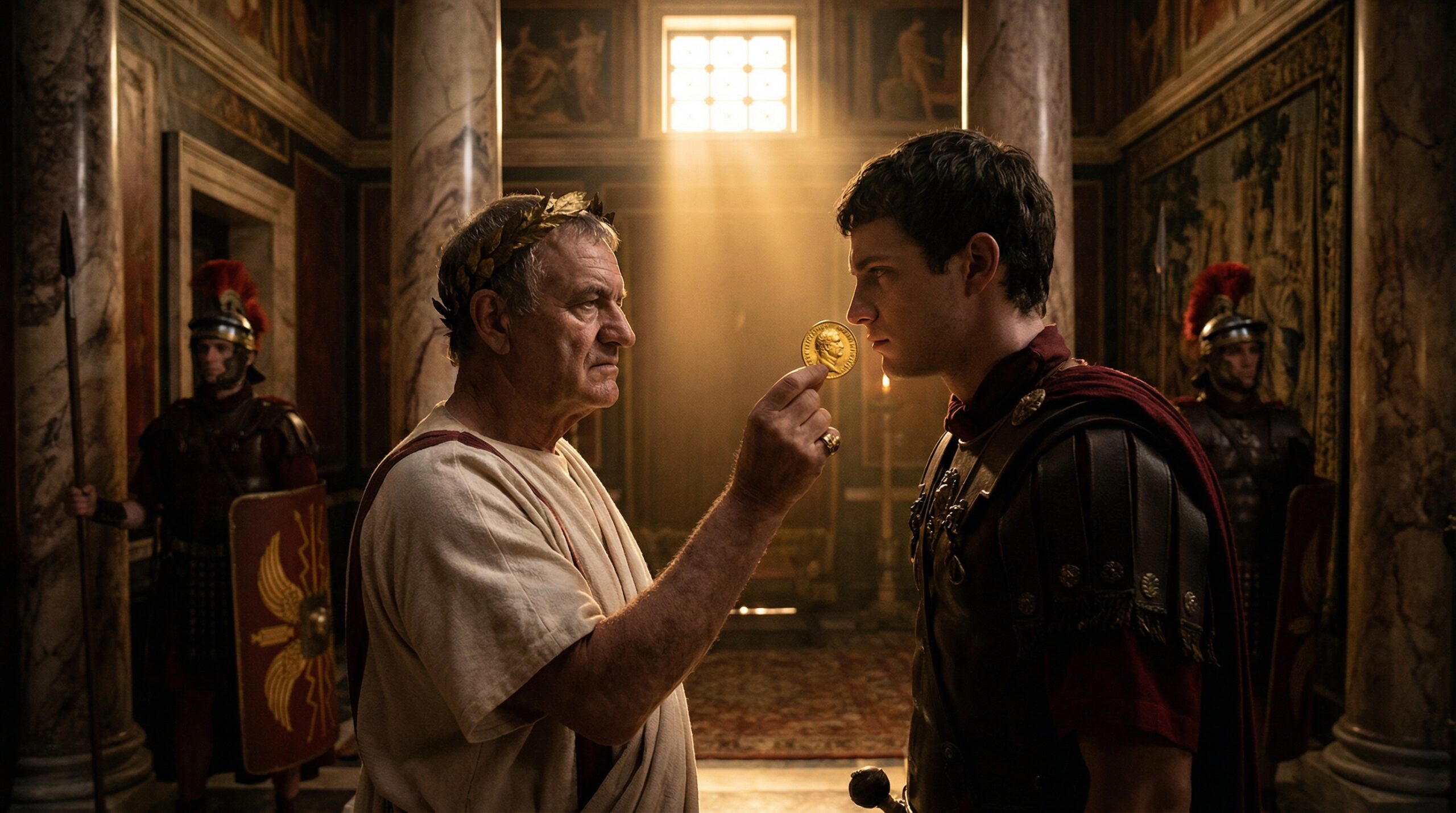
The tax was not without its critics, even within the imperial household. Vespasian’s eldest son, Titus, openly criticized the measure, finding the source of the revenue to be beneath the dignity of the Roman throne. Historical accounts from Suetonius and Cassius Dio record a specific encounter where Vespasian held a gold coin under his son’s nose. He asked Titus if the smell of the money offended him.
When Titus replied that the coin had no odor, the emperor famously remarked that the gold nonetheless came from urine. This exchange gave rise to the Latin expression “Pecunia non olet,” which remains a standard reference in finance and law today.
Restoring the Treasury Through Levies
Vespasian’s focus on collecting revenue from every possible source, no matter how trivial, successfully transformed the state’s finances. By the end of his reign, he had replenished the treasury and funded massive public works, including the start of the Colosseum.
The logistics involved the constant emptying of public jars into large vats for industrial pick-up, ensuring a steady flow of tax payments into the city accounts. While the specific tax was eventually abolished, the linguistic impact remained. In modern times, the emperor’s name still appears in the languages of Europe, as public urinals in France and Italy are still referred to as “vespasiennes” and “vespasianos.”