
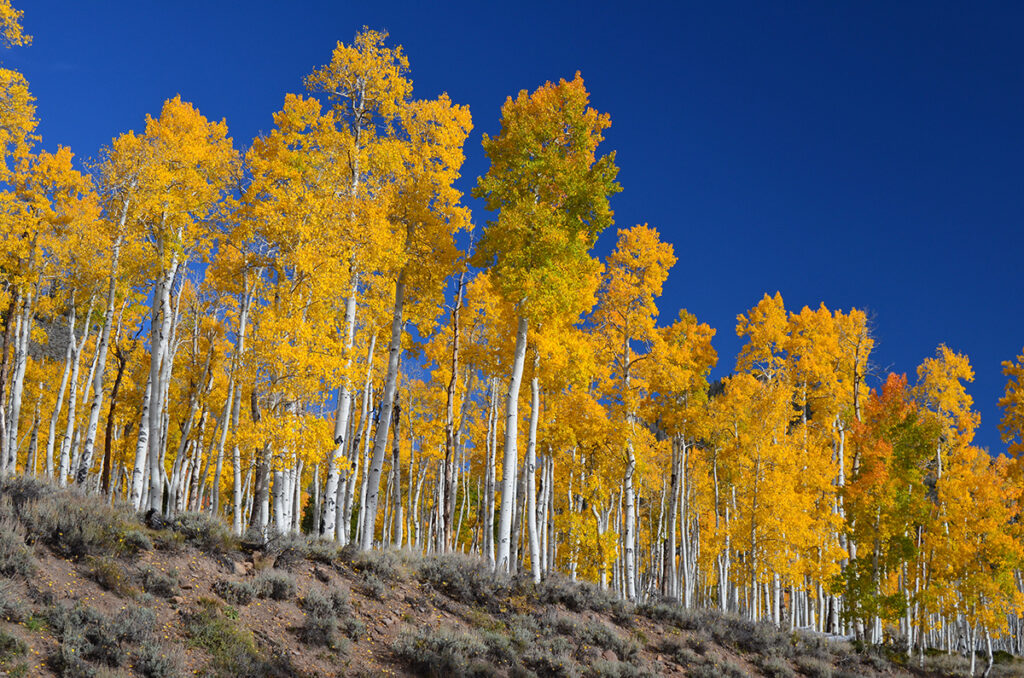
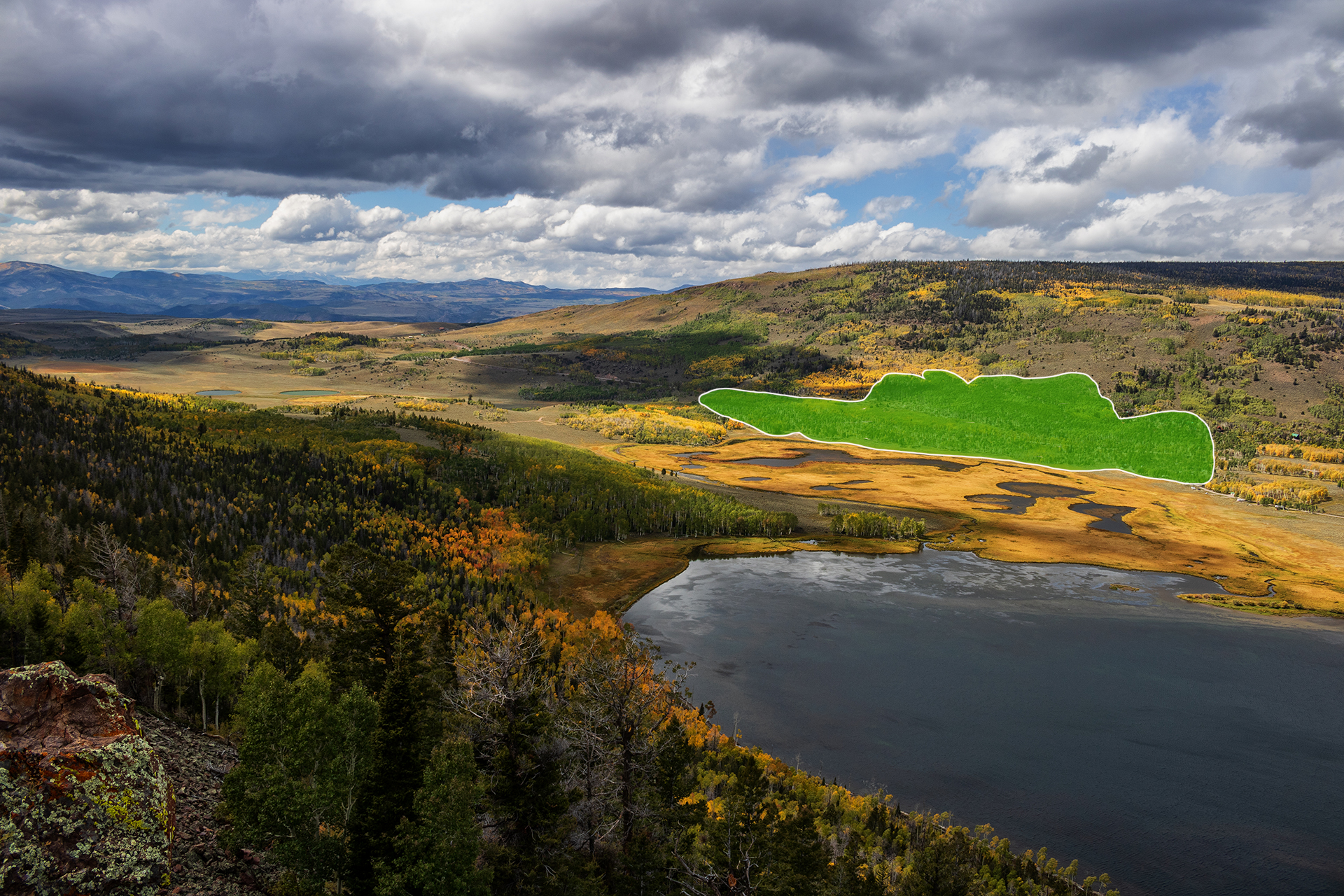
Deep in the Fishlake National Forest of Sevier County, Utah, what appears to be a vast woodland is actually a single living organism. Known as Pando, Latin for “I spread,” this massive quaking aspen (Populus tremuloides) spans 43.6 hectares (108 acres) and consists of an estimated 47,000 individual stems.
These stems look exactly like individual trees, but they share identical genetics and are physically connected by a single, expansive root system. Pando holds the title for the world’s largest known tree by weight, tipping the scales at an estimated 6,000 metric tons (6,600 short tons).
Uncovering the Science of Suckering
The organism was first identified in 1976 by researchers Jerry Kemperman and Burton V. Barnes. They used aerial photography and morphological differentiation techniques to determine that the massive grove was one male clone. Later, in 1992, researchers from the University of Colorado Boulder re-examined the site, studying pollen production, leaf structure, and root connections, which confirmed the earlier findings.
By 2008, comprehensive molecular genetic testing proved beyond doubt that Pando was a single biological entity. The tree reproduces through a process called “suckering,” where the central root system sends up new, genetically identical shoots to replace older stems as they die off naturally after 100 to 130 years.
A History Rooted in the Ice Age
Determining the exact age of Pando is complicated because the continuous replacement of stems and roots makes traditional tree-ring dating impossible. Current scientific estimates place the origin of the root system conservatively between 9,000 and 16,000 years ago.
This timeframe means the original seed germinated near the end of the last glacial period. The root system has survived for millennia, continually generating new shoots along the steep basin wall. The geographical footprint of the tree stretches from lower elevations of 2,700 meters (8,900 feet) up to 2,773 meters (9,098 feet) above sea level in the mountainous terrain.
Modern Efforts to Protect the Giant
Since the 1990s, scientists and land managers have noted that grazing animals, specifically mule deer and elk, consume the young aspen shoots before they can mature. To address this, the Fishlake National Forest and various conservation groups initiated the Aspen Regeneration Project.
They installed 2.4-meter (8-foot) fencing around significant portions of the landmass. Following extensive research and public planning between 2015 and 2022, a major initiative called the Pando Protection Plan was funded. By late 2025, approximately 80 percent of Pando’s total landmass was successfully enclosed within protective wildlife controls, allowing new stems to grow and maintain the organism’s structural volume.