
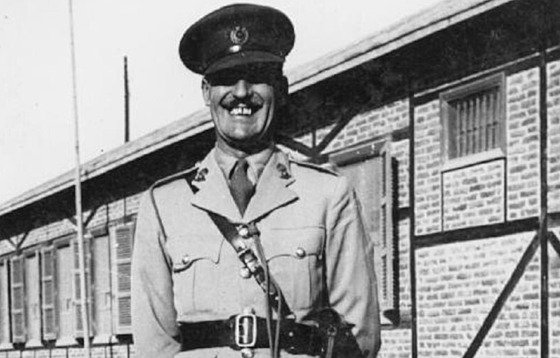
Before the Second World War, Jasper Maskelyne was the leading figure in British stage magic. The grandson of an esteemed illusionist, Jasper had caused a massive uproar in 1936 by publishing a book that revealed the secrets of professional stage tricks, ranging from mind-reading to vanishing acts.
The controversial move ruined many of his peers but turned him into an international star and a film sensation. However, his glamorous life directing the English House of Magic ended on September 1, 1939, when the 37-year-old enlisted in the British Army to fight Germany.
A Unique Problem for the Military
The military faced a dilemma: where do you place a world-famous celebrity during a war? Putting him on the front lines was too risky for national morale, but assigning him to a kitchen or supply depot did not suit his desire for action.
Maskelyne further complicated things by constantly leaking exaggerated claims of his activities to the press. In one early, unofficial demonstration, he used mirrors and models to create an optical illusion of the German warship Graf Spee floating on the River Thames. While it deeply impressed the public and fueled rumors of his vast powers, military commanders found it entirely impractical for battlefield use.
The Magic Gang and Desert Deceptions
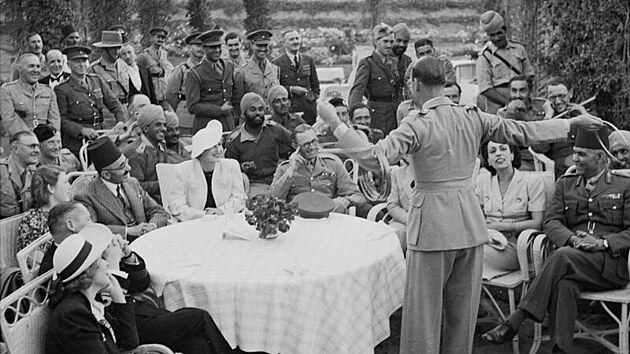
Maskelyne was eventually transferred to the Royal Engineers and sent to North Africa, a move the British intentionally publicized to play on the occult fears of high-ranking Nazi officials like Heinrich Himmler and Adolf Hitler. In Egypt, he led a small unit dubbed the “Magic Gang,” consisting of an architect, an art restorer, a carpenter, a cartoonist, and a painter.
While their main tasks often involved creating camouflage paint from desert sand and camel dung, they did pull off a massive deception in Alexandria. By using bright lights, fake structures, and controlled explosions on a remote coastline, they successfully lured German bombers away from the actual, darkened harbor.
The Ultimate Illusion: Operation Bertram
The magician’s greatest contribution, however, may have been accidental. During Operation Bertram, the British needed to trick the Germans into thinking an attack would happen in the south, while the real offensive was planned for the north. They built flimsy, obvious dummy tanks and trucks in the north to make the cautious Germans think it was just another one of Maskelyne’s elaborate stage tricks.
Under the cover of darkness, the Allies swapped the obvious dummies for real, heavily armed tanks hidden inside boxy structures. The surprise attack was a massive success. In his 1949 ghostwritten book Magic: Top Secret, Maskelyne claimed he single-handedly won the war by hiding cities and moving entire fleets. The military never corrected these wild exaggerations, allowing the magician to take the credit in order to protect the real intelligence officers and engineers who designed the actual military deceptions.