
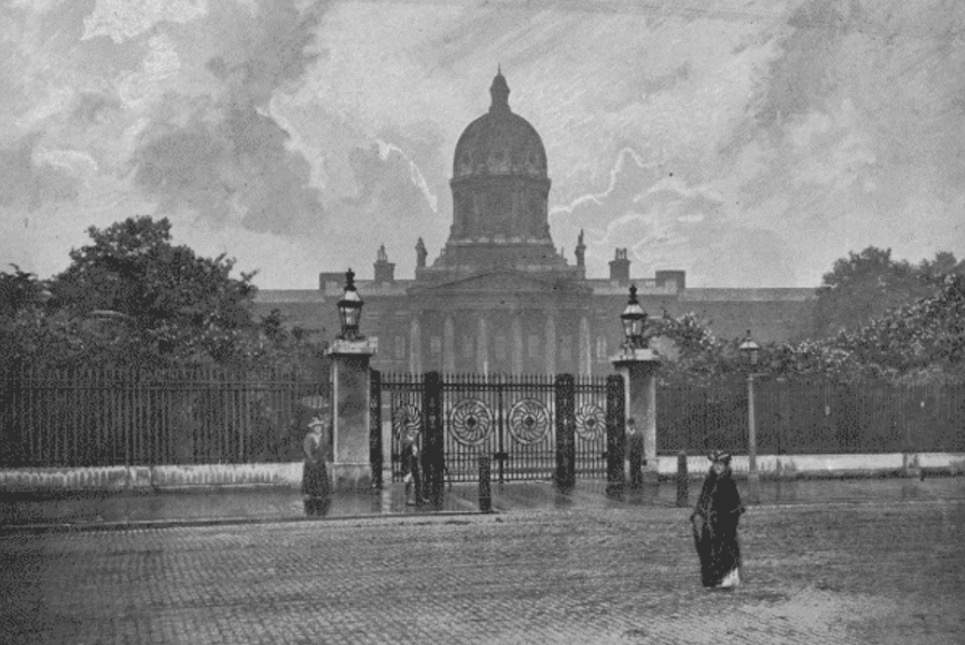
In 1247, an Italian bishop established a collection center for the Crusader Church just outside the walls of London. This small religious house, the Priory of the New Order of our Lady of Bethlehem, gradually transformed into Europe’s most infamous psychiatric institution.
Over the centuries, the colloquial pronunciation of its name birthed a new English noun for absolute chaos. This is the fully documented history of Bethlem Royal Hospital, an institution that locked away tens of thousands of individuals and turned medical treatment into a public spectacle.
The Origins of the Asylum
The facility began in the Bishopsgate Without district, operating primarily to raise alms. By the year 1403, official visitation records noted the presence of six male patients described strictly as “mente capti,” a Latin phrase indicating severe mental illness.
The site housed 11 chains, six locks, two pairs of stocks, and four manacles. These early historical documents demonstrate the facility’s shift from a general alms-house to a specialized site for confining individuals deemed criminally or mentally unwell. Over time, the name Bethlehem was shortened by locals to Bedlam.
Medical Experiments and Public Spectacle
During the 18th century, the institution suffered from a severe lack of government funding. Administrators quickly turned to public tourism to finance the facility. Historical records indicate that up to 96,000 visitors paid a monetary admission fee each year to walk the halls and observe the patients.
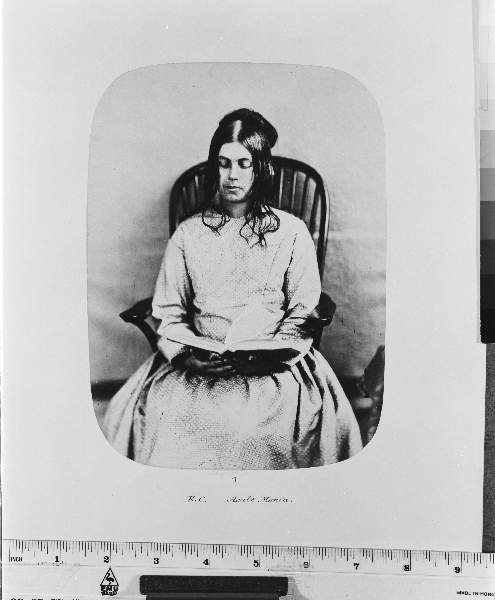
Staff members subjected the residents to extreme physical treatments based on the medical theory that bodily purging would cure the mind. Physicians utilized a device for “rotating therapy,” strapping patients to a chair suspended from the ceiling and spinning them at 100 rotations per minute to induce intense vomiting and severe vertigo.
Parliament Investigations and Relocations
The British House of Commons Select Committee on Madhouses initiated a formal parliamentary inquiry in 1815 to examine the internal conditions of the hospital. The resulting government report exposed severe neglect and prompted the immediate forced resignation of the principal physician, Thomas Monro.
The institution relocated multiple times to escape its decaying original structures, moving approximately 2 miles (3.2 kilometers) to St George’s Fields in Southwark in 1815, and finally settling at a new campus in Monks Orchard in 1930.
The Broadgate Mass Grave Excavation
The sheer volume of individuals who passed through the original Bedlam site remained completely hidden underground for several centuries. In 2013, construction crews excavating a new railway line in central London unearthed a massive burial ground at the Liverpool Street location.
Digging down deep into the soil, professional archaeologists identified the remains of roughly 20,000 hospital patients buried side by side. The oldest skeletons discovered on the site dated back to the 1500s. Today, Bethlem Royal Hospital operates as a modern psychiatric research facility strictly under the National Health Service.