
Breaching the Concrete Fortifications
After occupying Western Europe, Nazi Germany constructed the Atlantic Wall, a 3,105-mile (5,000-kilometer) stretch of concrete emplacements, tank traps, and walls. The 1942 Dieppe raid demonstrated that direct assaults on fortified ports resulted in heavy casualties and bogged-down vehicles.
Allied planners realized they needed a way to blow a tank-sized hole straight through the concrete defences to allow invading troops to pass with minimum losses. The Directorate of Miscellaneous Weapon Development tasked aeronautical engineer Nevil Shute Norway and his team to find a solution.
A Giant Explosive Catherine Wheel
Norway calculated that breaching the wall required a minimum of 1 tonne (1.1 tons) of high explosives. Inspired by the spinning Catherine wheel firework, the team conceptualized a remote-controlled device capable of delivering the massive payload.
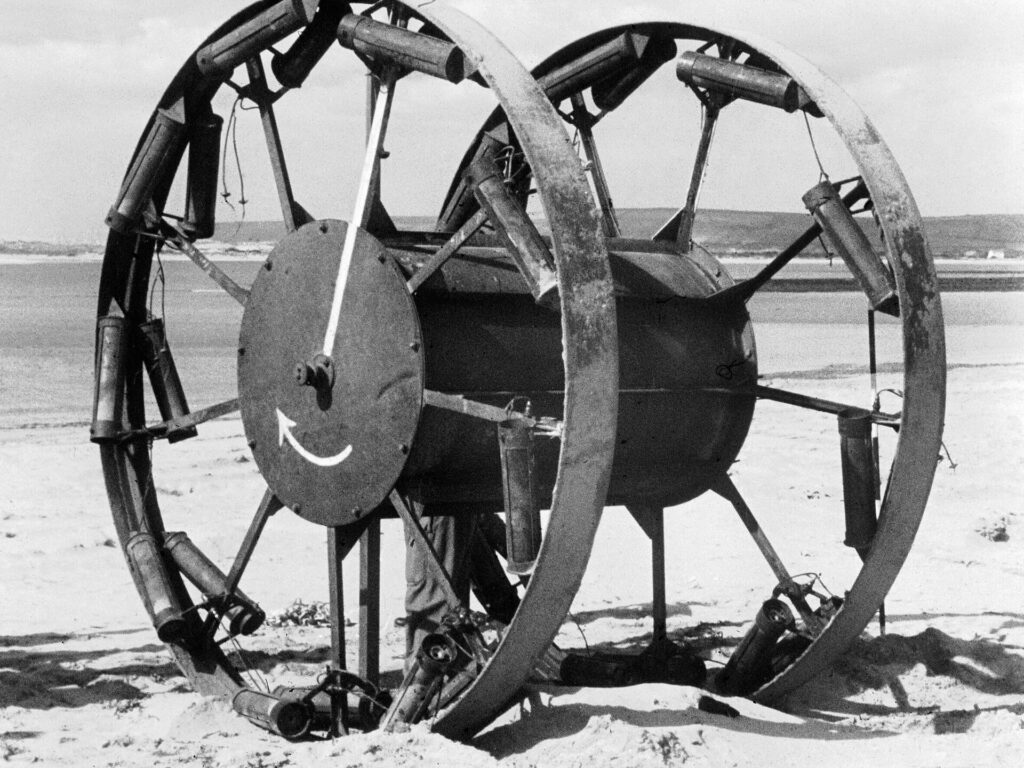
They built a contraption resembling a giant film reel. It featured two wheels, each 10 feet (3 meters) high, connected by a central steel tank containing the explosive charge. Cordite-filled rockets were attached around the outer rims of the wheels. When ignited, these rockets were designed to propel the massive structure up a beach at speeds exceeding 60 mph (96 km/h). They named it the Panjandrum.
Disastrous Public Beach Tests
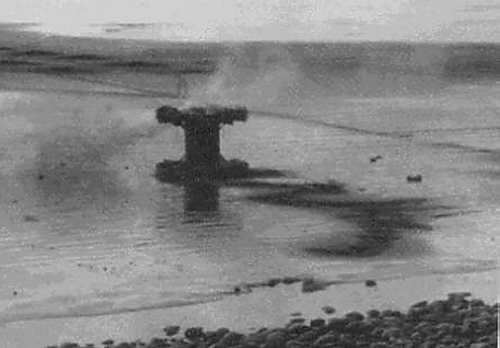
Testing began in September 1943 at Westward Ho! in Devon. Because the military needed a beach environment, secrecy was compromised, and civilian crowds gathered to watch. During the initial launch from a landing craft, rockets detached from one wheel, causing the heavy machine to veer wildly off course.
The team made multiple modifications, but subsequent tests failed. Archival footage shows the Panjandrum careering across the sand, throwing up seawater while being chased by an excited dog.
A Failed Weapon or a Clever Decoy?
A final test took place in January 1944 in front of military officials. A clamp failed, rockets broke free, and the Panjandrum lurched ominously. Shedding live rockets, it headed straight for the photographer and forced assembled admirals and generals to dive for cover into barbed-wire entanglements. The machine crashed onto the sand and disintegrated in violent explosions.
The project was officially scrapped. However, because the testing was conducted in plain sight of the public, some pyrotechnic experts and historians theorize the highly visible machine might have been a deliberate intelligence trick intended to mislead German forces about the Allied invasion plans.