
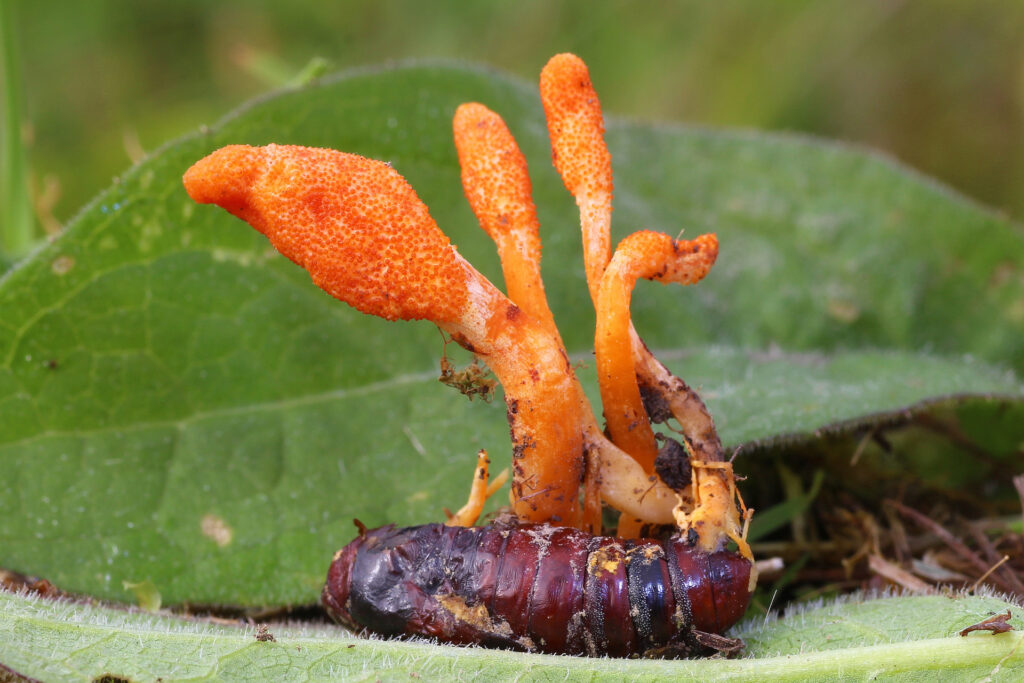
Deep within forests around the world, a genus of sac fungi known as Cordyceps executes one of the most fascinating life cycles in the natural world. This organism specifically targets insects and arthropods, invading their bodies and ultimately replacing the tissue of the host.
The biological reality of this entomopathogenic fungus features precise parasitic mechanisms that have existed for millions of years. This text details the factual biology of how over 260 species of Cordyceps operate globally.
A Microscopic Infiltration
When a Cordyceps spore lands on a suitable host, the invasion begins immediately. The fungus attacks the insect by breaching its outer exoskeleton. Once inside, the fungal mycelium spreads rapidly, consuming the internal tissues.
The fungus absorbs nutrients directly from the insect, growing and multiplying within the body of the host. During this period, the infected insect might continue its standard daily activities for a short time before the biological takeover is entirely complete.
The Final Spore Dispersal
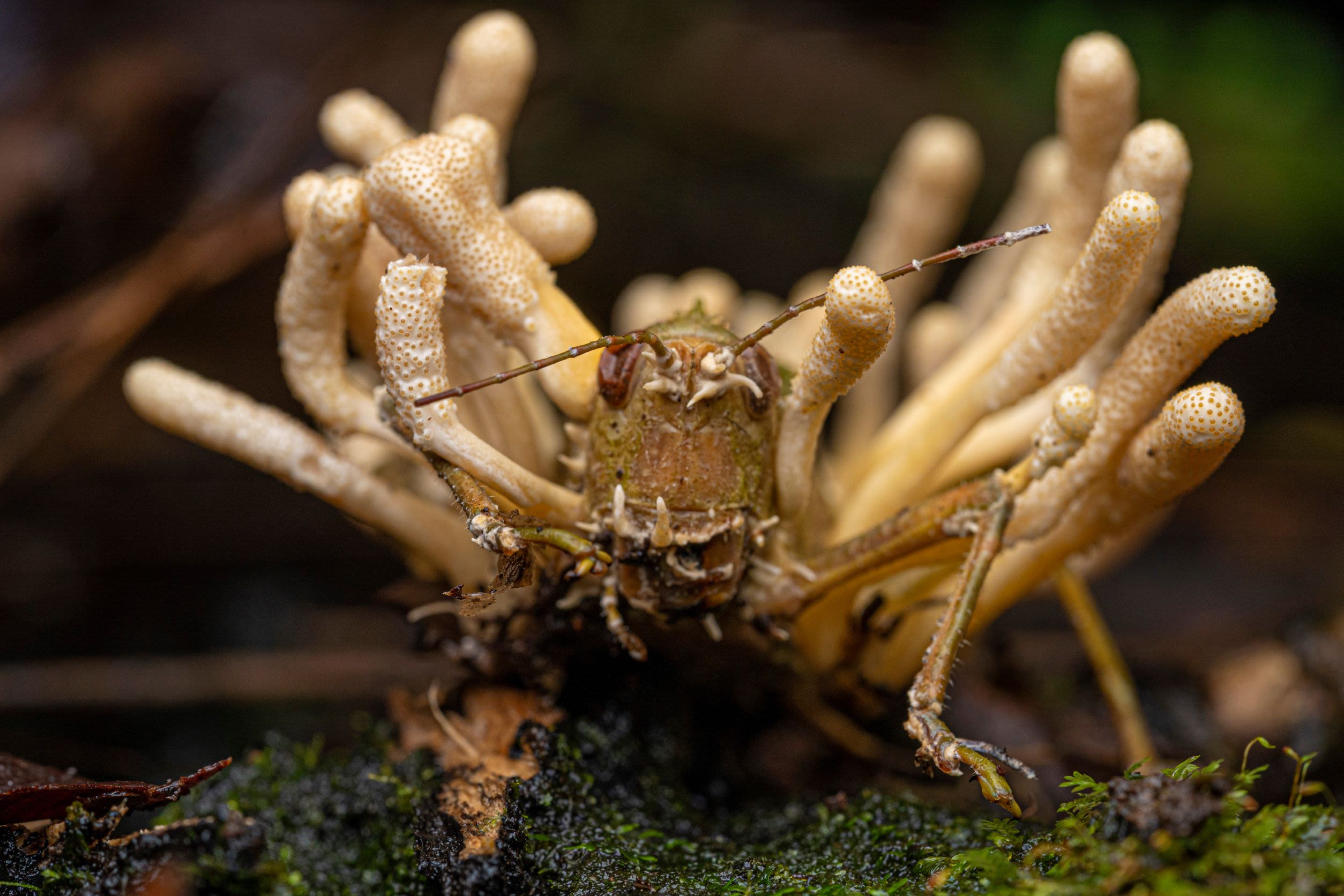
As the internal tissues of the host are completely replaced by the mycelium, the fungus prepares for its final phase. A specialized fruiting body, formally called an ascocarp, begins to grow outward from the remains of the insect. This ascocarp, which can reach heights of up to 4 centimeters (1.57 inches) in some species, physically breaks through the exoskeleton.
The fruiting body contains numerous small perithecia. These structures hold thread-like ascospores. Eventually, these ascospores break into fragments and release into the surrounding environment, ready to infect a new generation of hosts and continue the cycle.
Global Distribution and Varieties
The genus Cordyceps encompasses more than 260 distinct species worldwide. While they have a global distribution, the vast majority of these known species originate in Asia. The scientific name derives from the ancient Greek word for club and the Latin word for head.
For over 1,500 years, different variants of this fungus have been harvested and utilized in traditional Chinese medicine practices. Although modern research is investigating components like cordycepin, there is currently no scientifically proven therapeutic potential for human medical treatments.
Classification and Taxonomy
Scientists classify this genus under the family Cordycipitaceae. In 2007, extensive nuclear DNA sampling reorganized the taxonomy of these organisms. Researchers discovered that certain members previously classified under this umbrella were only distantly related.
As a result, several species were moved into entirely new genera. The complex taxonomy demonstrates the immense diversity of these parasitic organisms. Each species is highly specialized, often evolving alongside a single specific host species over countless generations. This exact specificity ensures that the broader ecosystem maintains an intricate biological balance.