
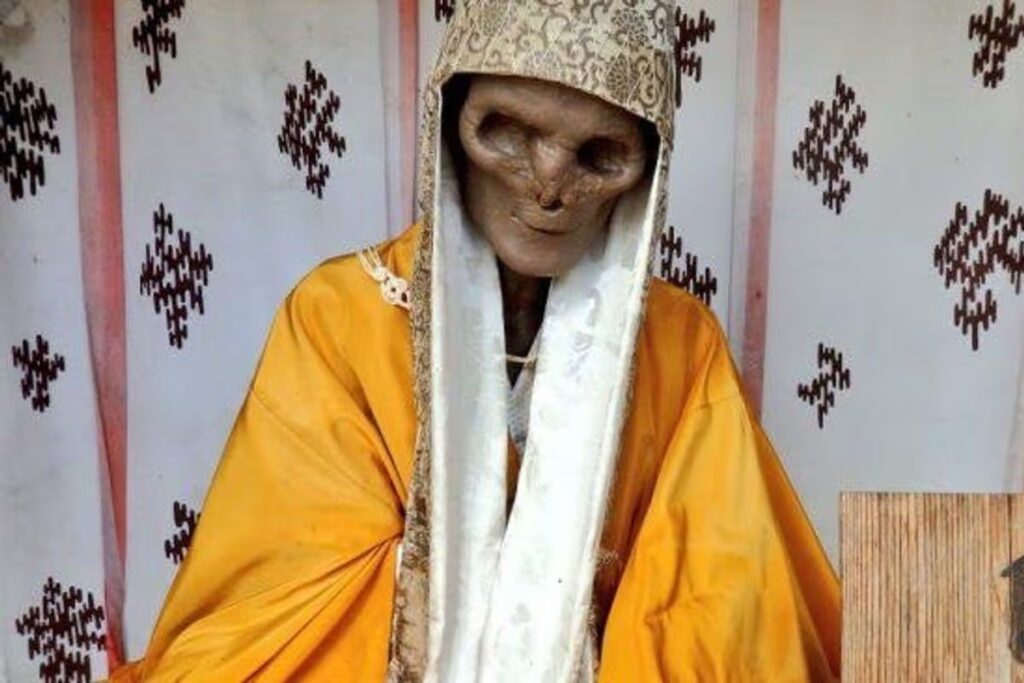
Between the 11th and 20th centuries, Japanese monks embarked on a regimen so extreme it altered their biology. They did not aim for physical health, but the exact opposite: turning their living bodies into mummies from the inside out.
Through a grueling years-long process of starvation, dehydration, and underground confinement, these men pursued a state called sokushinbutsu. Only a fraction succeeded in this ultimate physical transformation. This is the timeline and methodology of the monks who mummified themselves alive.
The Brutal Tree-Eating Diet
The path to sokushinbutsu began with an intense diet known as mokujikigyō, or “tree-eating.” For 1,000 days, practitioners completely stopped eating standard food. Instead, they foraged in the forests around the Mountains of Dewa, consuming only pine needles, nuts, berries, tree roots, and bark. Researchers have found river rocks in the stomachs of some mummies.
This diet was biological engineering. It eliminated fat and muscle tissue while severely dehydrating the body. By removing internal moisture, the monk starved the bacteria that cause human decomposition. Monks sometimes repeated this cycle multiple times.
Drinking Toxic Tree Sap
As the monks grew closer to death, they introduced a specific chemical element to their regimen. They drank a tea brewed from urushi, the toxic sap of the Chinese lacquer tree. Usually used to varnish bowls and furniture, this sap functioned as an internal embalming fluid.
Ingesting the urushi coated the internal organs in a toxic lacquer, making the body uninhabitable for maggots and insects that would otherwise consume the flesh. During this final stage, the practitioner consumed almost nothing else, limiting fluid intake to tiny amounts of salinized water.
Buried Alive With a Bell
The final phase required the monk to enter a cramped pine box, assuming the lotus position. Fellow monks lowered this coffin ten feet into the ground and covered it with charcoal. The buried monk had only two links to the surface: a hollow bamboo rod acting as an air pipe and a small bell.
Every day, the entombed monk meditated in absolute darkness and rang the bell to signal he was still breathing. When the ringing finally ceased, the surface monks removed the air tube and permanently sealed the tomb.
The 1,000-Day Waiting Period
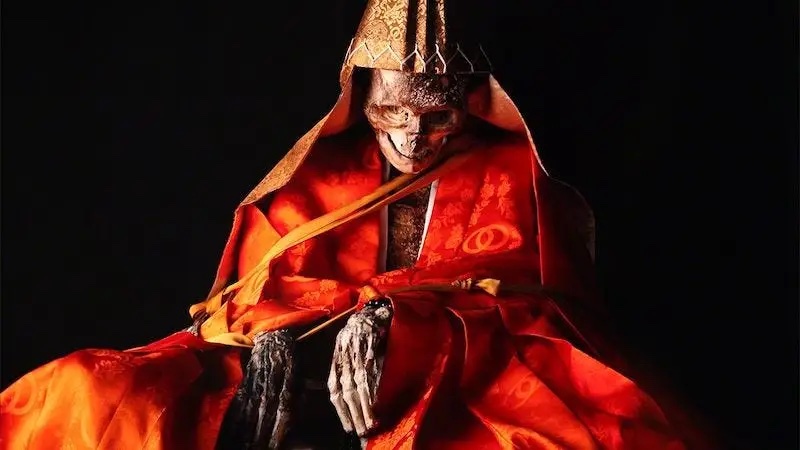
The sealed coffin remained underground for another 1,000 days. Once the time passed, the monks unearthed the box to inspect the corpse. If the body showed signs of rotting, it received a standard burial. However, if the mummification succeeded and the corpse remained intact, the monk achieved sokushinbutsu.
The preserved body was dressed in robes and displayed in a temple. The Meiji government legally banned the practice in 1877. The last successful attempt occurred illegally in 1903 by a monk named Bukkai. Today, approximately 16 mummies reside in the Yamagata prefecture.