
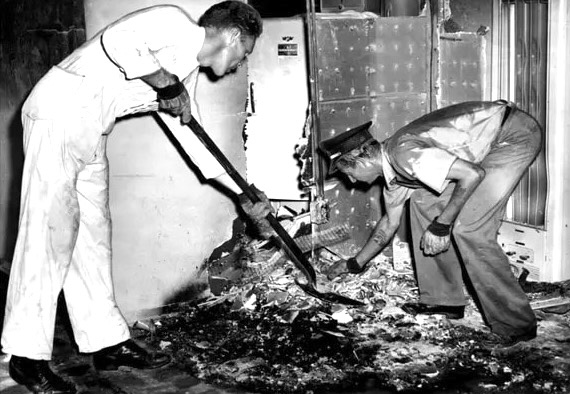
On the morning of July 2, 1951, a landlady in St. Petersburg, Florida, approached her tenant’s apartment to deliver a telegram. Reaching out, she touched a doorknob that was unusually hot. When authorities finally entered the room, they discovered a scene that defied conventional expectations of fire behavior.
A 170-pound (77.11 kg) woman had been reduced to a mere pile of ashes, yet the surrounding apartment remained largely untouched by the intense flames. This bizarre event sparked a major investigation, initially puzzling local officials before the FBI provided a definitive, scientific explanation for one of the most famous fires in American history.
A Gruesome Discovery in Florida
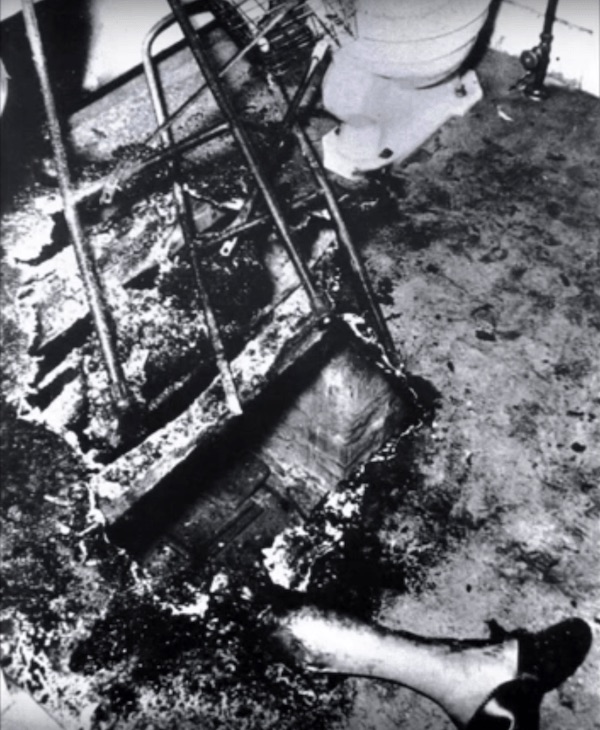
Police officers arriving at the scene found the remains of sixty-seven-year-old Mary Reeser. She had been sitting in an armchair, which was completely destroyed down to its bare metal springs. Of Reeser herself, almost nothing physical remained.
Investigators found only a single left foot still wearing a black satin slipper, a small piece of her backbone, and her skull. Strangely, the skull had shrunk down to the size of a teacup. The intense heat required to fully cremate a human body normally exceeds 3,000 degrees Fahrenheit (1,648.89 degrees Celsius), an extreme temperature that typically engulfs an entire structure and destroys everything inside.
The Intact Surroundings
The most perplexing aspect of the physical crime scene was the distinct lack of damage to the rest of the room. Fire experts noted that flames hot enough to vaporize human bones should have spread rapidly. Instead, the fire remained completely localized to the chair and Reeser’s body.
A stack of newspapers resting merely 12 inches (30.48 cm) away from the ashes showed absolutely no signs of singeing or burning. The ceiling and walls were completely coated in a thick layer of greasy soot, and a plastic light switch had melted from the rising heat, but the apartment itself never ignited.
The Scientific Wick Effect Conclusion
Local authorities were initially baffled by the physical details and eventually handed the case over to the Federal Bureau of Investigation. After conducting thorough chemical analysis and reviewing the scene photographs, the FBI released a final report.
They determined that Reeser had likely taken sleeping pills and fallen asleep while smoking a cigarette. The dropped cigarette ignited her highly flammable rayon nightgown. According to the FBI investigators, this initial spark initiated a biological and chemical process known as the wick effect.
In the wick effect scenario, the victim’s clothing acts exactly like the wick of a wax candle. The heat of the initial small flame melts the body’s subcutaneous fat, which then seeps directly into the clothing and continuously fuels the fire. Reeser possessed enough body fat to provide ample fuel for a slow, smoldering burn.
This localized combustion process slowly consumed her over several hours without spreading outwards to the surrounding room. The official records formally closed the case based on this exact scientific explanation.