
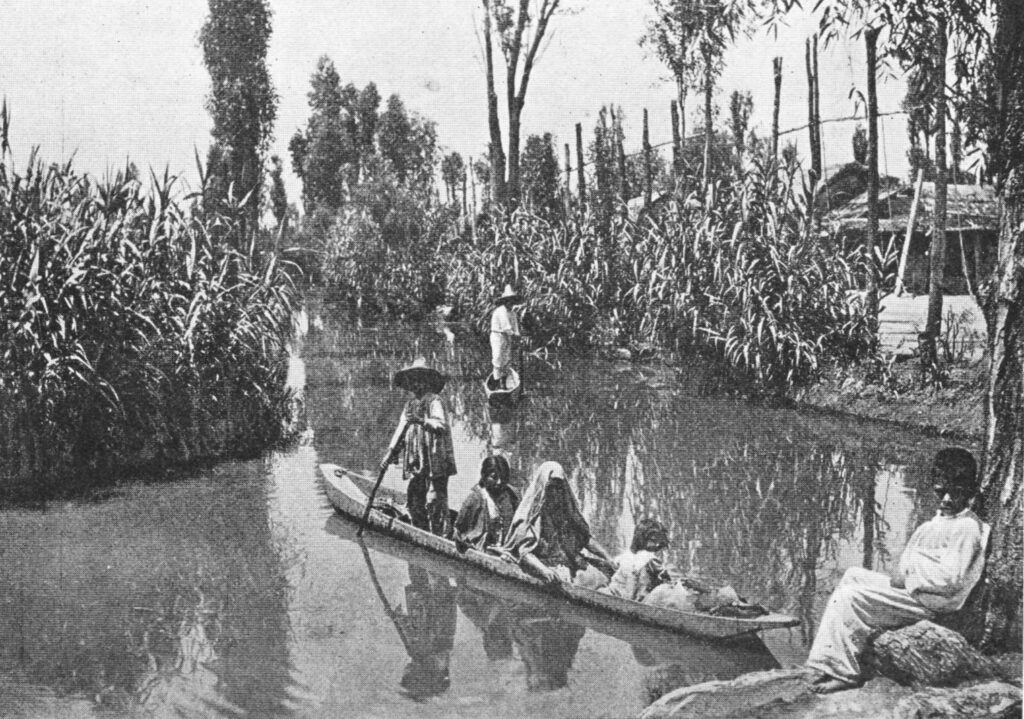
Hundreds of years ago, a massive empire figured out how to grow crops on top of water, feeding hundreds of thousands of people in the middle of a lake. Long before modern hydroponics, Mesoamerican farmers engineered a vast system of artificial islands that yielded up to seven harvests in a single year.
The method allowed a metropolis to thrive in an environment lacking solid ground for large-scale farming. This network of waterways and raised beds transformed a swampy basin into one of the most highly productive agricultural centers in the pre-Columbian Americas.
The Construction of Artificial Islands
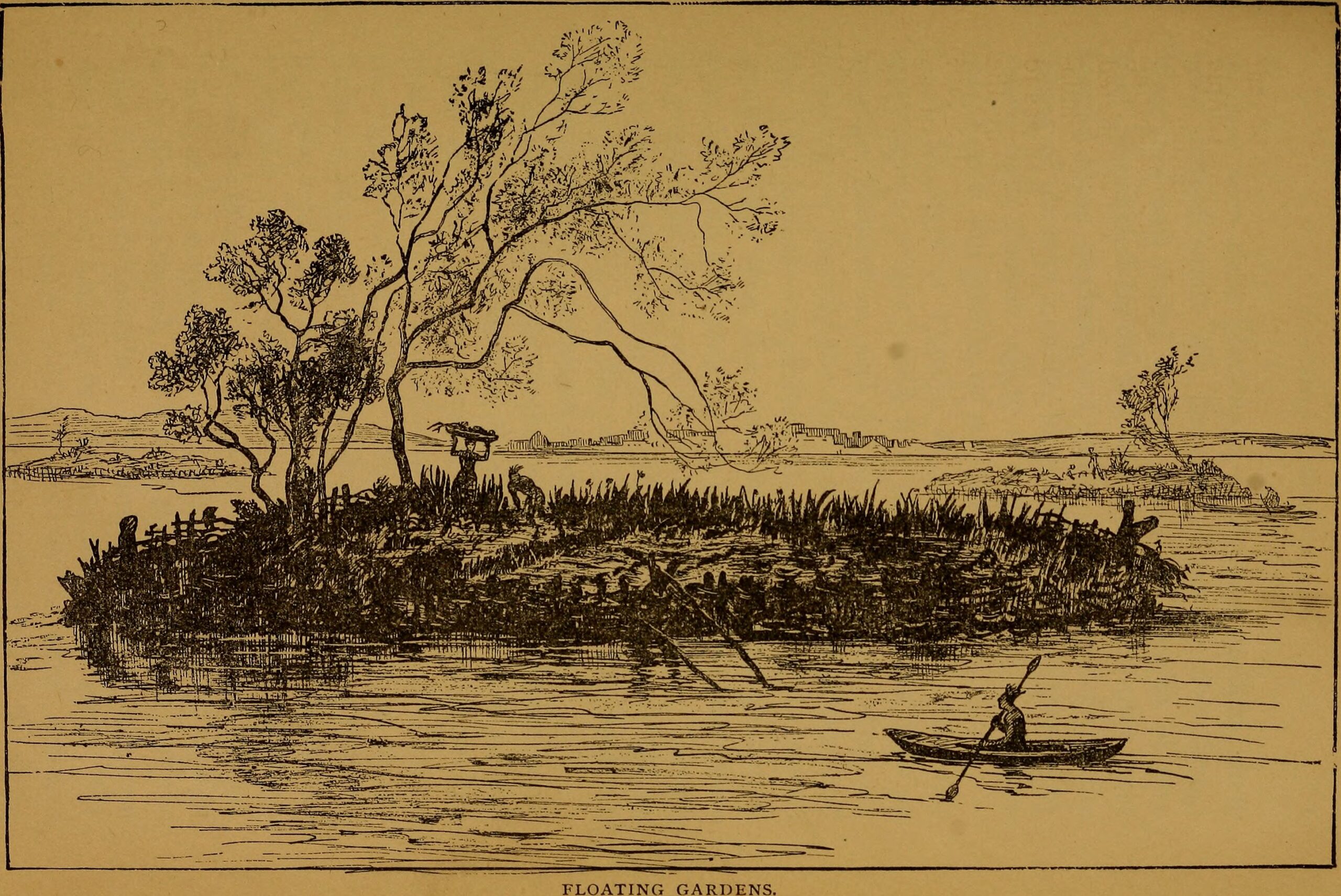
The process began with shallow, marshy lakebeds. Farmers staked out rectangular enclosures using wooden posts, typically measuring about 30 meters (98.4 feet) long and 2.5 meters (8.2 feet) wide. Between these stakes, they wove a dense web of reeds, sticks, and branches to form a base.
Workers then piled thick layers of lake mud, decaying vegetation, and dirt onto the floating rafts until the surface broke the water and stood tall enough to avoid flooding. To anchor these plots permanently, they planted ahuejote, a type of native willow tree, at the corners. As the trees grew, their dense root systems reached deep into the lake floor, securing the earth in place and creating a solid foundation.
A Continuous Cycle of Cultivation
These raised plots possessed continuous access to moisture, eliminating the need for seasonal rainfall to sustain the crops. Farmers navigated the narrow canals between the plots in small canoes, tending to maize, beans, squash, and tomatoes.
The lake mud scooped from the canal bottoms acted as a highly effective, nutrient-dense fertilizer. Because the soil never froze and constantly drew water from below through capillary action, farmers could germinate new seeds in separate seedbeds. Once a crop was harvested, the young seedlings were immediately transplanted into the main soil, allowing continuous food production without rest periods.
Feeding a Growing Metropolis
By the 15th century, this agricultural network covered over 9,000 hectares (22,239 acres) across Lake Texcoco and Lake Xochimilco. The massive food yield supported the expanding population of Tenochtitlan. The city housed nearly 200,000 residents at its peak, making it larger than most European cities of the same era. Every single day, thousands of canoes transported fresh produce, flowers, and building materials from the lake plots directly to the central markets of the capital.
The Disappearance of the Lakes
When the Spanish arrived in the 16th century, they fundamentally altered the hydrology of the valley region. To control seasonal flooding and expand their own style of urban development on solid ground, the new arrivals breached the dikes and began draining the basin.
As the water retreated over the centuries, the canal system collapsed. Today, only a small fraction of these original waterways remains in the Xochimilco district of modern Mexico City. In this limited area, a fraction of the historical canals still holds water, and local farmers continue to cultivate crops using the same physical methods.