
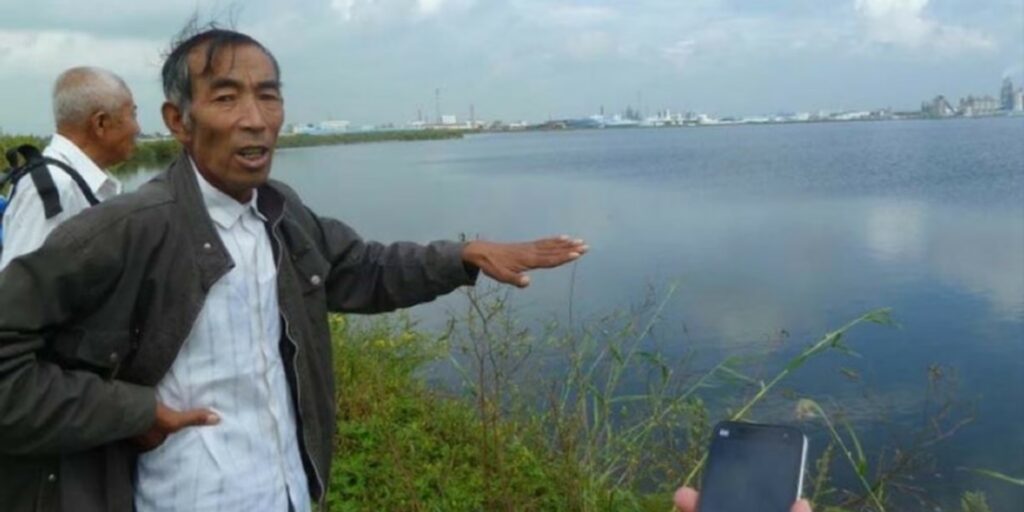
In 2001, a Chinese farmer with only a third-grade education watched toxic wastewater destroy his home and land. Facing a state-owned chemical corporation worth billions, he had no money, no legal representation, and no formal understanding of the law.
Instead of walking away, Wang Enlin bought a dictionary, entered a local bookstore, and began reading. For the next sixteen years, he educated himself on Chinese environmental regulations, building a lawsuit from scratch to hold the Qihua Group accountable for dumping thousands of tons (metric and imperial tonnes) of chemical waste onto his village.
A Lunar New Year Disaster
Wang Enlin lived in Yushutun, a farming village in China’s Heilongjiang Province. On the eve of the 2001 Lunar New Year, Wang was playing cards and preparing dumplings with neighbors. Suddenly, foul-smelling liquid began flooding his house and the surrounding farmland. The wastewater originated from a nearby polyvinyl chloride plant operated by the Qihua Group, a subsidiary of a massive state-owned enterprise.
Government documents later revealed that the Qihua Group discharged between 15,000 and 20,000 short tons (13,607 and 18,143 metric tonnes) of chemical waste annually. The continuous dumping created a 71-acre (28.7-hectare) wasteland of calcium carbide residue and a 478-acre (193.4-hectare) liquid waste pond. The pollution left the village soil completely unsuitable for growing crops, which the residents relied upon for their survival.
Paying for Law Books with Corn
When Wang complained to the local Land Resources Bureau, officials told him he needed to produce legal evidence. Wang later told reporters that he knew the company was at fault but did not know which laws had been broken. Having dropped out of primary school at age ten, he struggled to read complex legal texts.
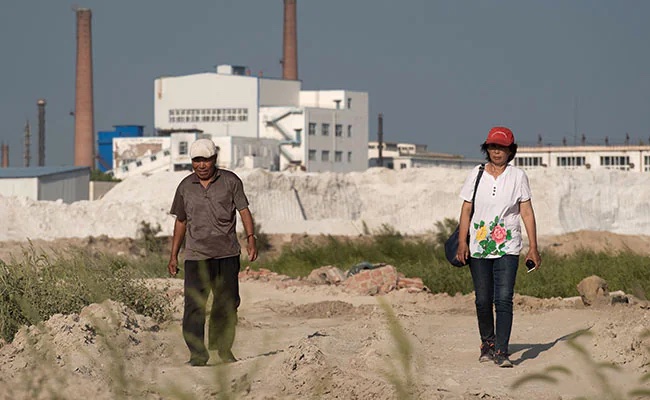
Determined to build a case, Wang spent his days at a local bookstore. He used a dictionary to decipher legal terminology. Unable to afford the law books, he hand-copied the relevant information into notebooks. He paid the bookstore owner with sacks of corn in exchange for allowing him to sit and copy the texts. Over a decade and a half, he gathered evidence, mastered environmental protection laws, and educated his fellow villagers on their legal rights.
The Long Road to Court
In 2007, Wang’s meticulous documentation caught the attention of the Center for Legal Assistance to Pollution Victims. The organization offered him free legal support and helped file a formal petition. The case officially entered the court system in 2015.
Two years later, the Angangxi District Court ruled in favor of Wang and fifty-five other families. The judge ordered the Qihua Group to clear the chemical waste and pay 820,000 yuan (approximately $120,000 USD) in compensation. The chemical company immediately filed an appeal, overturning the initial victory and sending the case into further litigation. Following this appeal, all media coverage of the case abruptly stopped, leaving the final outcome of the lawsuit unknown.