
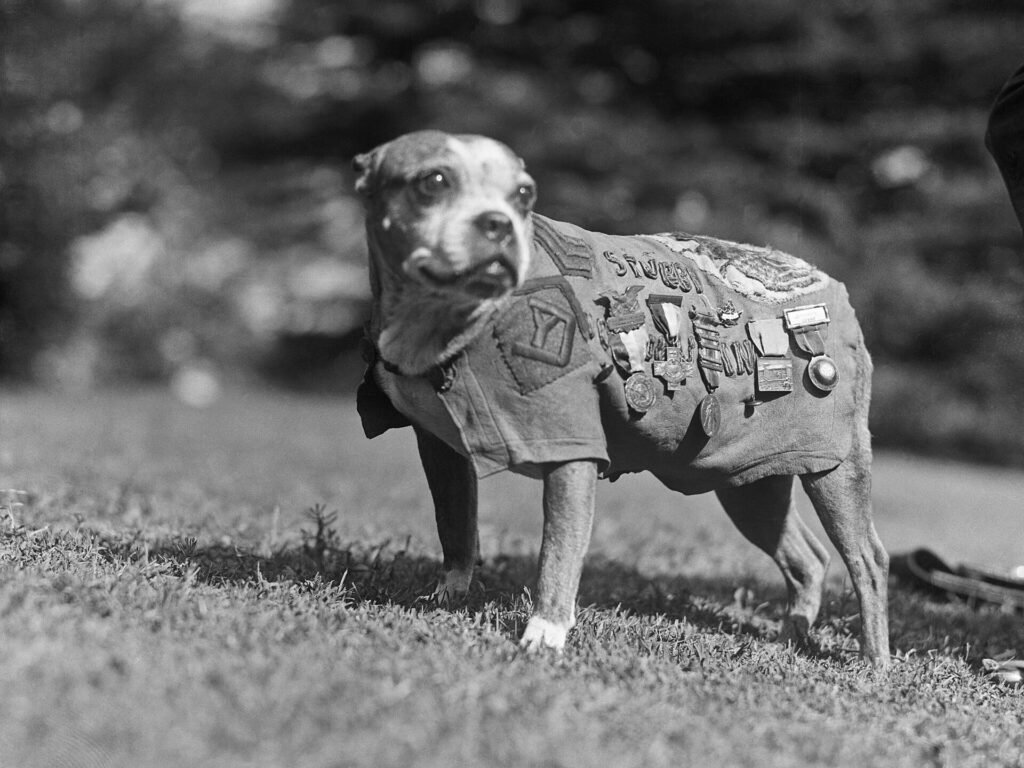
In July 1917, a stray dog of uncertain breed wandered onto the Yale University campus and found a home with the 102nd Infantry Regiment. Within months, this brindle-patterned pup was smuggled aboard a troop ship bound for France, hidden deep beneath a soldier’s overcoat.
He would go on to survive mustard gas attacks, capture a German spy, and become the most decorated combat dog of the First World War. This is the factual account of Sergeant Stubby, a street dog who served 18 months in the trenches, participated in 17 battles, and earned a historic military promotion through pure combat experience.
From Campus Stray to Frontline Soldier
Corporal James Robert Conroy developed a fondness for the stray wandering the New Haven, Connecticut training grounds. When the 26th Division deployed, Conroy concealed the dog to get him overseas. Upon discovery by the commanding officer, the dog lifted his right paw in a salute he had learned in camp.
The officer allowed him to stay. By February 1918, the dog entered the combat zone at Chemin des Dames, enduring constant artillery fire day and night for over a month.
Trench Warfare and Mustard Gas Alarms
In April 1918, retreating German troops threw hand grenades during a raid on Seicheprey, wounding the dog’s foreleg. After his recovery, he returned to the trenches. A subsequent mustard gas attack injured him again, prompting the creation of a specially designed canine gas mask.
He learned to detect incoming gas attacks and alert the regiment before human senses could register the threat. Because he could hear the distinct whine of incoming artillery shells early, he effectively warned soldiers to duck for cover.
Capturing a Spy and Earning a Promotion
During the Argonne offensive, the dog encountered a German spy hiding near the American lines. He attacked the soldier, holding him by the seat of his pants until American troops arrived to secure the prisoner. Following this capture, the unit’s commander nominated the dog for the rank of sergeant.
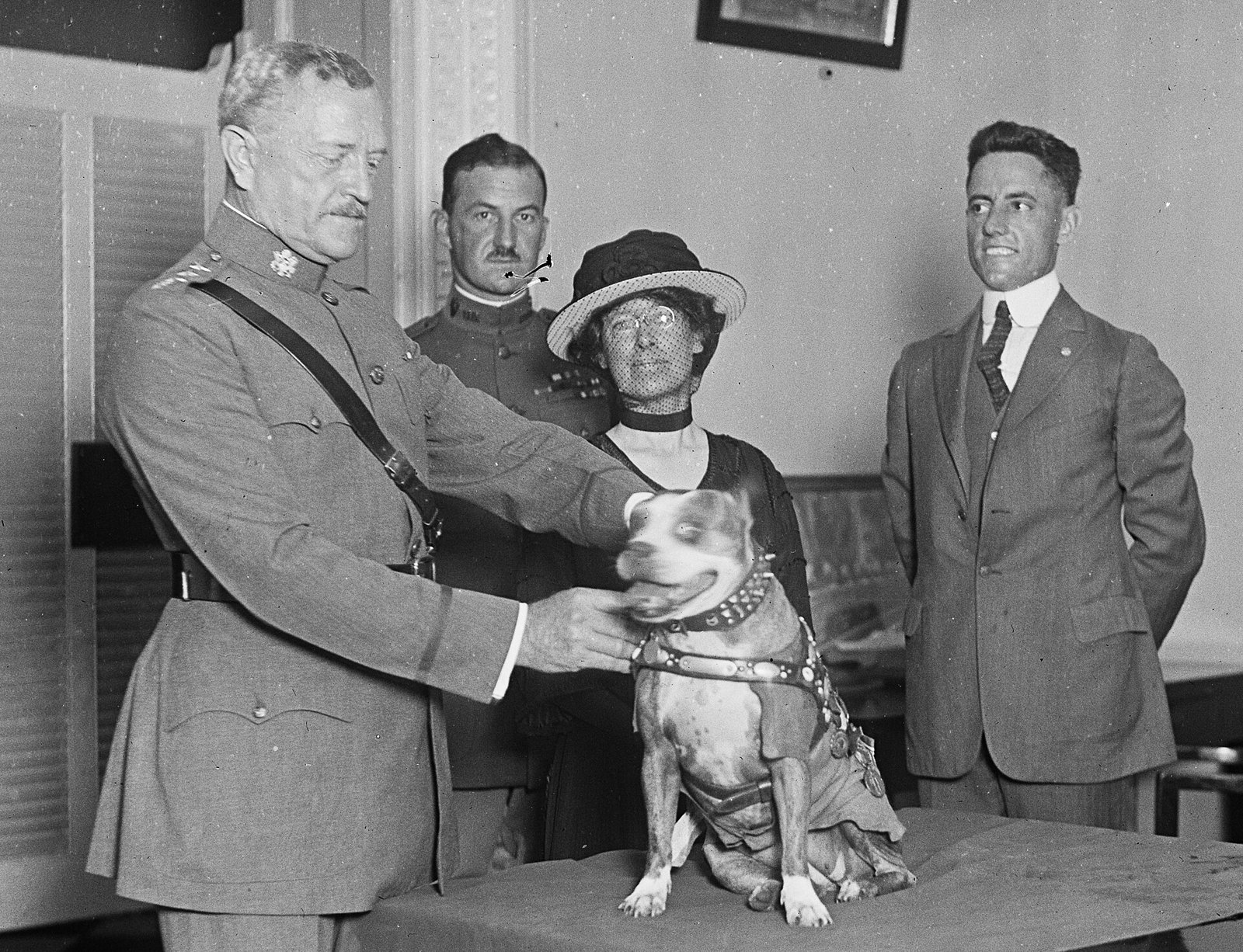
Women in the retaken town of Château-Thierry made him a chamois coat to hold his growing collection of medals, which included two purple hearts and a gold medal presented by General John J. Pershing.
Life After the Great War
Following the war, Sergeant Stubby returned to the United States in 1918. He marched in national parades and met three US Presidents: Woodrow Wilson, Calvin Coolidge, and Warren G. Harding. When Conroy attended Georgetown University Law Center in 1921, the dog became the official mascot for the Georgetown Hoyas, entertaining crowds by nudging a football across the field during halftimes.
He died in his sleep in March 1926. His preserved taxidermy mount now resides at the Smithsonian National Museum of American History.