
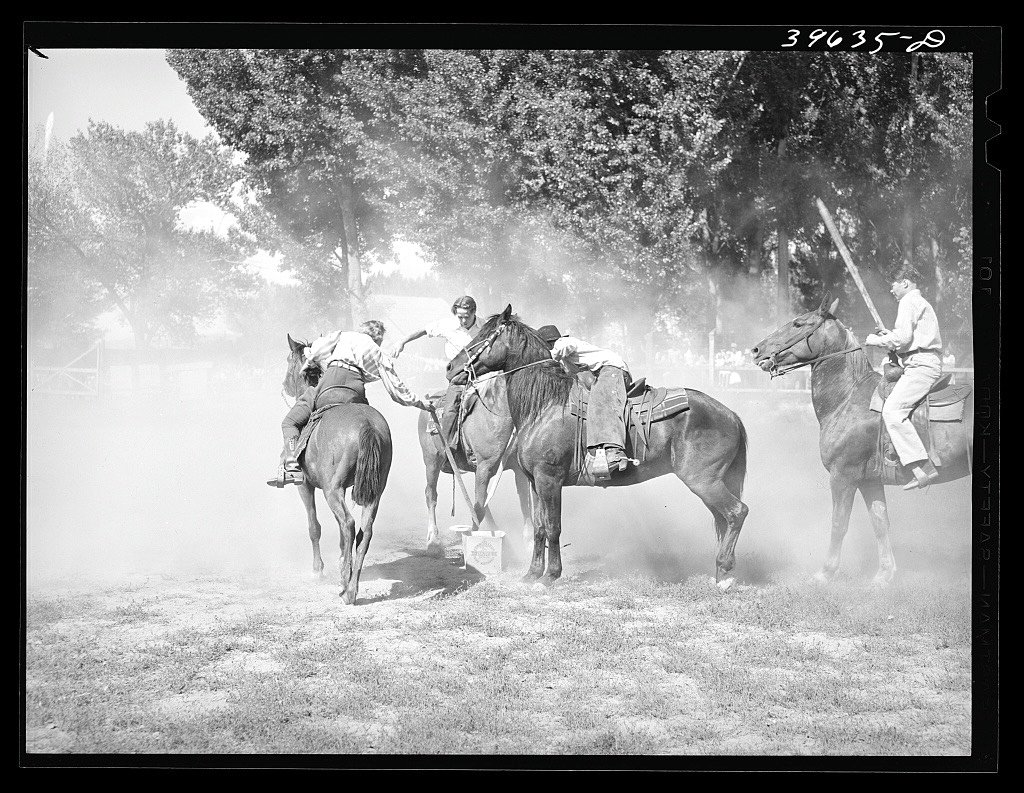
Mentioning a potato race today usually conjures images of laughing children sprinting across a park. Yet, at the turn of the 20th century, this simple competition was a highly competitive spectacle that frequently devolved into brutal brawls.
Participants did not just run on foot; adults mounted horses, bicycles, and even early automobiles to spear, snatch, and throw root vegetables. At its peak, the mounted team version featured riders pulling opponents from their saddles in chaotic free-for-alls where biting was the only barred tactic.
Early Origins of the On-Foot Race
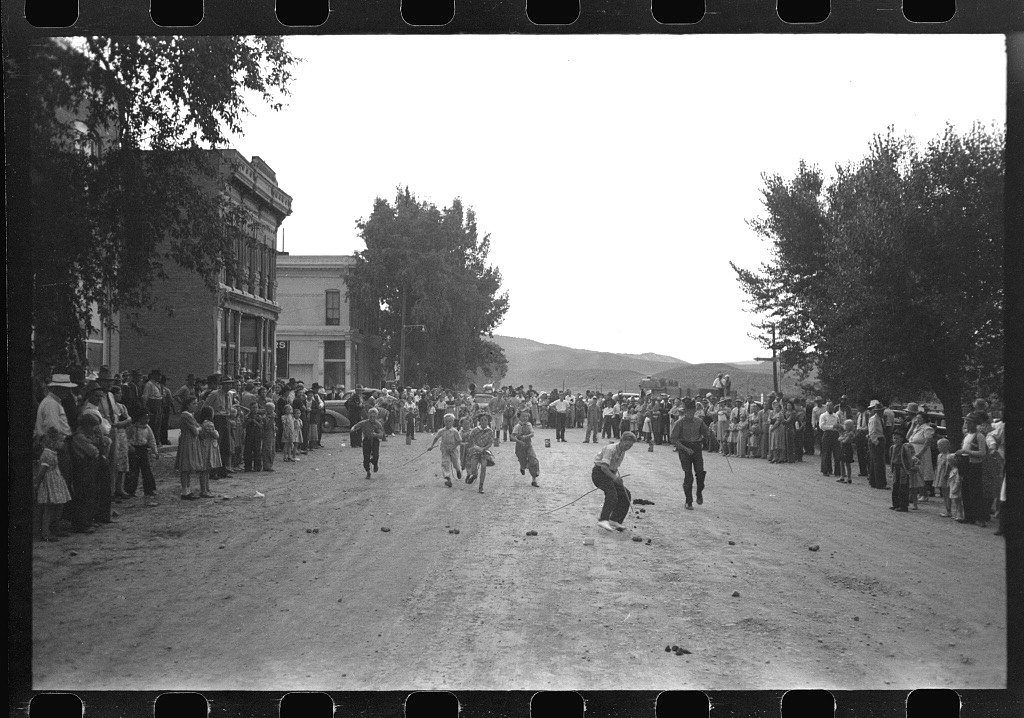
It remains unclear exactly when or where the first potato race took place. Newspaper reports from Scotland, Australia, and Wales mention the events as early as the 1860s. In 1869, the Wisconsin state fair advertised a potato race that “beats Base Ball all hollow.”
By 1871, the Boston Advertiser detailed a foot race in New Hampshire, prompting other states to add the event to their county fairs. The rules were straightforward: organizers marked individual lanes and spaced out a line of potatoes. Competitors sprinted down their lane, retrieving one potato at a time and dropping it into a basket.
Bicycles, Ice Skates, and Automobiles
Organizers soon began experimenting with new formats. Charlotte Perkins Gilman recorded watching a moving picture of a potato race on ice in 1915. Bicycles entered the fray as well; the British Almanac of 1897 highlighted a bicycle-mounted competition, and a 1908 event in England featured young women racing on two wheels.
The phenomenon reached the Indianapolis Motor Speedway in 1910, where 5,000 spectators watched a reverse race. Passengers in cars sped along a track, throwing potatoes into baskets as they drove by. Later, a 1970 motorcycle rodeo adapted the race for motorized two-wheelers.
The Brutal Mounted Rodeos
The most intense iterations took place in the Southwestern United States, where adults competed on horseback. In individual mounted races, riders carried sharpened stakes to spear the vegetables at high speeds, or leaned from their saddles at a full lope to snatch them from the dirt.
The team-based tournament operated with almost no rules. Multiple riders swarmed a field for ten minutes, using their stakes to knock potatoes away from opposing teams. The Courier-Journal reported in 1902 that dragging opponents off horses was acceptable. During a 1909 Frontier Days event, the melee became so severe judges halted the competition entirely.
The Decline of an Era
By 1913, on-foot potato races were already being labeled as old-fashioned. Popular Mechanics magazine suggested replacing the root vegetables with lightbulbs in 1917. While the violent equestrian rodeos died out by the 1930s, the structured foot races survived. Modified, non-violent horseback gymkhana events and casual playground games maintain the basic framework of those early agricultural contests today.