
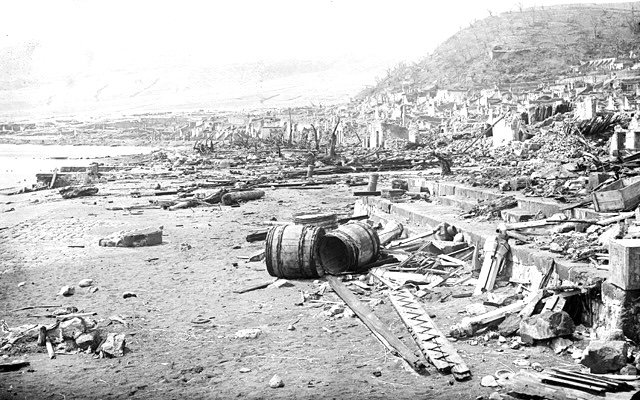
In less than sixty seconds, a hurricane-speed cloud of superheated gas and ash incinerated the Caribbean port of Saint-Pierre. The 1902 eruption of Mount Pelée remains the deadliest volcanic disaster of the 20th century, claiming roughly 29,000 lives in a single morning.
While warning signs plagued Martinique for weeks, almost no one escaped the terrifying pyroclastic surge. The story of Mount Pelée features boiling rivers, destroyed ships, and a handful of survivors, including a prisoner locked deep underground.
Boiling Rivers and Dark Skies
Activity on Mount Pelée began in late April 1902 with sulfurous vapors and light ash covering the mountain’s southern flanks. By early May, the situation escalated rapidly. Ash clouds blocked out the sun, plunging nearby villages into darkness and contaminating water supplies.
On May 5, a crater wall collapsed, sending a massive mudflow down the Blanche River. This boiling lahar buried a sugar mill, killing 150 people, and triggered a series of tsunamis that crashed against the coast. Despite the growing ash and lightning storms, local authorities prevented residents from leaving Saint-Pierre, claiming the city was safe.
The Deadliest Volcanic Blast of the 20th Century
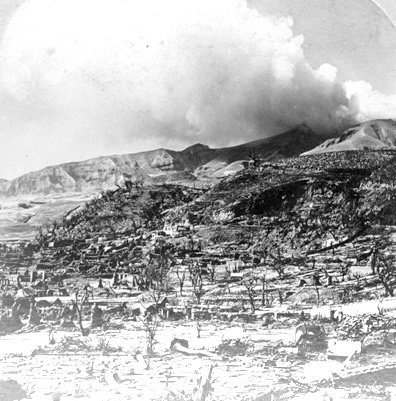
On Thursday, May 8, at 7:52 a.m., the mountain violently ripped open. A horizontal pyroclastic surge shot out from the volcano, racing toward Saint-Pierre at speeds exceeding 160 kilometers per hour (100 mph). Temperatures inside this dense, glowing cloud surpassed 1,075 °C (1,967 °F).
The blast hugged the ground, igniting everything combustible upon impact. Houses were pulverized, and the massive cargo ship Roraïma burned and sank offshore. Within minutes, the entire city was completely annihilated. The fierce heat prevented rescue ships from approaching the smoldering ruins until late afternoon.
The Prisoner Who Survived
Out of approximately 28,000 residents caught inside the city limits, only a few individuals survived. One was Ludger Sylbaris, a man locked inside a windowless stone jail cell for a prior altercation.
The thick walls protected him from the intense heat. Léon Compère-Léandre also survived by fleeing to the edge of the city, suffering severe burns before running six kilometers (3.7 miles) to safety. Another survivor, a 10-year-old girl named Havivra Da Ifrile, escaped by rowing a boat into a coastal cave just before the cloud hit.
Eruptions and the Lava Spine
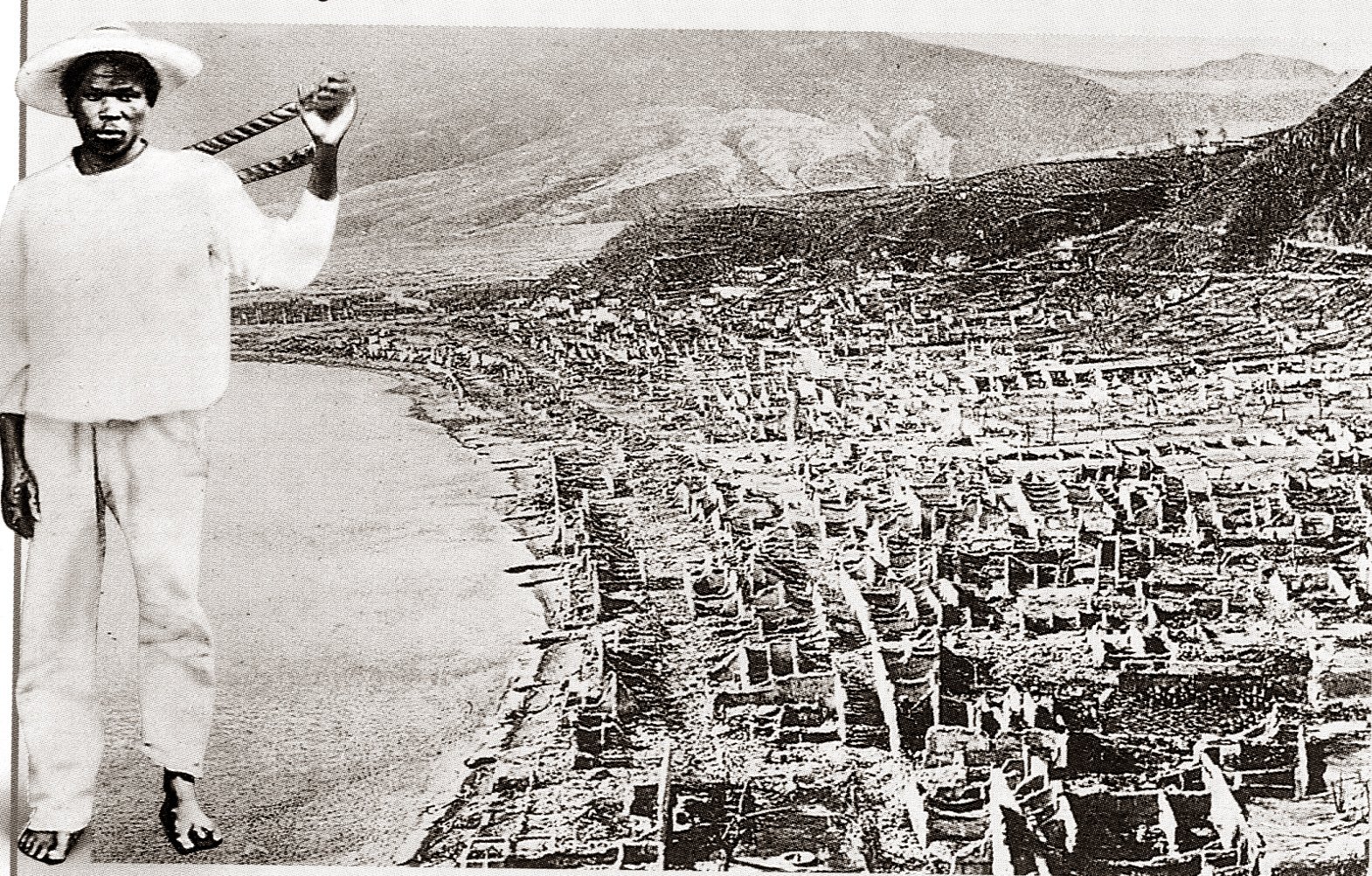
The disaster did not end on May 8. A second massive eruption on May 20 killed 2,000 rescue workers and mariners. On August 30, another pyroclastic flow extended even further, killing hundreds more in neighboring towns. By October, an enormous lava spine began growing from the crater floor.
Dubbed the Needle of Pelée, this unstable rocky tower grew up to 15 meters (50 feet) a day, reaching 300 meters (1,000 feet) high before collapsing in March 1903. The eruption finally concluded in 1905, leading scientists to establish the study of pyroclastic flows and fundamentally changing modern volcanology.