
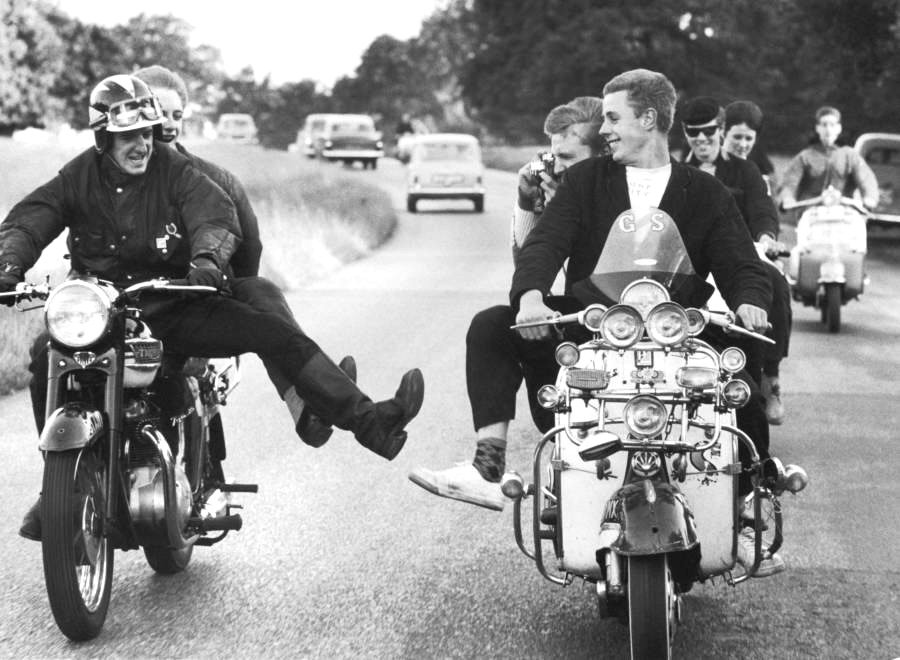
During the Easter weekend of 1964, two hostile youth factions clashed on the beaches of southern England, sparking an intense nationwide panic. Clad in sharp suits and riding scooters, the mods faced off against the rockers, a group recognized by heavy leather jackets and motorcycles.
These rival groups turned the seaside towns of Clacton and Margate into public battlegrounds. The physical violence escalated dramatically over the subsequent Whitsun weekend in Brighton, leading to dozens of arrests and headlines that condemned the teenagers as “vermin.”
Leather Jackets vs. Sharp Suits
The rockers built their culture around motorcycles, 1950s rock and roll, and artists like Eddie Cochran and Gene Vincent. Influenced by Marlon Brando in the film The Wild One, they wore black leather jackets, winklepickers, and styled their hair in quiffs or pompadours. The opposing mods focused heavily on clean-cut fashion and modern music.
They wore tailored suits under parkas and rode Vespa or Lambretta scooters, listening to soul, ska, and modern jazz. These distinct stylistic choices created a visible tribal divide among British youth.
The Seaside Skirmishes
The hostility between the groups exploded into massive physical brawls during the spring of 1964. Thousands of teenagers flooded the coastal towns, throwing bottles and attacking one another on the beaches. The violence peaked during the Whitsun weekend in Brighton, where police had to physically surround and protect a small, isolated group of rockers from an overwhelming assault by angry mods.
A presiding judge heavily fined the arrested youths, famously dismissing them in court as “sawdust Caesars.” One teenage mod proudly admitted he joined the fights to rebel against older generations telling them what to do.
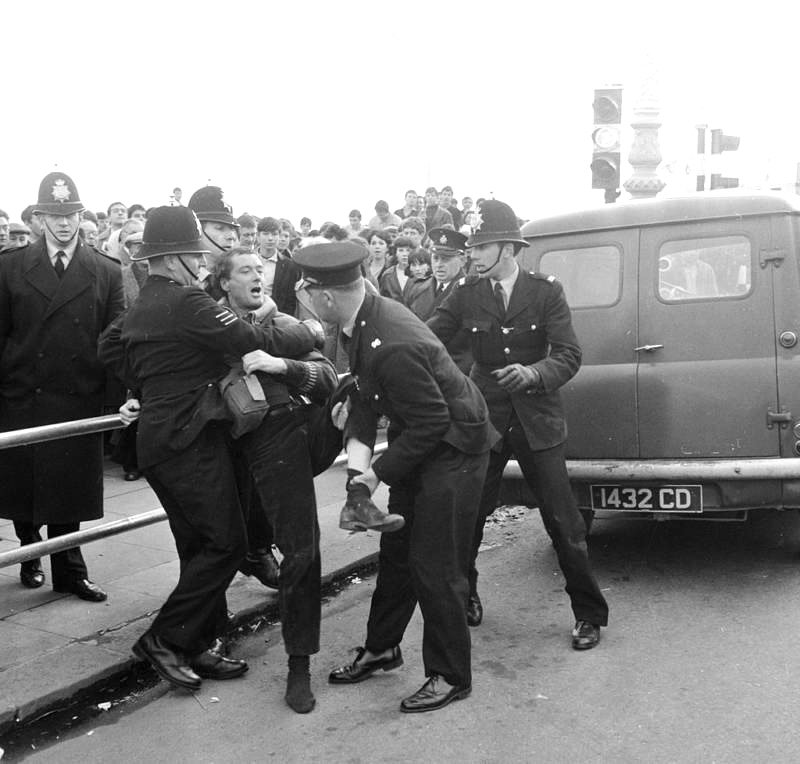
The Press Sparks Widespread Panic
While roughly 1,000 teenagers gathered at Brighton beach, police only recorded 76 arrests. However, British newspapers amplified the scale of the violence, describing the brawls as a day of terror. Editorials claimed these internal enemies would cause the complete disintegration of the nation’s character.
Sociologist Stanley Cohen later analyzed this reaction, officially coining the term “moral panic.” Cohen proved that the media often published deceptive headlines, such as “Mod Dead in Sea,” when the youth had actually drowned in an accidental, unrelated event.
Parliament and Punk Rock
The sensationalized news coverage prompted Members of Parliament to travel to the coastal towns to personally inspect the damage, leading to calls for intensified measures against hooliganism. The rivalry continued for years.
In 1981, fights broke out in Finsbury Park between rockers attending a gig by the punk band the Exploited and mods leaving a nearby concert by the Jam. The original 1964 Brighton clashes were permanently immortalized in 1979 when the Who released the film Quadrophenia, directly featuring the historic coastal battles.