
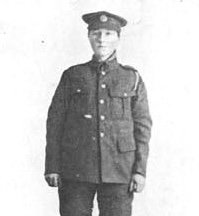
In 1915, British commanders discovered a major security breach just 400 yards from the Western Front. A sapper with the 179 Tunnelling Company was not who he appeared to be.
Hidden beneath a forged identity, a homemade corset, and a fake shaving rash was a 27-year-old English woman. Desperate to report on the war, she orchestrated a deception that baffled generals, triggered a massive interrogation, and resulted in a strict government gag order. This is the true story of Dorothy Lawrence.
Becoming Private Denis Smith
When World War I broke out, Lawrence wanted to be a war correspondent. Fleet Street newspapers refused to send a woman to the front. Undeterred, she bought a bicycle, crossed the Channel to France, and decided disguising herself as a man was her only option.
In Paris, she convinced two British soldiers to smuggle her a khaki uniform. She flattened her figure with a corset, bulked her shoulders with cotton-wool, and had two policemen cut her hair. She darkened her skin with disinfectant, scraped her cheeks to fake a shaving rash, and secured forged papers under the name Private Denis Smith.
Ten Days on the Somme
Lawrence cycled to the Somme. Near Albert, she met Tom Dunn, a coalminer-turned-sapper, who found her an abandoned cottage to sleep in. Dunn helped her secure work with a mine-laying company operating directly on the front lines.
For ten days, Lawrence worked within the trenches. The physical toll quickly caused constant chills, rheumatism, and fainting fits. Afraid that requiring medical attention would expose her identity and punish the men who helped her, she confessed her true sex to a commanding sergeant and was immediately arrested.
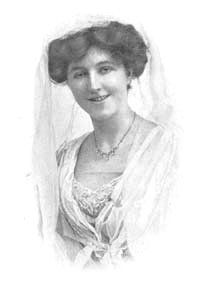
Interrogation and the Cover-Up
The military transferred Lawrence to Third Army headquarters in Calais. Six generals and twenty officers interrogated her, suspecting she was a spy or a prostitute. Embarrassed by the security breach, a judge confined her in a convent until the Battle of Loos concluded. To avoid jail, the War Office forced her to sign an affidavit under the Defence of the Realm Act, swearing she would not write about her experiences.
Censorship and a Tragic End
n 1919, Lawrence published her account, Sapper Dorothy Lawrence: The Only English Woman Soldier. The War Office heavily censored the manuscript, and it failed commercially.
By 1925, she began exhibiting erratic behavior. After disclosing a teenage sexual assault to a doctor, and with no family to care for her, authorities committed her to a mental hospital. She remained institutionalized for nearly 40 years without a single visitor. She died of cerebral thrombosis in 1964 and was buried in a pauper’s grave.