
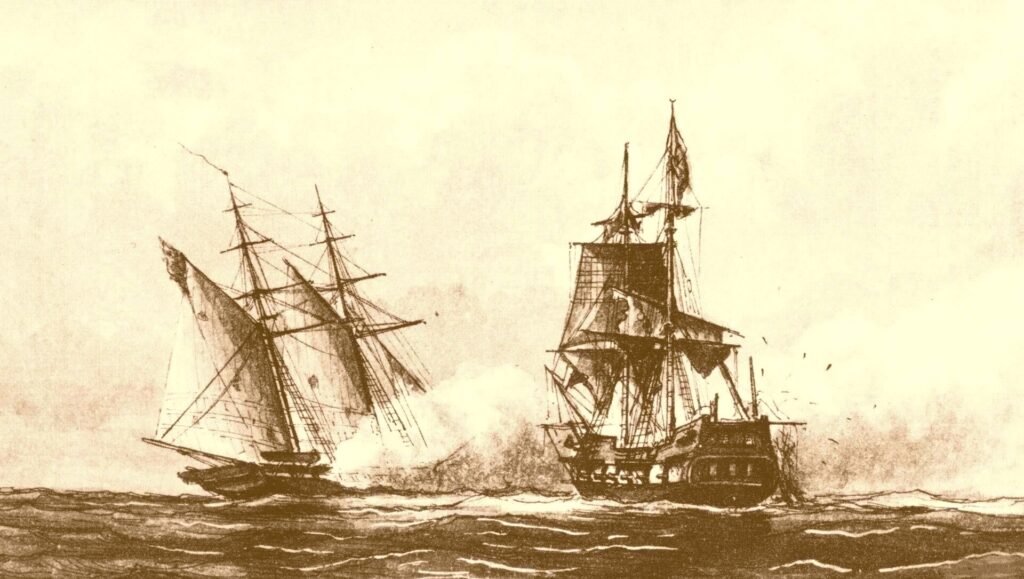
In the late eighteenth century, American merchant ships crossing the Mediterranean faced a terrifying threat: pirates. Corsairs from North Africa routinely captured commercial sailors and demanded massive payouts. The United States initially struggled to defend its vessels, leaving dozens of men enslaved in foreign ports.
But when a newly inaugurated president refused to pay an extortion fee, it sparked the First Barbary War—a grueling overseas conflict featuring burned frigates, desert marches, and a daring nighttime raid.
The Price of Piracy and a Chopped Flagpole
Following its independence, America lost the naval protection previously provided by France. Barbary states like Algeria and Tripoli quickly capitalized on this vulnerability, seizing ships like the Maria and the Dauphin. The captors demanded huge sums for peace, while American diplomats had a budget of only forty thousand dollars. Captured crews endured hard labor, vermin, and disease.
The breaking point arrived when Thomas Jefferson took office in 1801. The Pasha of Tripoli, Yusuf Karamanli, demanded a payment of two hundred and twenty-five thousand dollars. Jefferson refused. In response, Karamanli declared war by chopping down the flagstaff standing in front of the United States Consulate.
A Grounded Frigate and a Daring Raid
Jefferson dispatched a naval squadron to blockade Tripoli. The campaign suffered a major blow in October 1803 when the USS Philadelphia ran aground on a reef. Tripolitan forces captured the ship intact, took Captain William Bainbridge and his crew hostage, and converted the frigate into a floating harbor defense battery.
On the night of February 16, 1804, Captain Stephen Decatur led a detachment of Marines aboard a captured ketch named Intrepid. They sneaked up to the Philadelphia under the cover of darkness, stormed the deck, overpowered the guards, and set the warship on fire before it could be used against the American fleet.
A Mercenary March Across the Desert
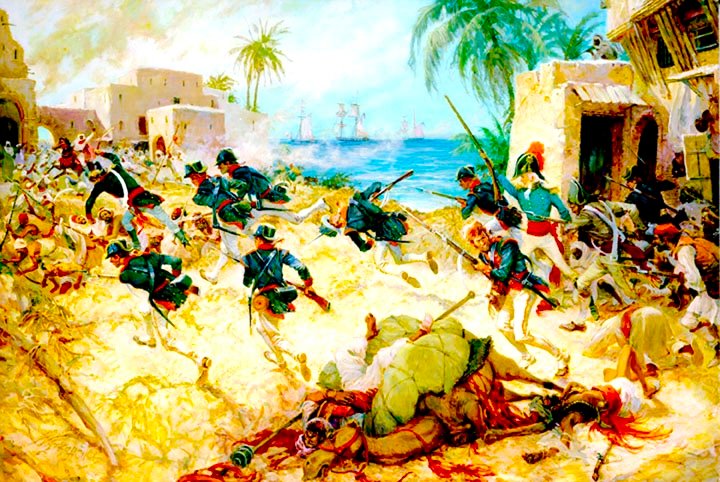
The conflict escalated during the Battle of Derna in 1805. Former Army captain William Eaton and Marine First Lieutenant Presley O’Bannon gathered eight Marines and five hundred Arab, Greek, and Berber mercenaries.
They marched directly across the desert from Alexandria, Egypt, to attack the Tripolitan city of Derna. After a fierce battle, they captured the city, raising the United States flag in victory on foreign soil for the first time.
The Ransom and the Treaty of Tripoli
The capture of Derna pressured Yusuf Karamanli to negotiate. On June 10, 1805, the two sides signed the Treaty of Tripoli to halt hostilities. The agreement included a sixty thousand dollar ransom payment from the United States to secure the release of approximately three hundred American prisoners.
While the Jefferson administration justified the payment as a ransom rather than a tribute, Eaton argued that the capture of Derna should have guaranteed the sailors’ freedom without any financial exchange.