
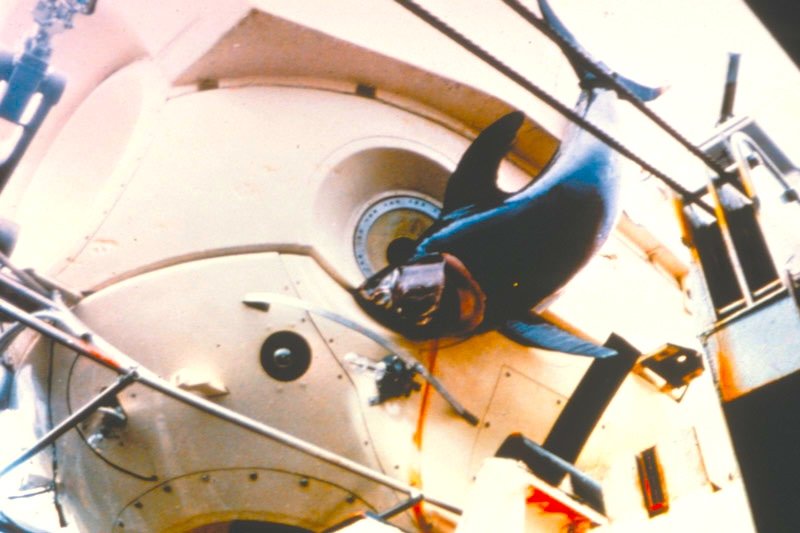
In July 1967, the ALVIN submersible reached the ocean floor off the coast of Florida. The crew intended to conduct a six-hour geophysical survey, but a massive swordfish had other plans.
In an incredible deep-sea encounter, the 200-pound fish launched an unprovoked attack on the 16,000-pound vessel, violently wedging its sword into the exterior. The terrifying incident triggered an emergency ascent, a bizarre rescue operation, and a total reassessment of submarine safety protocols.
An Unexpected Deep-Sea Attack
About an hour into the dive, pilot Marvin McCamis maneuvered ALVIN forward so research assistant Edward F.K. Zaruski could photograph a deep-sea coral specimen. The movement kicked up a plume of sediment, startling a lone swordfish resting on the seafloor. Zaruski suddenly heard a scraping noise against the hull. Co-pilot Valentine Wilson looked out the starboard porthole and recoiled, shouting, “We have been hit by a fish!”
Zaruski watched through the window as the eight-foot swordfish bumped and thrashed against the sub. The fish swam away briefly, only to pick up speed and ram full force into ALVIN. The inclined fiberglass hull deflected the fish’s weapon toward a joint, causing the sword to become tightly wedged at its base between two modules of buoyancy foam.
Aborting the Dive
The three-man crew was trapped 2,000 feet underwater with a massive, angry fish thrashing violently against the exterior of their vessel. As the captive swordfish struggled to disengage, an indicator light warned the crew of a potential leak in an external electrical connection box. Unwilling to take any chances, the crew held a quick conference call with the surface ship and unanimously decided to abort the dive.
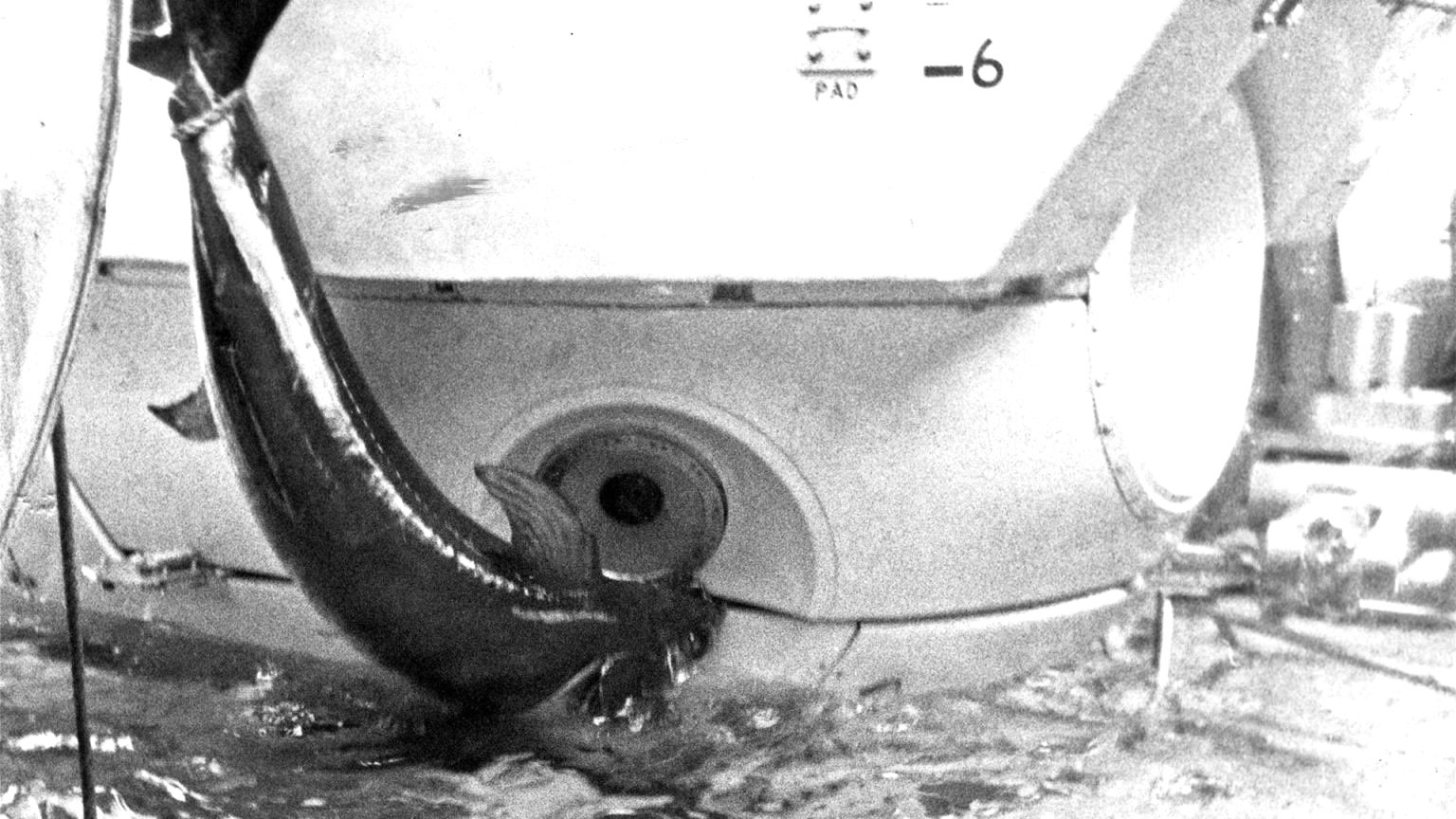
As ALVIN ascended, McCamis used the underwater telephone to instruct the tender ship, Lulu, to prepare a dive team. Once the submarine broke the surface, divers managed to throw a noose around the thrashing fish’s tail. During the two-hour removal process, the swordfish broke its sword off inside the foam gap. The fish did not survive the ordeal, but it provided a meal for the entire crew the following day.
Testing the Windows
The bizarre attack prompted an internal memo at the Woods Hole Oceanographic Institution (WHOI) titled, “The Problem of Swordfish Attack on ALVIN.” The primary concern was whether a high-speed swordfish strike could shatter the submarine’s acrylic windows. In response, WHOI engineers designed a rigorous stress-testing program to simulate and analyze swordfish impacts on various window shapes. They concluded that acrylic was the ideal material because its slight flexibility allowed it to withstand the blows without shattering.
While swordfish attacks on submarines remain rare, they are not unheard of. Marine ecologists note that swordfish possess highly sensitive vision and can readily detect vibrations in the dark ocean. If they perceive a large vessel like ALVIN as a threat, they will launch a defensive strike, a behavior that modern submarine pilots are now specifically trained to handle.