
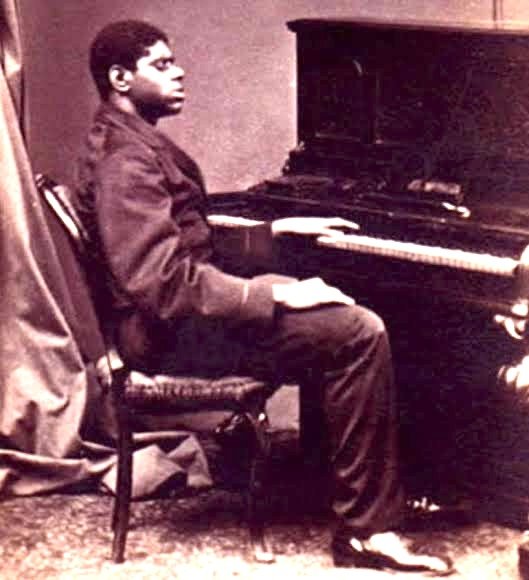
In 1860, an eleven-year-old boy who was born blind and enslaved stepped into the White House to play piano for President James Buchanan. Over his career, Thomas “Blind Tom” Wiggins mastered a reported 7,000 musical pieces, performed up to four concerts a day, and earned up to $100,000 a year. Yet despite becoming the highest-paid pianist of the 19th century, he spent his entire life under legal guardianship and never controlled the fortune he generated.
From a Georgia Plantation to a 7,000-Piece Repertoire
Born on May 25, 1849, in Harris County, Georgia, Wiggins was sold in 1850 along with his parents to Columbus lawyer General James Neil Bethune. Because he was blind, he could not do standard plantation labor and spent his days exploring the grounds and mimicking sounds. By age four, he could repeat ten-minute conversations word for word and had started playing piano by ear after listening to Bethune’s daughters. At age five, he composed his first piece, The Rain Storm.
Bethune eventually moved him into a room with a piano, where a neighbor recalled him playing for twelve hours a day. Hired musicians played compositions for him, and Wiggins reproduced them accurately, often after hearing them once.
White House Concerts and Onstage Feats
When Wiggins was eight, Bethune leased him to concert promoter Perry Oliver. Performing up to four times daily across the United States, Wiggins brought in up to $100,000 a year, eventually generating an estimated $750,000 for the Bethune family. In 1860, he became the first African American to give a command performance at the White House.
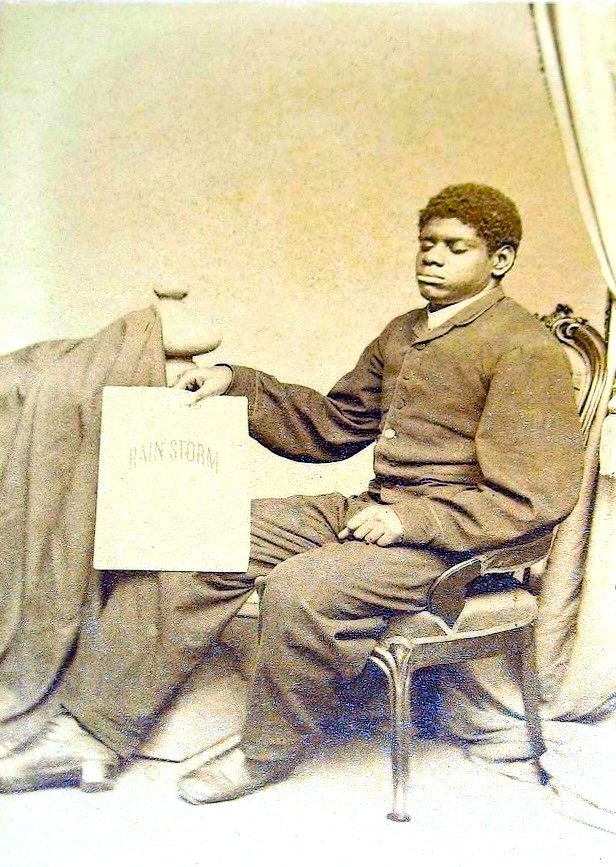
Audiences—including Mark Twain—watched him perform unusual feats. A Civil War soldier wrote in 1862 that Wiggins played “Fisher’s Hornpipe” with one hand, “Yankee Doodle” with the other, and sang “Dixie” simultaneously. He also played with his back to the keyboard and invited skeptics onstage to test his memory with brand-new compositions.
Guardianship After Emancipation and a Custody Battle
After the Thirteenth Amendment abolished slavery in December 1865, Wiggins remained under the Bethune family’s legal control. General Bethune took him on a European tour in 1866 and later handed management to his son, John Bethune, in 1875.
When John died in an 1884 railway accident, his estranged wife, Eliza Stutzbach, sued General Bethune for custody. In August 1887, a court awarded Wiggins to Stutzbach. She moved him to New York and kept him touring until the mid-1890s, later booking him on the vaudeville circuit in 1903.
Final Years in Hoboken
A stroke in December 1904 ended Wiggins’s public performances. He lived out of the spotlight with Stutzbach in Hoboken, New Jersey, where neighbors still heard his piano at all hours. After a major stroke in April 1908, Wiggins died on June 14, 1908, at age 59, and was buried in Brooklyn, New York.